
It takes 3 months. Not to heal — nobody heals in three months. But to arrive at the particular stage of grief that looks, from the outside, like fine. He went to work. He answered emails. He attended meetings and said what was required. At night, he ordered food from an app, ate it from the container, watched something on a laptop, and fell asleep in his clothes more often than I would have liked. His wife had left. Not for someone else. Not after years of accumulated damage finally cresting. She had exercised the oldest and most devastating of human freedoms: she had simply chosen to be elsewhere. And he — forty-four years old, an engineer, Whitefield — had discovered what everyone eventually discovers, but no one is ever adequately warned about. The body does not distinguish between a person who is grieving and a person who is dying. It responds to both in the same way. It begins to grieve itself.
His digestion had collapsed. He was gaining weight despite eating less. Sleep arrived but restored nothing. His eyes — and I have learned over twenty-six years to read eyes the way a mechanic reads a dashboard — had that specific flatness that comes not from sadness but from the suspension of interest in being alive. He was not depressed in the clinical sense. He had lost his appetite. Not for food. For everything.
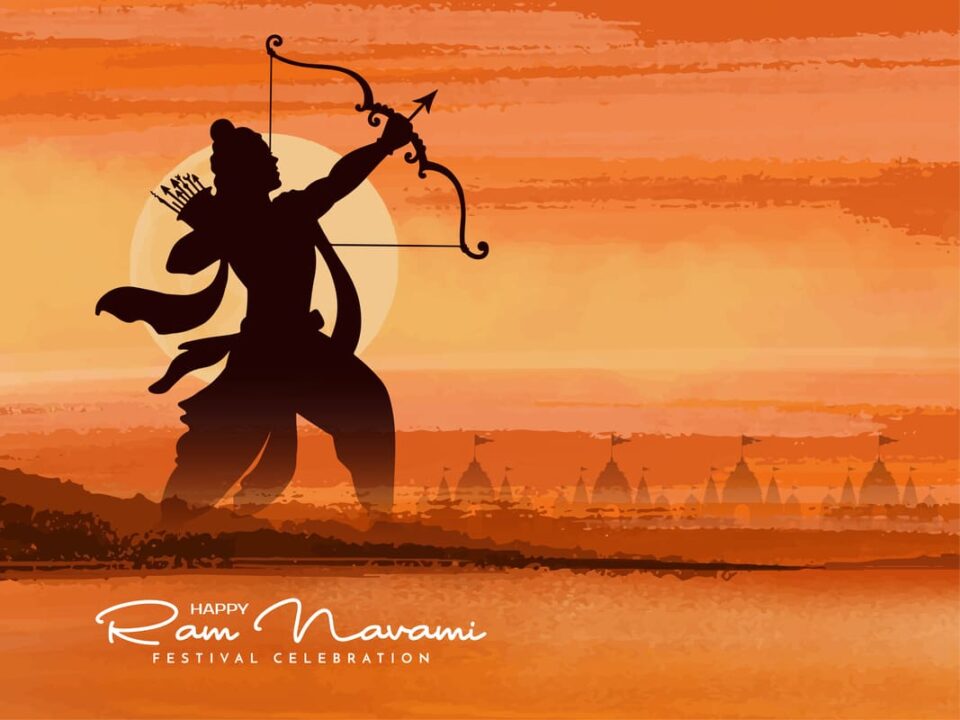
I prescribed him something. But I also thought, on the drive home through Bengaluru’s eternal traffic, about a man who lost considerably more. Who had a kingdom removed on the morning of his coronation, walked into a forest with nothing but a bow and his dharma, watched his wife disappear into the sky above a demon king’s island fortress, wept beside a river — Valmiki records this carefully, and it matters that he does — and then stood up, found Hanuman, built an army, and crossed an ocean. Rama did not lose his appetite for life. He lost everything else. That distinction is the whole subject of this essay.
Ayurveda’s understanding of the mind rests on three qualities: Satva, Rajas, and Tamas. Not as philosophy. As a clinical observation. Satva is the quality that allows you to see a situation as it actually is — without the distortion of desire or fear. Rajas is motion, passion, the fuel of action. Tamas is rest, heaviness, the quality that produces sleep and, in excess, stupor. In a healthy mind, they coexist. In grief, catastrophe floods the system with Tamas and Rajas simultaneously. You are agitated and sluggish at once. You cannot rest, and you cannot act. You lie awake, unable to think. You eat and do not taste. This is not a metaphor. It is a description of a dysregulated nervous system that Ayurveda recorded five thousand years before neuroscience had language for it.
Charaka named this state Shoka — grief — and listed it among the primary causes of Rajayakshma, the wasting disease whose clinical picture maps closely onto pulmonary tuberculosis. A modern reader’s first instinct is to object: tuberculosis is caused by Mycobacterium tuberculosis, a bacterium discovered by Robert Koch in 1882, not by sorrow. This objection is correct, and it misses the point entirely. Charaka was not describing the pathogen. He was describing the host. Approximately 1.7 billion people alive today carry M. tuberculosis in their bodies right now — dormant, contained, held in check by a functioning immune system. Whether the bacterium remains dormant or reactivates to cause disease depends almost entirely on the immune system’s condition. And what does prolonged grief do to immunity? It activates the hypothalamic-pituitary-adrenal axis, flooding the body with cortisol. Cortisol, sustained at high levels, suppresses lymphocyte production and measurably reduces natural killer cell activity — documented in controlled studies at forty days post-bereavement. Inflammatory cytokine patterns shift. Antibody response to vaccination weakens in the bereaved compared to non-bereaved controls. In short, the immune system begins to withdraw. What Charaka observed without a microscope — that a person hollowed by grief becomes newly vulnerable to a consuming illness — is precisely what modern psychoneuroimmunology has since measured in laboratories. He identified the host condition that allows the pathogen to win. Koch identified the pathogen. They are not in conflict. They are describing the same catastrophe from opposite ends of a very long chain.
Dasharatha dies of exactly this. His heart breaks when Rama leaves, and he follows within days. Valmiki is almost clinical about it. The old king could not absorb the loss. His Ojus — that deep vitality accumulated over decades of righteous rule, good sleep, the quiet satisfaction of a life lived in alignment — could not hold against this final blow. He was a full vessel that shattered on impact. Rama was a full vessel that bent.
The question that has stayed with me since my early years of practice: what is the difference? What separates the grief that consumes from the grief that eventually, painfully, without false comfort, transforms?
Valmiki answers it, if you read carefully. After Sita is taken, Rama does not suppress his grief. He expresses it fully. He speaks to the trees. He speaks to the river. He asks the deer if they have seen her. A reader might smile at the literary device. A clinician reads it differently. Rama externalises the pain. He does not swallow it. He does not immediately busy himself with logistics to avoid feeling the feeling. He sits with it long enough to feel its full weight — and then re-engages. Finds Hanuman. Makes an ally of Sugriva. Moves. This sequence — feel it fully, then move — is not poetry. Grief researchers call it oscillation: the capacity to move toward the pain and then away from it, toward engagement and back into grief, in a rhythm. People frozen either in total pain or total avoidance are the ones who do not recover. Rama, wandering the forest, calling Sita’s name, and then building a bridge across an ocean, was doing so instinctively. Seven millennia before the research caught up.
Satva is one of Ayurveda’s most misunderstood concepts, nowhere more so than among Indian men, who were taught from childhood that composure means not feeling. It does not. Satva is not the absence of emotion. It is what remains functional inside you while the emotion does its worst — the part that keeps watching even when the rest has stopped coping. In grief, it is what allows you to know, without comfort and without certainty, that you will eat again, sleep again, recognise yourself again. Not soon, perhaps. But again. That knowledge does not make grief smaller. It stops grief from becoming the whole of you.
What builds it? Nothing dramatic. Eating at regular times, because a body given a predictable rhythm handles chaos better than one living in permanent disorder. Sleeping before midnight. Walking in the morning before the phone gets involved. Ten minutes of genuine quiet, which feels like wasted time on every ordinary day, turns out to be load-bearing on the difficult ones. These are not lifestyle upgrades. They are the unglamorous groundwork of resilience — laid down in the calm seasons so that something solid remains when the ground gives way. The texts were prescribed five thousand years ago. Neuroscience is now measuring why it works. The conclusion is the same: Satva is not given. It is built, brick by quiet brick, in the days when nothing appears to be at stake.
A retired schoolteacher from Jayanagar came to see me two years ago with a joint complaint, six months after losing her son. He was thirty-one. Sudden cardiac event. She had aged since I had last seen her, but there was something else: a stillness I had not seen in her before. She had resumed her morning walk. She was teaching literacy classes on Tuesday and Thursday afternoons. She cooked every evening — small, simple meals, nothing elaborate. She said she wept every day. Usually in the bathroom. Briefly. Then continued. “Doctor,” she said, “my son loved life very much. I would be wasting his memory if I stopped living mine.” I wrote her prescription. I did not add anything.
Her Ojus had held. Not because her loss was smaller. Because what she had built in the ordinary years — the walk, the meals, the purposeful Tuesday afternoons — gave her something to return to when the worst arrived. Resilience is not a response to catastrophe. It is a preparation for it, assembled in the days when nothing is at stake, and the assembly seems pointless. You discover what you have only when the demand arrives without warning, and you reach for something and find, to your own surprise, that it is there.
There is one detail in the Ramayana I return to more than any other. After the war, after the homecoming, Rama does not become the radiant restored king of the triumphant narrative. Valmiki shows us an older man, ruling with a gravity he did not carry at twenty-five. He is not the same person who entered the forest. He is a version shaped by loss, by moral complexity, by the particular loneliness of living at the absolute edge of one’s own capacity. He carries this not as damage. As depth.
Medicine has long framed recovery as restoration — returning the patient to their previous state. For deep losses, this is not always possible, and insisting on it can cause harm. Some people, after devastating grief, do not simply recover. They emerge with capacities they did not have before. Greater empathy. Sharpened priorities. People who have genuinely lost something large are the least anxious people in any room — not because they no longer care, but because they have made peace with the portion of outcomes that was never in their hands. That peace, hard-bought and unromantic, is one of the most useful things grief can give. It doesn’t fit anywhere in the wellness industry. It is nonetheless real.
My Whitefield engineer came back six weeks later. He had started cooking again — just rice and dal, nothing ambitious, but cooking. He was walking at six in the morning. His eyes were different. Not healed—I told him honestly it would be a long time before that, but present. Back behind his eyes in a way he had not been in March. “I don’t know if I’m better,” he said. “But I feel like myself again. Even if I am sadder than before.”
That is, in twenty-six years of practice, one of the most accurate descriptions of recovery I have heard. You, but sadder, but present. The sadness is evidence that you loved something enough to grieve it. The presence as evidence that you have chosen, however tentatively, to remain in the business of being alive. Ayurveda has a single word for this: Swastha. Usually translated as health. Its literal meaning is more precise — swa, self; stha, established within. To be healthy is not to be free from feeling. It is to be standing inside yourself, even if that self is quieter than it was, even if it carries a weight it did not carry before.
Valmiki tells us that Rama ruled for a very long time after the forest. He never forgot a single day of it.
Rama Navami comes back every year, whether we are ready for it or not, which is, if you think about it, the whole point. Readiness is not required. Grief does not wait for readiness. The hot season does not wait. The question the festival asks — what remains in you when everything removable has been removed — does not wait for a convenient moment. It arrives in April, in the heat, when you are already tired, and it points at the man born on this day and says: he lost more than you. He kept going. The mechanism by which he kept going is not a secret. It is not locked in a temple or encoded in a verse that requires a scholar to open. It is ordinary. It is a meal eaten slowly. A morning walk. A grief felt all the way through, rather than managed around the edges. A day lived — imperfectly, heavily, with no particular grace — but lived. That is the whole inheritance. It fits in the palm of your hand. It is enough.
JAI SHRI RAM
I have written a book.
If this blog spoke to you, the book will stay with you longer.

2 comments
Evidence-based analysis of the ‘commendable man’, the hero of the great epic, with that of the recent knowledge of psychoneuroimmunology is a very laudable concept worthy of worship on this festive occasion. You have been endowed with rendering such excellent exposition, with clinical parlance, which has befitted your name to bring in that “absolute happiness”. Learnt a lot from reading this. Hats off to you.
Thank you, Sir, for your ever-inspiring words and the warmth you so graciously extend to your students. It is your scholarship that has always nudged us to look deeper. Rama, the ‘commendable man’, is perhaps the finest clinical specimen of Prakriti-sattva balance that Ayurveda ever described, a man whose nervous system never left the Turiya-adjacent state of equanimity, whether in triumph at Ayodhya or in exile in the Dandakaranya. The Charaka Samhita speaks of the Sattvic Purusha as one in whom Ojas is supreme and the Manovaha Srotas flows unobstructed, and who better embodies this than Rama, whose every action, even grief, was without the cortisol-driven chaos of Rajas or the paralysis of Tamas. It is this Ayurvedic psychophysiology of Rama — the hero as the ultimate Ojas-ful being, that psychoneuroimmunology is only now beginning to quantify in its laboratories.