
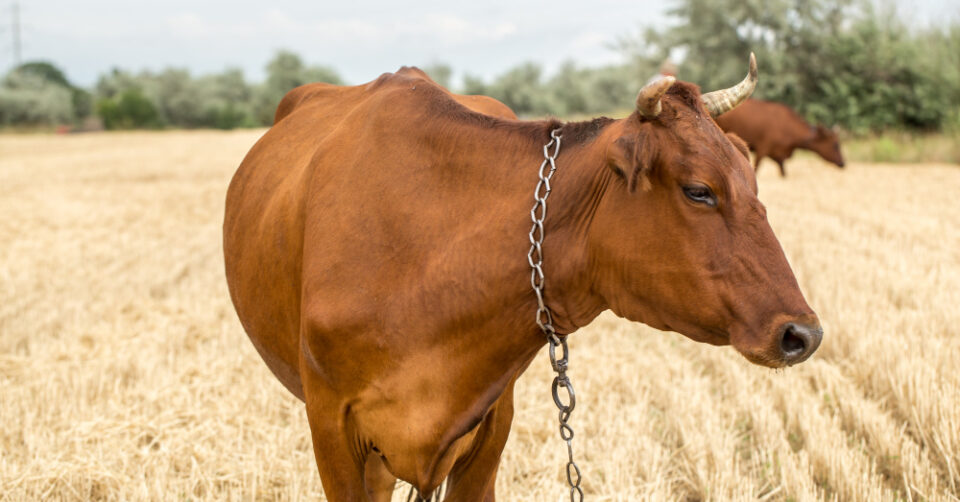
In most Indian homes, the day once began with the sound of milk boiling over. Someone in the kitchen shouted. Someone else rushed to lower the flame. Mothers insisted that children drink milk before school because, in their understanding, strength was not a matter open to democratic discussion. Children protested with admirable consistency and negligible success. In villages, cows waited in courtyards. In cities, they occupied roads with the unhurried confidence of beings that had lived among humans long before traffic lights were invented.
Long before the cow entered laboratories, she had entered Indian life. Long before she became the subject of government grants, she had entered Indian medicine.
A recent report described how, six years after India’s Department of Science and Technology allocated Rs 98 crore under the SUTRA-PIC programme to study indigenous cows and their products, the first research papers have begun to emerge. The reactions were immediate and entirely predictable. Some celebrated the studies as the vindication of ancient wisdom. Others treated them as proof that traditional medicine had finally been exposed as superstition dressed in Sanskrit.
Both sides had overlooked the most interesting part of the story.
Few people know that one of Ayurveda’s foundational texts discusses Gomutra — cow urine — in the very first chapter of its pharmacological catalogue. As I read those passages, I realised that Charaka was not trying to win an argument. He was trying to solve a clinical problem.
Charaka Samhita begins its exploration of medicinal substances not with reverence but with classification. He describes eight types of animal urine: sheep, goat, cow, buffalo, elephant, camel, horse and donkey. Each receives a separate pharmacological identity. Camel urine is indicated for respiratory disorders. Donkey urine for certain neurological and psychiatric conditions. Horse urine for wounds and skin disorders. Elephant urine has its own specified actions. This is comparative pharmacology. Not ritual enumeration.
Charaka was not asking, What is sacred? He was asking a physician’s question: “What does this substance do?” That distinction, ignored by almost everyone in the current debate, changes the conversation entirely.
Consider what happened with a middle-aged man who came to my clinic some years ago carrying a thick file of laboratory reports and prescriptions accumulated over nearly a decade of failed consultations. He had a chronic skin disorder. Multiple therapies had offered brief relief and long disappointment. The disease had reorganised his life. He avoided social occasions. He slept poorly. The itching was relentless. Chronic illness does that. Families stop asking, “How was your day?” and begin asking, “Did you sleep? Did it come back?”
I prescribed a combination of classical Ayurvedic medicines. One was Gomutra Ark, a distilled preparation derived from cow urine, used not as a miracle but as an adjunct. I advised patience. Six weeks later, he returned with a hesitant smile.
“Doctor,” he said, “my wife says I slept through the night without scratching.”
Did Gomutra Ark produce that result? I genuinely do not know. Was it the combined effect of the formulation, the natural fluctuation of a relapsing disease, or some mechanism I have not yet understood? I do not know that either. What I know is that physicians notice patterns. Patterns generate questions. Questions deserve investigation. Curiosity is not certainty, and noticing is not knowing.
What I can describe is a method. My professor, Dr T D Kshirasagar, had cautioned that Gomutra Ark occasionally provokes hyperacidity and gastric discomfort — not dangerous, but uncomfortable enough to make a patient abandon treatment prematurely. His solution was elegant in its simplicity: begin at 5 ml once daily for five days, then 5 ml twice daily, then 10 ml once daily, then 10 ml twice daily, continuing this staircase upward until reaching 15 ml twice daily over thirty days. This ascending dose titration (vardhamana prayoga) allows the gut to acclimatise before the therapeutic dose is established. The patient tolerates what he might otherwise refuse. The physician learns, at each step, whether the preparation is being received or resisted. It is old clinical wisdom that modern pharmacology has formalised under a different name.
Charaka described Gomutra using clinical descriptors. Krimighna — destroying pathogenic organisms. Kushthaghna — beneficial in skin disorders. Kandughna — relieving itching. Vishaghna — counteracting toxins. He did not know about cytokines or phenolic compounds. His vocabulary was different. He knew patients. He observed effects. He named what he saw.
Modern medicine often assumes that explanation must precede observation. History suggests otherwise. Physicians recognised the usefulness of digitalis before understanding cardiac electrophysiology. Aspirin relieved pain for decades before prostaglandins were discovered. Penicillin saved lives before beta-lactam chemistry was fully mapped. Observation arrives before the mechanism more often than we admit.
Sushruta approached Gomutra differently — practically, procedurally. He used Gomutra-based preparations in wound cleansing, wound healing, and certain skin disorders. He specified indications and methods. Charaka, remarkably, prescribed a Gomutra sitz bath for haemorrhoids — the pile mass first anointed with sesame oil, the patient then seated in lukewarm Gomutra for a specified period, with the expected outcome of a measurable reduction in pain, itching, and swelling. Modern proctology still recommends sitz baths. The classical physician would not have found that surprising.
The Rasashastra texts offer something more unexpected. Gomutra appears there not as a medicine but as a purification medium for some of the most toxic substances in the Ayurvedic pharmacopoeia. Vatsanabha. Langali. Bhallataka. Substances capable of serious harm. They were soaked, boiled or processed in Gomutra before being permitted to enter medicinal formulations. Vagbhata recognised that the medium through which a drug is processed influences the behaviour of the final product. Modern pharmacology agrees: solvent matters, vehicle matters, formulation matters. Ayurveda has a concept for this — Yogavahi, a substance that enhances and directs another’s action. We now celebrate piperine from black pepper as a scientifically validated bioenhancer. Few realise that classical physicians applied a near-identical concept centuries earlier.
Of all the clinical observations I have made over the years, one returns to me whenever this subject arises. In selected patients with uncomplicated superficial fungal infections, I sometimes advise cleansing the affected area with diluted Gomutra Ark before applying Nalpamaradi Taila. What I prescribe is not raw urine collected in a vessel from the cowshed but Gomutra Ark—a distilled preparation available commercially. The resistance usually begins before the treatment does. “Doctor, will the whole house smell?” “My wife won’t sleep next to me.” “My husband will banish me from the bedroom,” I reassure them that I am not asking them to soak in it and go to bed perfuming the household. The affected area is cleansed, washed and dried before the oil is applied. Domestic harmony, I have learnt, is an underappreciated determinant of treatment compliance. Many decline. Some reluctantly agree. A few return, looking mildly surprised. “The itching reduced faster than I expected.” “The rash has started clearing.” Medicine has humbled me too often for that. Some patterns that appear convincing dissolve under closer scrutiny. Yet this particular observation has persisted across enough patients and over enough years to make me pause. Perhaps it reflects better cleansing and adherence. Or perhaps the laboratory findings suggesting antifungal and bioenhancing activity echo something clinicians have been quietly noticing in practice. That is a question worth pursuing, not through faith or ridicule, but through carefully designed studies capable of distinguishing coincidence from mechanism.
Here, something needs to be said carefully, because it is routinely either exaggerated or misunderstood. CSIR — India’s Council of Scientific and Industrial Research — in collaboration with Go-Vigyan Anusandhan Kendra in Nagpur, holds five United States patents and one Chinese patent relating to cow urine distillate. The most significant among them, US Patent No. 7,235,262, granted in 2007, is titled “Use of bioactive fraction from cow urine distillate as a bio-enhancer of anti-infective, anti-cancer agents and nutrients.” A related patent demonstrated that cow urine distillate increased the potency of paclitaxel — Taxol, one of the most important chemotherapy agents in oncology — against a human breast cancer cell line in laboratory assays. These are not fringe claims. They come from CSIR-CIMAP in Lucknow, one of India’s most credible scientific institutions. What they establish, however, is narrow and specific. A patent establishes novelty and ownership. It does not establish clinical efficacy. It does not mean the finding has been replicated in patients. It does not mean the mechanism is understood. What it does mean is this: a rigorous international patent authority examined the claim that cow urine distillate enhances the bioavailability and potency of certain drugs, found the claim sufficiently novel and supported to merit legal protection, and granted it. The question, in other words, has been deemed worth protecting. That is not the same as saying it has been answered. The distance between a granted patent and a changed clinical protocol is exactly the distance that serious research must now cross.
A reader might reasonably ask: how widespread is this, actually? No systematic national survey of Gomutra prescribing among registered Ayurvedic practitioners exists — a gap that is itself telling. What we have is the accumulated testimony of practice. Across Gujarat, Rajasthan, Madhya Pradesh and Maharashtra, Gomutra Ark is routinely prescribed, almost always as an adjunct. The conditions most commonly addressed are chronic skin disorders — psoriasis, recalcitrant eczema, vitiligo, and fungal infections that have cycled through multiple treatments without resolution — and inflammatory digestive complaints. The preparation is almost universally the distillate, not raw urine, a distinction classical texts insisted upon and that practitioners today maintain without exception. When I have asked colleagues how their patients receive it, the answer is consistent: initial reluctance, followed, in those who persist through the titration period, by a quiet willingness to continue. No one claims a cure. Most report that something — the itching, the inflammation, the restless quality of a chronic condition — has quietened enough to notice. That is a clinical signal. It is not a clinical trial. The difference between those two things is precisely what the research now being built must address.
Laboratory studies have reported antimicrobial activity against Staphylococcus aureus, E. coli, Klebsiella pneumoniae, Pseudomonas and Salmonella species. Immunomodulatory effects have been observed in animal models. These findings are neither trivial nor definitive. Cell cultures are not patients. Animal models are not clinics. Yet repeated signals across independent institutions deserve neither amplification nor dismissal. They deserve a method.
One recent finding reported the presence of harmful bacteria in raw cow urine. This matters, but perhaps not in the way assumed. Traditional practice relied almost entirely on processed preparations — distilled, filtered, combined. The finding that raw urine contains bacteria may therefore reinforce rather than contradict what classical physicians already understood: processing matters. They specified not just the ingredient but its form, dose, preparation method and contraindications. Gomutra was not recommended during pregnancy, in conditions associated with aggravated Pitta, or for constitutions that Ayurvedic physicians recognised as unsuitable. Somewhere between ancient text and modern enthusiasm, we remembered the ingredient and forgot the pharmacology.
Which brings us to the real problem, and it has little to do with cow urine.
Something significant has shifted in the last decade. The Ministry of AYUSH, established in 2014, has channelled substantial funding into exactly this kind of serious inquiry. The Central Council for Research in Ayurvedic Sciences has launched joint clinical trials with the Indian Council of Medical Research. IIT Jodhpur now houses AyurTech, a Centre of Excellence that brings artificial intelligence, multi-omics technologies and data science to bear on Ayurvedic questions — including the genomic basis of Prakriti. Researchers at CSIR-IGIB in New Delhi have sequenced the gut microbiomes of 272 individuals, classified by Prakriti type, and found constitution-specific microbial signatures, suggesting that what ancient physicians observed clinically may have measurable biological correlates. CCRAS has begun Phase II clinical trials in oncology, in collaboration with the Tata Memorial Centre, examining Ayurvedic formulations as adjuncts in cancer care. Pharmacovigilance networks for Ayurvedic drugs now report adverse reactions to regulatory authorities, building the safety database the field has historically lacked. These are not gestures toward respectability. They are the architects of a research ecosystem that did not meaningfully exist twenty years ago. The infrastructure is in place. The methodological rigour, in at least some of these projects, is credible. What remains unfinished is the hardest part: translating laboratory signal and preliminary clinical data into the kind of large, replicable, peer-reviewed evidence that changes medical practice. That work takes time, funding, institutional patience, and the willingness to publish results that disappoint as honestly as results that vindicate.
When cow urine is claimed to cure cancer, diabetes and AIDS simultaneously, the blame lands on Ayurveda. This is approximately as fair as blaming cardiology for the opioid crisis. The tradition did not generate these claims. The tradition, in fact, anticipated the people who make them. Charaka classified charlatans with the same taxonomic precision he applied to medicinal substances. He named four categories of fraudulent practitioners in the Sutrasthana. The Chadmachara — the pseudo-physician who drapes himself in the costumes of medicine, displays a few books and a medicine box, and understands nothing. The Siddhisadhita — the feigned practitioner who claims wealth, fame and learning he does not possess, relying entirely on occasional accident for his reputation. The Rogabhisara — the physician who, through ignorance or recklessness, carries away lives instead of diseases, the one Charaka called a messenger of death. And those who take money from suffering patients under false pretences, for whom Charaka reserved language so unsparing that translations still retain its heat: better, he wrote, to swallow heated iron balls than to extort food or money from someone who has come to you in affliction. Two millennia before the Indian Medical Council was established, a physician was warning that the real danger in medicine is not any particular substance. It is the practitioner without scruples using the language of healing as cover.
That warning was written for Ayurveda. It applies everywhere.
Purdue Pharma told American physicians, backed by a 110-word letter to the editor of the New England Journal of Medicine that was never a clinical trial, that OxyContin carried minimal addiction risk. The company trained its sales representatives to quote that letter verbatim, funded conferences at resorts where paid physicians amplified the message, and flooded clinics with salesmen bearing gifts. More than five hundred thousand Americans died of opioid overdoses in the two decades that followed. Purdue later pleaded guilty to criminal misbranding. Rosiglitazone — Avandia — was approved and aggressively marketed as a breakthrough for Type 2 diabetes while its manufacturer, GlaxoSmithKline, possessed internal data suggesting elevated cardiac risk from as early as 1999; a two-year United States Senate Finance Committee investigation concluded that GSK had worked to minimise those findings, intimidate independent researchers, and keep the evidence from public view before the drug was severely restricted across most markets. Vioxx, the arthritis drug that Merck withdrew in 2004, is estimated by a peer-reviewed Lancet analysis to have caused 88,000 heart attacks in the United States alone, of whom 38,000 died — a period during which Merck’s own internal emails documented awareness of cardiovascular risk, and during which the New England Journal of Medicine’s editor-in-chief later said the journal had been “hoodwinked” by the data submitted to it. In India, the central drug regulator banned 344 fixed-dose combination allopathic drugs in 2016 after a Supreme Court-mandated expert panel found no therapeutic justification for their ingredients — combinations that pharmaceutical companies had sold aggressively for years with no credible evidence of advantage over individual components, and which continued to be prescribed in large numbers after the ban, because no sales representative ever visits a clinic to announce that what he sold you last year has just been declared irrational. Proton pump inhibitors, developed for acute peptic ulcer disease, are today taken continuously for years by patients whose symptoms, clinical evidence suggests, would respond to a changed diet, except that dietary modification does not have a sales representative. Hyperclaim is not a pathology of ancient knowledge. It is a pathology of commercial greed.
Months after his symptoms improved, the patient with chronic skin disease returned. He looked different. Not dramatically — just ordinary, which in his case was the point. The itching had totally reduced. His sleep had returned.
Then he said something I have not forgotten. “Doctor,” he said, “my wife has stopped asking whether I scratched all night.” Illness had occupied every conversation in their home. Its retreat restored something medicine rarely measures — normalcy.
The cow has long occupied a place of gratitude in Indian life. Asking scientific questions about preparations derived from her does not weaken that respect. It strengthens medicine by bringing tradition and evidence to the service of patients.
Long after our arguments fade, milk will continue to boil over in Indian kitchens. Mothers will continue persuading reluctant children to finish their glasses. Researchers will continue examining chromatograms. Physicians will continue sitting across from people in pain, trying to find something honest to offer them.
Charaka watched patients. Scientists watch molecules. Physicians watch suffering. Perhaps all three are attempting to answer the same question. How do we relieve human suffering with honesty, with humility, and without mistaking the story we need to tell for the truth we have yet to find?
The work, it seems to me, has only just begun.
I have written a book.
If this blog spoke to you, the book will stay with you longer.
