
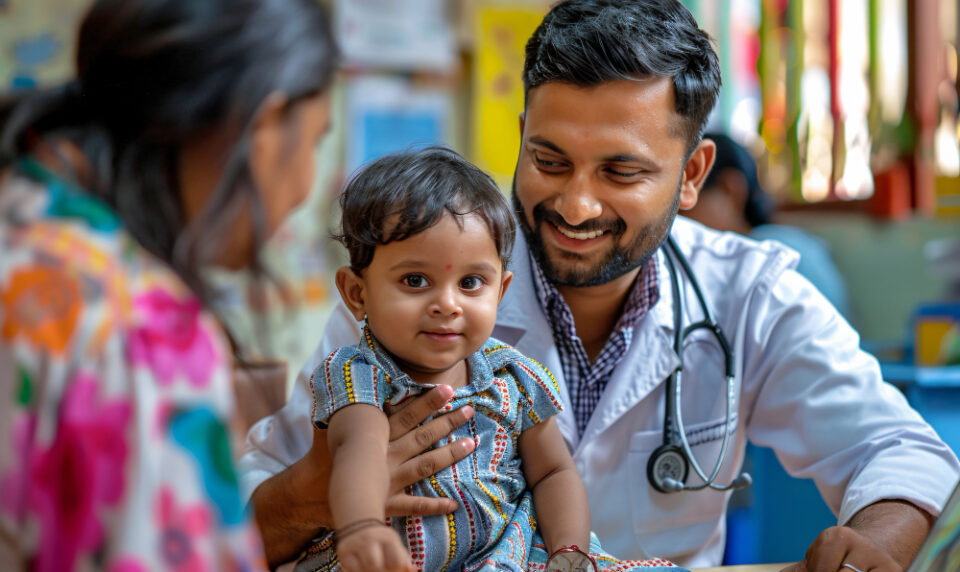
In many Indian homes, there was once only one man who could walk into a sleeping patient’s bedroom at midnight without causing alarm. The family doctor. He arrived on a scooter that sounded older than the Constitution, carrying a black bag containing a stethoscope, a thermometer and enough mystery to convince children that injections multiplied inside it after sunset. He knew who was allergic to penicillin. He also knew who was allergic to daughters choosing their own husbands.
The family doctor occupied a peculiar position in Indian society. Part physician, part counsellor, part detective and part keeper of inconvenient truths. He knew which grandfather’s diabetes disappeared temporarily whenever laddus arrived, which uncle had “quit smoking” every January and restarted every February, which child hid antibiotics behind flowerpots, and which patient’s blood pressure rose specifically while opening hospital bills. He knew who had hypertension and who merely had sons preparing for engineering entrance examinations.
Most importantly, he understood that people rarely arrived carrying only disease. They arrived carrying lives. A woman was not hypothyroid but a schoolteacher caring for ageing parents while worrying about her daughter’s future. An elderly man was not osteoarthritis but a retired railway employee whose knee pain mysteriously worsened whenever his sons discussed selling the ancestral house. A teenager with stomach pain occasionally carried not appendicitis but examination season. People did not experience illnesses in organs. They experienced them in their lives.
This is perhaps what younger generations may find difficult to imagine. The family doctor often recognised depression before the vocabulary reached small towns. He understood grief before questionnaires. He knew anxiety long before it introduced itself as panic disorder. He understood that loneliness could present as fatigue and sleeplessness could occasionally have less to do with melatonin than with unpaid loans. He recognised when a patient saying, “I’m fine,” meant precisely the opposite.
Then India changed. Joint families became nuclear families. Cities expanded. Healthcare specialised. Medicine performed miracles that would have looked like mythology a generation ago. Tiny premature babies survived. Blocked arteries reopened before lunch. Joints were replaced. Tumours were mapped with astonishing precision. Artificial intelligence entered diagnostic rooms. This progress deserves admiration. It also arrived carrying unintended consequences.
Today, one doctor manages diabetes. Another supervises the kidneys. Someone else monitors the heart. Another examines the eyes. The dermatologist protects the skin. The dentist rescues teeth. The psychologist guards the mind. The body has become a committee meeting. Everybody knows one room of the house. Nobody necessarily knows the family living inside it. Occasionally, specialists debate whose organ is responsible for the problem while the patient sits quietly between them, wondering whether he is a human being or a disputed territory.
Patients now carry thick folders tied together with rubber bands. Reports. Scans. Prescriptions from multiple hospitals. Every consultation begins with introductions. “What medicines are you taking?” “Any allergies?” “Any surgeries?” Patients occasionally look puzzled. “But Doctor, haven’t I already told this?” They have. Just not to this doctor. One of the great unnoticed losses in modern healthcare is the disappearance of being known. Being known is medically useful. It is also profoundly human. Three minutes is enough time to read a report. There has never been enough time to read a person.
The family doctor possessed another skill now approaching extinction. He knew when to do nothing. Few sentences have prevented more unnecessary panic than these: “It will settle.” “Nothing serious.” “Let’s wait.” “Go home.” Modern medicine celebrates intervention. The family doctor often celebrated restraint. Health systems built on strong primary care show lower costs and better outcomes. Continuity of care itself reduces mortality. A consistent relationship with one physician can lower the risk of death by nearly one-fifth. It does not appear on invoices. Neither does reassurance. Insurance companies cannot bill elegantly for common sense.
Years ago, a patient entered my clinic carrying a file thick enough to qualify as literature. After carefully reviewing the reports, he looked at me and asked, “Doctor, what do you think?” Not, “What is my diagnosis?” Not, “Which test next?” It remains one of the most beautiful questions in medicine because it seeks more than expertise. It seeks judgement, perspective, memory, kindness and a place to rest one’s fears. Of course, nostalgia edits generously. Family doctors made mistakes. Diseases were missed. Diagnostic tools were limited. Sometimes the reassuring “It will settle” proved wrong. The answer is not abandoning modern healthcare and returning to the era when thermometers lived beside pickle jars, and injections cured everything from fever to disappointment.
The answer lies elsewhere. Modern medicine has information. The family doctor had context. Modern medicine knows kidneys. The family doctor knew why the kidneys mattered. Modern medicine knows cholesterol values. The family doctor knew that the patient had buried his wife three months ago. Even today, elderly patients occasionally walk into clinics and say, “Doctor, you treated my father. Then my mother. Then my husband. Now it is my turn.” Three generations. Different illnesses. The same trust.
We have built the most sophisticated medical system in history. Reports remember numbers. Hospitals remember visits. Insurance companies remember claims. The family doctor remembered stories. Yet many patients still carry a quieter suffering for which there is no billing code: the loneliness of being expertly managed and profoundly unknown. Perhaps people never merely wanted someone who recognised diseases. They wanted someone who recognised them. The family doctor did not merely treat illness. He reminded people that before they were diagnoses, they were people. And perhaps that, too, was medicine.
I have written a book.
If this blog spoke to you, the book will stay with you longer.

2 comments
Interesting article
Thank you sir