
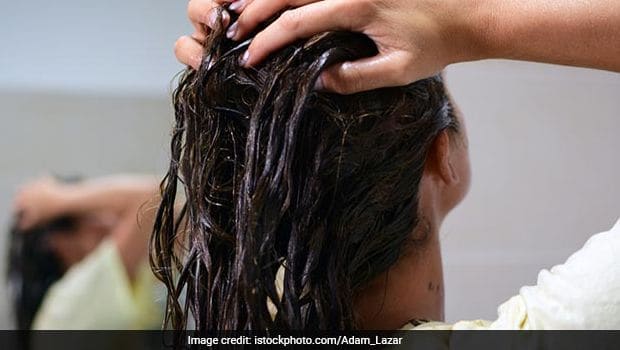
The beauty industry has a remarkable talent for making us feel that our hair is one emergency away from collapse. Every month, there is a new bottle, a new molecule, a new promise and a new celebrity with hair that appears to have signed a contract with gravity. Somewhere between keratin therapy, peptide masks and probiotic conditioners, we simply forgot a deliciously inconvenient fact. One of the oldest hair conditioners in human history was not invented in a laboratory. It was discovered by accident, in a pot of milk that somebody forgot to throw away. Fermentation, it turns out, may have been the first beauty influencer.
No civilisation deliberately invented curd. They merely discovered that milk left alone developed a second life. Ancient Indians ate it. People across the Middle East applied fermented milk to dry hair. In many Sikh households too, particularly before commercial shampoos became common, curd found a place among simple, home-based methods of caring for long hair, alongside oils and herbal preparations. Nobody spoke of proteins, probiotics or scalp microbiomes. They simply noticed something medicine has learned to respect over the centuries. When the same humble remedy survives in different cultures that never exchanged beauty tips on Instagram, it deserves curiosity before dismissal.
As a physician, I have become suspicious of remedies that promise miracles and respectful of those that promise very little. The miraculous ones usually disappear within a few years. The modest ones silently survive for centuries. Curd belongs to the second category. It does not claim to regrow hair on a polished scalp or reverse thirty years of genetics over a lazy Sunday afternoon. It merely whispers, “I can make damaged hair behave a little better.” Medicine has taught me that whispers often outlive advertisements.
The real hero is fermentation. Tiny bacteria convert milk sugar into lactic acid, transforming ordinary milk into something chemically far more interesting. Long before microbiologists gave these bacteria Latin names, village kitchens were cultivating them every night in clay pots and steel vessels. The funniest part is that modern cosmetic science now advertises “fermented beauty technology” as though it arrived on the last flight from Seoul. Every Indian grandmother reading the label would probably nod politely and continue setting curd for tomorrow.
Now for the science that rarely escapes the dermatology textbook. Your scalp is not an empty patch of skin waiting for shampoo. It is an ecosystem crowded with billions of microscopic residents. Some microbes protect you. Others misbehave when the balance changes. Imagine a crowded Indian railway station at peak hour. As long as everyone follows the rules, the system somehow works. One small disruption and chaos spreads quickly. The scalp behaves in much the same way. Curd cannot magically cure dandruff or scalp disease, but its mildly acidic nature and fermentation products may help create conditions that are kinder to the scalp than repeated exposure to harsh alkaline cleansers. Sometimes health is less about killing enemies and more about restoring neighbours.
Hair itself has an even bigger surprise waiting. The strand you lovingly oil, colour, straighten, and photograph is biologically dead. Every compliment your hair receives is accepted by tissue that has no blood supply, no nerves and absolutely no opinion about your hairstyle. What matters is its architecture. Under a microscope, healthy hair resembles overlapping roof tiles. Heat, pollution, excessive washing and chemical treatments lift those tiny scales, making neighbouring strands rub against one another like rough sandpaper. Lactic acid gently smoothens the surface, while milk proteins and fats temporarily coat the shaft, reducing friction. That is why hair often feels softer after a curd wash. It is not being fed. It is being polished.
Many patients ask me the wrong question. “Doctor, will curd make my hair grow?” Hair growth is decided far below the scalp, inside living follicles influenced by genes, hormones, nutrition, sleep and overall health. Curd cannot negotiate with your DNA. The better question is, “Can it reduce damage?” There, the answer is more encouraging. Hair that breaks less naturally appears longer and fuller over time. Sometimes the greatest secret behind long hair is not extraordinary growth but ordinary survival. Hair, like good friendships, often lasts because it is handled gently.
I remember a young entrepreneur who entered my clinic with a shopping bag full of expensive hair products. She had a shampoo for oily days, another for dry days, a serum for mornings, a mask for weekends and a spray that promised “molecular repair”. Yet every time she combed her hair, the brush looked as though it had collected evidence from a crime scene. We corrected her iron deficiency, improved her diet and simplified her routine. I also suggested applying curd weekly before shampooing. A month later, she smiled and said, “Doctor, for the first time, my comb has nothing interesting to report.” That remains one of my favourite clinical definitions of healthy hair.
Of course, curd has one undeniable personality flaw. It smells exactly like curd. Fortunately, so does common sense. A thorough rinse, followed by a gentle shampoo if necessary, usually removes the odour. A final rinse with diluted lemon water leaves the hair fresh without disturbing its softness. The irony is delicious. The same fermentation responsible for the smell is also responsible for much of the chemistry that makes curd useful. Nature has always insisted that a little inconvenience is a reasonable price for authenticity.
Every generation believes it is discovering something new. Then research simply opens an old kitchen cupboard and realises somebody’s grandmother had arrived there much earlier. That does not mean every traditional remedy deserves blind faith, nor does every modern product deserve suspicion. The wisest path lies somewhere between the laboratory and the kitchen. One gives us evidence. The other gives us experience. When both point in the same direction, it is worth paying attention. A bowl of curd sitting beside a comb may never become a museum exhibit or a luxury cosmetic, but it carries a lesson civilisation keeps relearning: the greatest breakthroughs are not always new. As doctors, we trust evidence. As students of history, we occasionally discover that evidence arrives a few centuries after experience.

28 comments
very useful information sir. i shall share with my family. they are attracted by too much by synthetic products. Thanks sir
thank you
ಒಳ್ಳೆಯ ಮಾಹಿತಿ ನೀಡಿದಕ್ಕಾಗಿ ಧನ್ಯವಾದಗಳು ಸರ್
THANK YOU
Thanks a lot for useful information
Sir
you are welcome
ಒಳ್ಳೆಯ ಮಾಹಿತಿ ನೀಡಿದಕ್ಕಾಗಿ ಧನ್ಯವಾದಗಳು ಸರ್
thank you madam
thank you, madam
A wonderful article in present situation nityanna.thanks
thank you pinki, for your feedback
Doctor after reading your article i tried it.
“Curd wash in hair was amazing” i can see the difference now
Thanks for your wonderful tips!
wow. thanks for the feedback
Good information.
thank you
Useful information doctor
thank you madam
[…] Also Read: Curd wash in hair care […]
[…] Also Read: Curd Wash in Hair Care […]
I wanted to know whether curd makes our hair white?
no. curd is good for hair
[…] Also Read: Curd in hairwash […]
[…] Also Read: Curd Wash in Hair care […]
[…] Hair […]
Excellent read, I just passed this onto a colleague who was doing some research on that. And he actually bought me lunch because I found it for him smile So let me rephrase that: Thanks for lunch!
[…] scientific studies have explored the potential benefits of curd for scalp psoriasis, and the findings are promising. Here are some key mechanisms by which curd may help alleviate the […]
Great information Dr 👍🙏 Never knew about its benefits! Will surly try it out !
thank you madam