
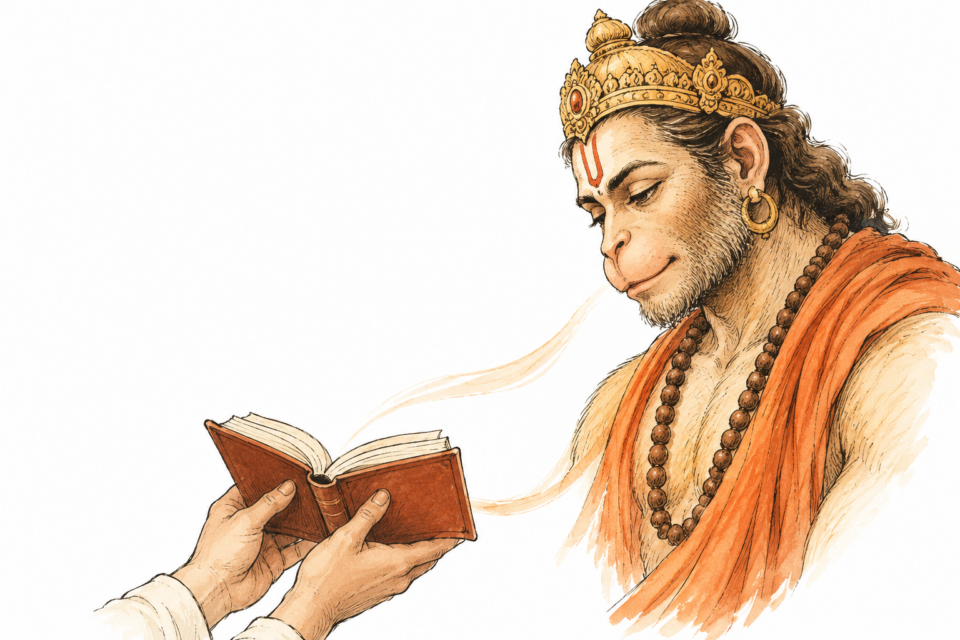
A medical report can weigh less than ten grams and still become the heaviest thing in a house. Someone studies the numbers. Someone consults Google, which has never been famous for its bedside manner. Somewhere nearby, another person begins the Hanuman Chalisa. The words cannot change what the laboratory found. But they may change how a family gets through the evening.
As a physician, I take that evening seriously. A diagnosis enters a household with more than its medical consequences. It rearranges sleep, conversations, spending and the meaning of tomorrow. Treatment addresses the illness; the person must also live through everything the illness has stirred up. In that difficult territory, a familiar prayer can become a source of companionship and courage.
Captain Smit Machchhar recently described such courage under extraordinary circumstances. Injured during the flydubai cockpit attack, he managed to open the door so others could intervene. Later, he told Prime Minister Narendra Modi that he had recited the Hanuman Chalisa during the ordeal. He also said he recited it at home with his young son on his lap.
That last detail brings the story to a close. Before the prayer accompanied danger, it accompanied a child. We cannot reconstruct what happened inside the captain’s mind. He understood his survival as divine grace. But his account suggests something worth considering: ordinary mornings may give us resources whose importance becomes apparent only when ordinary life disappears.
The Chalisa’s opening is surprisingly hospitable to human weakness. Traditionally attributed to Tulsidas, the hymn has forty central verses, framed by opening and closing couplets. Before praising Hanuman’s strength, the speaker acknowledges his own limitations and asks for bal, buddhi, vidya—strength, discernment and knowledge. You are allowed to arrive needing help.
Those three requests deserve to be heard together. Fear can supply enormous energy and terrible direction. Anyone who has spent midnight examining a harmless-looking mark with a mobile-phone torch knows this. Strength helps us act; judgment helps us choose the action; knowledge helps us understand what we are facing. My reading of the invocation is that courage needs all three.
An equally arresting image comes before it: the mind as a mirror that needs cleaning. Anxiety can leave that mirror reflecting only catastrophe. A delayed result becomes a terrible result. A doctor’s pause becomes an announcement. The image invites a question: before we decide what the future holds, how clearly are we seeing the present?
Science offers one modest clue about recitation. In a 2001 BMJ study, twenty-three healthy adults reciting the rosary or a yoga mantra slowed their breathing to approximately six breaths a minute, with changes in cardiovascular rhythms and reflex regulation of blood pressure. The study did not examine the Hanuman Chalisa. It showed that rhythmic recitation can have measurable physiological effects.
That is interesting without exaggeration. Claims about guaranteed brain rewiring or special healing frequencies run ahead of reliable evidence. A more plausible possibility is that comfortable rhythm helps organise breathing while familiar words give attention somewhere to return. Fear keeps rehearsing an uncertain future; recitation offers a known sequence, one line after another.
Yet a devotee is doing more than managing attention. Someone is being addressed. The words may also carry a mother’s voice, a grandfather’s morning routine, a room in which one once felt safe. We should leave room for that meaning. A physiological account of prayer can illuminate an experience without explaining away the relationship at its heart.
The same forty verses may meet us differently at different points in life. We may begin by asking Hanuman to remove a difficulty; later, we may ask for the courage to face it. Gradually, the prayer may draw our attention towards someone else’s suffering, and strength becomes something we hope to offer, rather than merely receive. These are not ranks of devotion: grief can send even a seasoned devotee back to the simplest plea for help. But a profound spiritual possibility lies here. The words remain the same while our understanding of what we are asking for grows—from protection for ourselves towards the capacity to serve.
The physician’s question, then, extends beyond whether someone feels calmer while reciting. What becomes possible afterwards? Can they attend the examination they have been avoiding? Listen to the treatment plan? Accept assistance? Hanuman’s strength repeatedly finds expression in service. Perhaps that is a useful measure of the practice: the capacity it leaves us with to care and act.
For someone who wishes to recite, I would suggest learning the meaning, keeping a comfortable pace and allowing the practice into ordinary days. No spiritual prize comes from finishing fastest. Nor does continued anxiety indicate failed devotion. People who pray still suffer; their suffering says nothing about the sincerity of their faith.
The report remains on the table. It needs a doctor’s attention. The frightened person beside it needs attention too.
Forty verses cannot promise what tomorrow will bring. They may help someone make the telephone call, keep the appointment, sit beside a loved one, and remain present for the life that still needs them tonight.
