
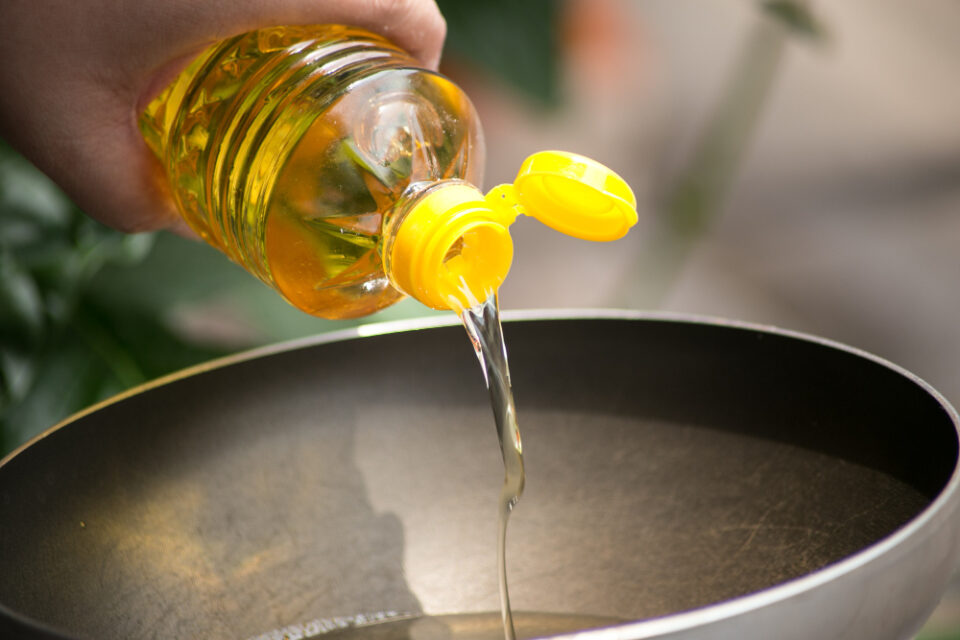
“Doctor, we always use olive oil. From abroad,” says Zainab. The last two words seem to require passport verification. Anita buys cold-pressed oil. Lovely Kaur’s mother-in-law sends mustard oil from Haryana. Nayana Pai accepts coconut oil only from K.V. Prabhu’s shop back home in Mangalore. “Oorina enne maatra.” Only hometown oil. Bangalore can treat her ailments, but its cooking oil remains suspect.
Sunita prefers groundnut oil because she likes the nutty flavour. A refreshingly uncomplicated relationship: she enjoys it, she buys it. Then Anju Varma says, “I am health-conscious. Cholesterol-free sunflower oil.” In my consulting room, these remarks reveal how differently people purchase reassurance. Some trust a process, some a country, some a shop. Lovely has something stronger than a quality certificate: her mother-in-law knows where it came from.
I understand these loyalties. For a coastal person, coconut oil’s fragrance can bring home into a kitchen before lunch is ready. Mustard oil carries a different geography. Advising a change can sound like questioning the competence of generations of women who fed the family perfectly well. Yet the grandmother whose cooking we remember also had a life we may not have inherited. We have preserved her tempering technique more faithfully than her daily movement.
Anju’s remark offers the most useful place to begin. Pure plant oils contain no cholesterol—including coconut oil. But a cholesterol-free oil can still raise blood cholesterol. The liver manufactures cholesterol, and saturated fat can raise LDL partly by reducing its clearance from the bloodstream. The problem need not arrive ready-made in the bottle. A label describes the product; a blood report describes what the body did with it. They are answering different questions.
That distinction changes the consultation. Instead of merely asking which oil somebody buys, I want to know what changed when they began buying it. Did it replace another fat, or join it? Did the reassuring label loosen the pouring hand? Are we discussing home cooking while overlooking restaurant meals? A bottle can be carefully chosen while the diet remains almost unexamined. The patient has brought the oil’s credentials; I need its working conditions.
Quantity is particularly easy to misjudge. A teaspoon of oil supplies roughly forty calories; a tablespoon about three times as much. Both can disappear into the same pan without altering the cook’s description: “Just a little.” This is not dishonesty. It is what happens when an invisible ingredient meets an unmeasured gesture. Before spending more on the bottle, spend a week using a spoon. It may reveal more than another hour of research.
Coconut oil deserves the same precision. A 2020 analysis of sixteen trials found that it raised LDL by about 10 mg/dL compared with non-tropical vegetable oils. The result does not outlaw a familiar flavour. It challenges the claim that generous coconut oil use is a heart-protection strategy. Nayana’s trusted supplier may provide excellent coconut oil; supply quality does not change the fatty acids. A sincere shopkeeper cannot negotiate with a molecule.
Nor should fear drive the choice. The claim that omega-6 fats inevitably cause inflammation sounds impressive when accompanied by arrows and a worried man pointing at a sunflower. But a review of fifteen randomised trials in healthy people found virtually no evidence that increasing linoleic acid, a major omega-6 fat in vegetable oils, raised inflammatory markers. A plausible biochemical story is the beginning of an investigation, not its conclusion. The arrows still have to survive contact with people.
More recently, a 2025 study of 221,054 American adults estimated that replacing ten grams of daily butter with plant oils was associated with 17% lower mortality risk. It was observational research, not a prescription promising extra years. Its useful lesson is the substitution. Olive oil added to an unchanged butter-rich diet is a different arrangement. Nutrition advice frequently reaches the kitchen with its most important verb missing. We remember what to buy and forget what it was meant to replace.
Another verb is worth remembering: discard. Repeatedly heating frying oil promotes oxidation and generates harmful compounds; ICMR–National Institute of Nutrition advises avoiding repeated use. Adding fresh oil to an old batch does not undo the damage. Prepare smaller batches, deep-fry less often, and avoid heating oil until it smokes. The leftover bajji oil has completed its assignment. It need not become a permanent member of the household.
For everyday cooking, choose a reputable oil suited to the dish and budget, generally favouring oils rich in unsaturated fats. Groundnut, sunflower and olive oil are among the reasonable options. Cold-pressed describes extraction; imported describes travel. Neither measures the pour. Different oils may serve different dishes, but rotating bottles will accomplish little if the quantities remain generous. Your kitchen needs a usable routine more than a championship winner.
So I would keep Sunita’s pleasure in flavour, Zainab’s preferred bottle and Nayana’s connection to home. I would give the measuring spoon a promotion. It costs little, has no celebrity endorsement and asks an awkward question every time the bottle tilts. The danger of a reassuring label is that it can silence that question. Even a healthy oil becomes a problem when “healthy” becomes your excuse to pour more.
