
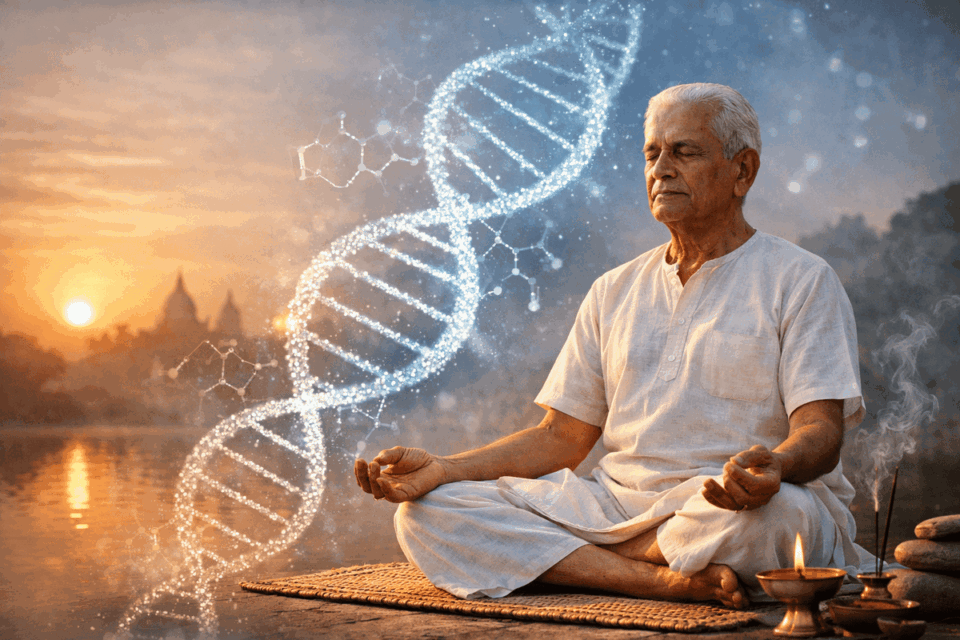
He did not come announcing discipline. He came announcing his age.
Seventy-six, retired schoolteacher, slim without looking fragile, upright without stiffness. He sat down the way people sit when they have nowhere else to rush. When I asked what brought him, he smiled and said he had no complaints. He had come because he believed doctors should occasionally see people who are doing well, not only those who are sick. It was said without irony.
Medicine is trained to manage risk. This man had spent his life managing signals.
Family history, however, told a different story. Diabetes ran through his family like a stubborn habit. Hypertension had claimed its share. Coronary disease, cancers, the usual list that fills outpatient files and fuels preventive advice. The kind of genetic background that modern medicine flags early and watches nervously, with numbers, warnings, and follow-ups. And yet here he was, six decades later, carrying the same genes and almost none of their consequences.
When I asked how, he did not offer philosophy. He offered memory.
At sixteen, he had met an ascetic who taught him pranayama and yoga. Not a course. Not a workshop. A way of living. Three hours every day. No holidays from it. No excuses made for weddings, examinations, or grief. “I never stopped,” he said, as if that sentence needed no emphasis. Sixty years of daily practice turn effort into habit and habit into identity. There is no drama left in it.
His food was simple. He did not describe it as clean, organic, or therapeutic. Just simple. Meals at fixed times. Hunger allowed to arrive. Fullness is allowed to end the meal. No snacking to fill boredom. No eating to reward stress. Food was fuel, not entertainment, not medicine, not a moral statement.
His wife died last year. He mentioned it the way one mentions the weather that passed through and changed the season. There was sadness, yes, but no collapse. He continued his practice the next morning. Not to escape grief, but to hold himself steady inside it. That distinction matters more than it sounds.
He does not own a mobile phone. Both children live abroad. He spends long hours alone. And yet he does not carry the restless loneliness that so many younger people bring into the clinic. His nervous system appears to have learned something early: how to feel safe without constant stimulation.
We know more than this man ever did. We read more. Measure more. Track more. And yet we struggle to sustain even a fraction of what he never questioned.
When such patients walk into my consulting room, they do not trigger awe. They trigger curiosity. Because they quietly challenge one of medicine’s most comfortable beliefs that genes decide fate.
Genes do not decide. They respond.
They respond to the chemical environment in which they live. Stress hormones, inflammatory signals, sleep rhythms, blood sugar swings, breath rate, and emotional vigilance all act like switches. They tell genes when to speak loudly and when to stay quiet. This is not mysticism. It is measurable biology.
If one marker explains much of this man’s life, it is cortisol.
Cortisol is not the enemy. It is a necessary hormone that helps us respond to a threat and then return to baseline. The problem begins when it never truly goes down. Chronic stress keeps cortisol elevated, nudging genes toward inflammation, insulin resistance, vascular stiffness, and accelerated ageing. The body stops repairing and starts defending.
Slow, sustained breathing lowers baseline cortisol. Long-term practice trains the stress response to rise only when needed and to settle quickly when it is not. Over the years, these matters have been more important than any single intervention. A body that knows how to return to baseline does not keep shouting instructions at its genes.
Most research studies yoga and meditation for weeks or months. Occasionally for a year. This man ran a sixty-year experiment. No funding. No ethics committee. No publication. But the data walked into my clinic, breathing steadily, blood pressure normal, gait unhurried.
Over the last two decades, I have met a few like him. Not many. Enough to recognise a pattern. Retired teachers. Farmers. Temple caretakers. Men and women who discovered discipline early and never negotiated with it later. Their lives were not free of sorrow. Their bodies were free of chaos.
The common thread is not spirituality. It is nervous system stability.
Modern life trains vigilance. Notifications, deadlines, comparisons, financial anxiety, and social performance. The body learns to expect a threat even when none is present. Genes that evolved to respond briefly to danger now stay switched on for years. Inflammation becomes background noise. Repair waits its turn and often never gets it.
Yoga and meditation do not remove stress. They change how the body processes it.
Long-term practitioners show calmer baseline brain activity. Their stress response rises when needed and settles without drama. This flexibility is rarely discussed, yet it determines everything from metabolic health to emotional resilience. The goal is not calmness. It is recoverability.
There are small observations that rarely make headlines. Breathing patterns influence gene expression related to inflammation. Regular meditation correlates with slower cellular ageing markers. Consistency matters more than intensity. Twenty minutes a day for decades alters biology more reliably than a brief, heroic effort.
No prescription I write can reproduce sixty uninterrupted years of practice.
The retired teacher did not look younger than his age. He looked appropriately aged. That itself is becoming rare. Age without bitterness. Lines without collapse. Muscles without fear. He did not speak of longevity. He spoke of continuity.
Medicine often arrives late, trying to repair damage already done. Yoga and meditation arrive early, reducing the need for those repairs. They do not fight genes. They negotiate with them, quietly, daily, without urgency.
When he stood up to leave, he thanked me for listening. His posture remained unchanged as he walked out. Nothing dramatic happened. No lesson was announced.
Some people inherit good genes. A few learn how to speak to them.
I have written a book.
If this blog spoke to you, the book will stay with you longer.

4 comments
60 years habit is mine blowing
yes. thanks for reading
Practicing yoga for 60 years is mind bogling, superb article
thank you