
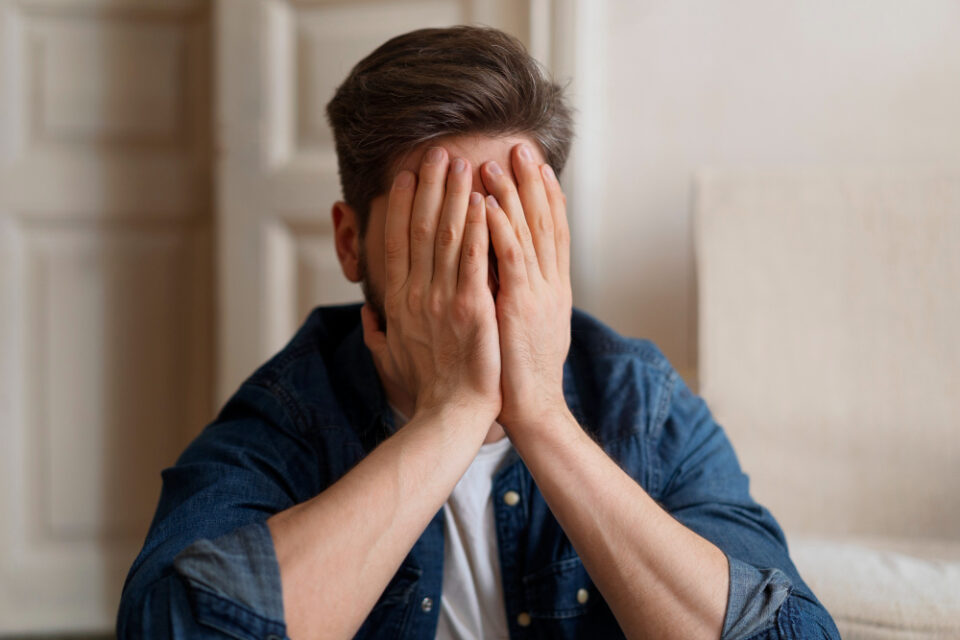
There are questions patients ask me openly, like “Doctor, what should I eat for diabetes?” and “Which oil is best for my hair?” Then some questions hover in the room but never come out, like a mosquito in the dark. Masturbation sits right at the top of that secret list. You can see it in the way a young man shifts in his chair, clears his throat, and asks about “weakness.” Weakness, in our clinics, is rarely about muscles—it’s usually about guilt.
I still remember a nervous 22-year-old who came to me, trembling as though he was confessing a crime. “Doctor, I think I am ruined,” he said. I asked what terrible accident had happened. He said, “I have been… doing that thing… alone.” He used no word, but his eyes said it all. He expected thunderbolts, a lecture, maybe a diagnosis of doom. Instead, I offered him a glass of water and told him, “Relax, you are not alone. Ninety per cent of men your age do this. The other ten per cent lie.” The poor fellow laughed for the first time in weeks. Relief sometimes comes not from a medicine but from a sentence.
The problem is not the act but the myths that wrap around it like vines around a tree. In India, masturbation has been blamed for everything from hair loss to memory loss, from weak eyes to weak morals. One patient told me his grandmother warned him that semen is “more precious than blood” and that losing even a drop will drain his life. I told him gently that semen is not petrol and he is not a leaking scooter. Ayurveda does value semen, yes, but it does not condemn masturbation to the fires of hell. Like all things, it is about balance.
In Ayurveda, when someone feels drained after too much indulgence, the remedy is not shame but nourishment. A glass of warm milk with ghee, a handful of soaked almonds, or a date at night is considered shukra-bala vardhaka, strength-restoring. Gentle yoga, breathing practices, and a calm mind restore balance quicker than any tonic from a roadside quack. Sexual energy, when respected, doesn’t weaken—it transforms. After all, a flame can either burn down a hut or light a lamp; it depends on how you hold it.
Science is kinder than society. Modern research shows that masturbation does not cause infertility, blindness, or madness, though those three continue to dominate WhatsApp forwards. In fact, it may reduce stress, help sleep, and even lower prostate cancer risk in men. For women—who are often excluded from this conversation—it can improve sexual awareness, lubrication, and body confidence. Yet in our culture, women rarely even admit it. One young woman once confessed to me with great embarrassment, “Doctor, is this something only bad girls do?” I asked her, “Did you need a certificate from anyone to breathe? Then why for this?” She smiled with tears. Sometimes, permission is the best prescription.
Ayurveda, of course, sees the body through doshas and dhatus. Semen, or shukra dhatu, is considered the essence, produced after all other tissues are nourished. Too much indulgence can deplete it, leading to fatigue, anxiety, or lowered vitality—just as overeating sweets can disturb kapha or excessive travel can aggravate vata. Moderation is the key. A river that flows gently nourishes; a flood destroys; a drought dries the land. The art of living is not in extremes but in balance.
I often tell my young patients: masturbation is like drinking coffee. A little can refresh you, too much can make you jittery, and none of it is worth a lifetime of guilt. One college student came with dark circles, convinced they were the result of “overdoing.” I asked him about his daily routine. He stayed up till 2 a.m. binge-watching cricket highlights, survived on Maggi, and barely stepped into sunlight. Yet he blamed his guilt, not his lifestyle. I told him, “Your problem is not in your hand, it’s in your plate and your pillow.” The dark circles faded when his schedule improved, not because he stopped, but because he slept.
Cultural myths, however, have a long life. An elderly uncle once told me proudly, “In my youth, boys who touched themselves became weak. That’s why we were so strong!” I asked gently, “Uncle, then why did you need spectacles at 40? Why did you lose your teeth by 50? Why do you take sugar tablets now?” He laughed. It is easier to blame young boys’ habits than to admit to a bad lifestyle. We humans are great myth-makers because myths explain what science has not yet reached, and they keep elders in control of the young.
Yet guilt is the heaviest disease I see. One boy came with severe anxiety, convinced that he had wasted away. He had visited quacks who charged him thousands, prescribing tonics to “restore lost semen.” His fear was not of disease, but of shame. I told him, “You are fine. The only thing you lost was money.” He laughed, and that laughter was his medicine. Fear sells faster than facts, but facts heal better than fear.
What then should one do? The advice is simple. If it does not interfere with your work, studies, relationships, or health, it is not a problem. If it becomes compulsive, if you cannot control the urge, if it leaves you drained and distracted, then it needs attention—not condemnation, but balance. Ayurveda suggests nourishing foods, good sleep, yoga, and brahmacharya in its true sense, which is not denial but mastery. Real strength is not in never indulging, but in never being enslaved.
I often reflect that masturbation is less about biology and more about psychology. The act itself is natural, but the guilt surrounding it is cultural. In my OPD, I have seen more harm from the guilt than from the act. A body can recover from a release, but a mind shackled with shame carries wounds that fester. If culture had been kinder, half my counselling sessions would be unnecessary.
Is masturbation harmful? The real harm lies in myths, secrecy, and guilt. A habit in moderation is rarely a disease; an obsession always is. Ayurveda teaches balance, modern science teaches evidence, and life teaches laughter. When a patient asks me about it, I do not prescribe pills. I prescribe perspective.
One hand cannot ruin your life, but too many myths can.
