
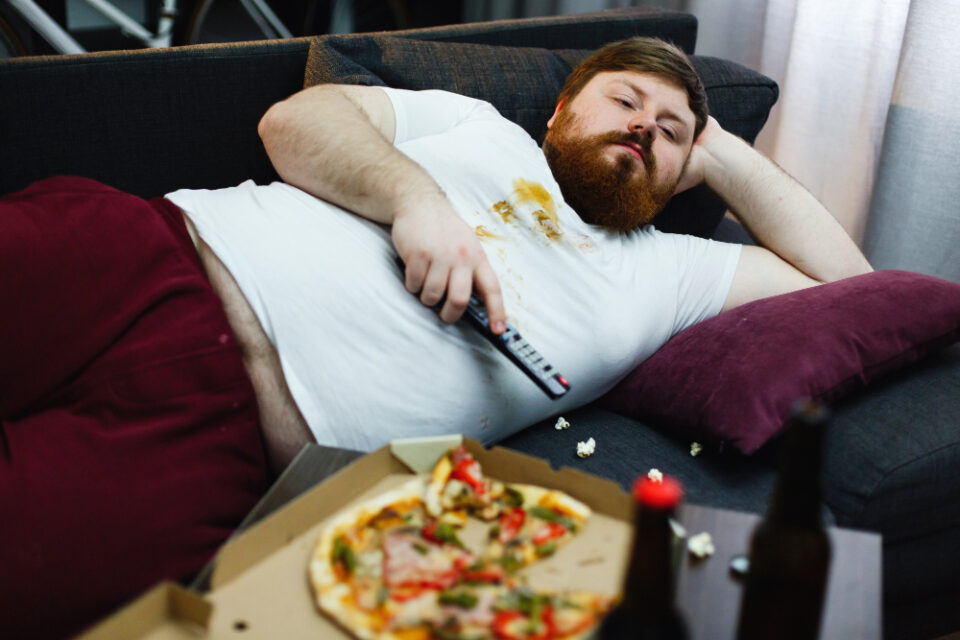
For three months, a patient of mine searched his kitchen for the four kilograms he had gained. He interrogated rice, dismissed sugar and arrested the banana. He removed ghee without trial. His dinner became so disciplined that even the cucumber looked nervous. Still, his waist expanded. The real culprit was not sitting on his plate. It was lying, unused, on his pillow.
He had begun sleeping one hour less each night after taking charge of a difficult project. Dinner ended by nine, but work continued past midnight. Somewhere between the final email and sleep, he would drink tea, finish two biscuits, rescue a handful of namkeen from becoming stale and inspect the refrigerator with the seriousness of a customs officer. None of this entered his memory as eating. In his account, the day had only three meals. His body, being less sentimental about bookkeeping, had recorded everything.
That is how lost sleep often becomes weight. It does not happen dramatically or overnight. It returns through a sweeter coffee, a larger breakfast, an abandoned walk, a second helping and the mysterious cashew that repeatedly finds its way into the mouth. One hour disappears from the night. By evening, it has come back disguised as hunger.
One lost hour will not make anyone obese. Bodies do not issue instant punishment slips. But when seven hours repeatedly become six, the effects begin to accumulate. Sleep shortage can increase appetite, sharpen cravings, reduce insulin sensitivity, weaken self-control around food, and leave more waking time for eating. It may also reduce the small movements that quietly spend energy throughout the day. The missing hour does not contain calories. It recruits them.
A tired brain is not a wise restaurant customer. After adequate sleep, dal, vegetables and curd can make a convincing case. After a short night, the brain wants food that arrives fast and glows slightly: biscuits, chips, sweets, bakery items and anything fried within smelling distance. Reward centres become more responsive to calorie-dense food, while the systems responsible for judgement become less effective. Desire grows louder just as restraint begins to yawn.
Hormones play a role, but the popular story that poor sleep simply increases ghrelin and decreases leptin is too tidy for human biology. Findings vary across studies. What remains remarkably consistent is behaviour. Sleep-restricted people often report greater hunger and stronger cravings, and many consume more calories when food is freely available. The body may not produce a polite stomach growl. It may create a sudden conviction that four gulab jamuns are emotionally necessary.
A young software engineer once told me that her eating discipline collapsed every Saturday. Her weekend breakfast could have fed a small audit department. We traced the collapse backwards. From Monday to Friday she slept around five and a half hours, conducted meetings across time zones and carried fatigue with professional elegance. By Saturday, she was not celebrating the weekend. She was paying for five nights of biological arrears with masala dosa, coffee, and dessert.
Controlled experiments reveal the same pattern without requiring a dosa. In one study, sleep-restricted adults consumed considerably more food, especially during late-night hours, and gained weight. Their energy expenditure did not rise enough to cancel the extra intake. This is the important arithmetic. Sleep loss does not always dramatically slow metabolism. It often does something much simpler: it gives hunger more hours in which to find you.
The abdomen may be especially interested in this arrangement. A randomised crossover study found that restricted sleep increased calorie intake, weight and abdominal fat, including visceral fat stored around internal organs. The scale therefore tells only part of the story. Two people may gain similar weight while one accumulates more metabolically troublesome fat. When sleep is repeatedly shortened, the waist sometimes keeps a more honest diary than the weighing machine.
Poor sleep also alters the way the body handles glucose. Cells may respond less efficiently to insulin, forcing the body to work harder after meals. Over time, this becomes more concerning in someone with abdominal obesity, prediabetes, polycystic ovarian syndrome or a strong family history of diabetes. The late-night biscuit is therefore not acting alone. It has acquired accomplices: fatigue, impaired judgement and altered glucose handling.
Then there is movement. One businessman assured me that sleep could not explain his weight because he still exercised every morning. His watch confirmed thirty disciplined minutes. It also revealed the remaining day: fewer steps, longer sitting and several journeys of impressive brevity completed by car. Exercise had survived, but ordinary movement had disappeared. The body had balanced the account by conserving energy elsewhere, like a household switching off lights after buying a chandelier.
The reverse is equally revealing. In a real-world clinical trial, adults who were overweight and usually slept fewer than six and a half hours received personalised sleep advice. They extended sleep by about 1.2 hours and consumed roughly 270 fewer calories a day, without being prescribed a diet or exercise programme. Sleep did not melt fat by magic. It removed some of the hunger, opportunity, and impulsiveness that had been quietly contributing to weight gain.
The practical treatment begins before the pillow. Keep a steady waking time, then move bedtime earlier by fifteen minutes every few nights. Finish dinner two or three hours before sleep. Dim the house, reduce late caffeine and place the phone where reaching it requires enough effort to restore civilisation. If hunger appears at eleven, pause before obeying it. Physical hunger usually accepts a simple meal. Late-night screen hunger tends to negotiate for something crisp, sweet or delivered by motorcycle.
Persistent snoring, choking during sleep, morning headaches, or severe daytime sleepiness warrant medical assessment, particularly when weight is increasing, because sleep apnoea can worsen metabolic problems. Diet matters. Exercise matters. But sleep stands quietly behind both, influencing what you crave, how much you eat and whether you move. My patient began going to bed forty-five minutes earlier. Within weeks, his nightly inspection of the refrigerator had ended. The refrigerator had not changed. It had simply lost an hour of opportunity.
