
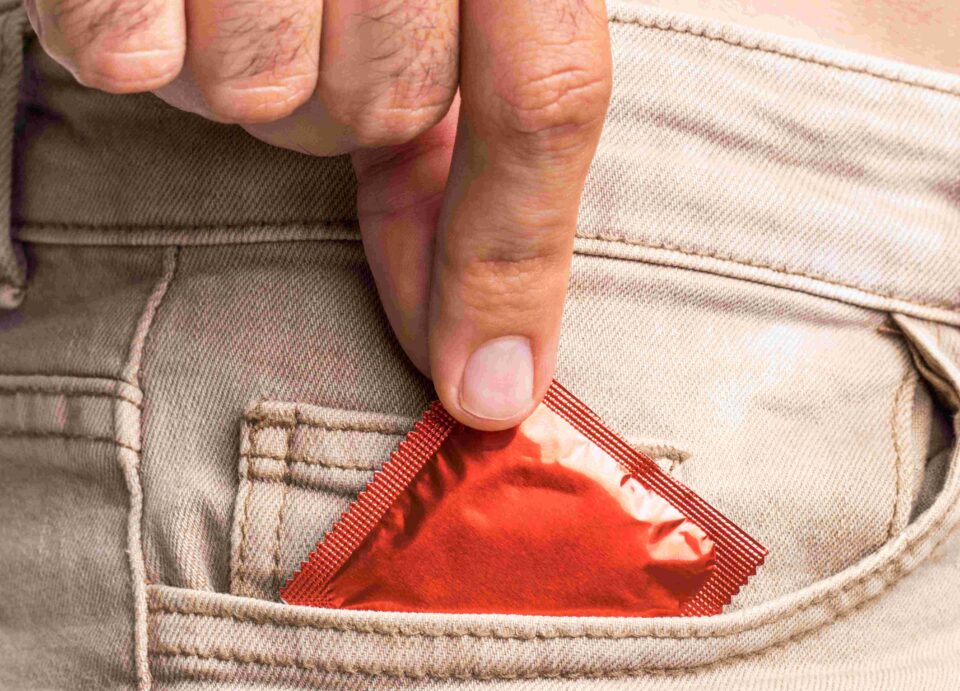
An Ayurvedic doctor writing about condoms may surprise some readers. Apparently, I may discuss fertility, semen, aphrodisiacs and Vajikarana without disturbing anyone—but the moment I say “condom,” half the room begins examining the floor tiles.
Yet patients ask me about condoms more often than you might imagine. Which condom is best? Do ultra-thin condoms tear easily? Do women really enjoy dotted condoms? Is five inches too small for a regular condom? Can one be kept in a wallet? One nervous young man even asked whether wearing two condoms would provide “double protection.” It does not. It provides two layers of friction and one excellent opportunity for both to fail.
The condom is one of medicine’s most elegant inventions: inexpensive, portable, hormone-free, reversible and available without a prescription. It is also the only contraceptive method that can help prevent both unintended pregnancy and most sexually transmitted infections, including HIV. We have robotic surgery, gene editing and watches that scold us for sitting too long, yet this modest piece of latex continues to prevent an astonishing amount of illness, anxiety and human drama.
Ayurveda never pretended that human beings reproduced through prayer and good posture. Sexual health was discussed within Vajikarana, one of its eight classical branches. Desire, pleasure, fertility, reproductive vitality and responsible sexual conduct were considered legitimate parts of health. Ancient physicians did not describe modern latex condoms, of course, and we need not manufacture a Sanskrit reference for every contemporary product. The enduring principle is simpler: pleasure should not damage health, disregard consent or create consequences for which neither partner is prepared.
Sex can improve intimacy, reduce tension temporarily and produce a sense of wellbeing through several neurochemical pathways. But it is not an antidepressant in the medical sense, and every sexual encounter is not automatically therapeutic. Sex without consent, communication or protection can manufacture considerably more stress than it removes. Biology supplies desire; maturity must supply judgement.
A Brief History of the Condom
Barrier protection is older than most people assume. Various societies experimented with cloth and animal membranes, although many dramatic historical claims are difficult to verify. The first well-documented medical description appeared in the sixteenth century, when Italian physician Gabriele Falloppio described a treated linen sheath intended to reduce the transmission of syphilis.
Later condoms were made from animal intestines and sometimes washed and reused—an economy measure that should make us profoundly grateful for both latex and dustbins. Rubber condoms appeared in the nineteenth century after vulcanisation; thinner disposable latex versions became widely available during the twentieth. Today we also have polyurethane, polyisoprene and internal condoms.
The condom has travelled from linen to intestine, from thick rubber to ultra-thin latex. Human embarrassment, meanwhile, has shown very little technological progress.
How Effective Are Condoms?
External condoms are about 98% effective at preventing pregnancy over one year when used correctly every single time. That figure describes perfect use over a year; it does not mean that a condom prevents 98% of every STI, nor does it describe the risk from one isolated sexual encounter.
Real-life effectiveness is lower because human beings are less consistent than laboratory instructions. People put the condom on late, remove it early, use the wrong lubricant, damage the packet, choose a poor fit or occasionally forget protection until passion has dismissed the planning department.
A condom rarely wakes up and decides to betray its owner. Most failures result from incorrect or inconsistent use rather than a mysterious manufacturing rebellion.
Condoms substantially reduce the risk of infections transmitted through genital fluids, including HIV, gonorrhoea and chlamydia. Protection is less complete against infections spread through uncovered skin, such as genital herpes, HPV or syphilis, when a lesion lies outside the covered area. “Safer sex” is therefore more accurate than “risk-free sex.” The World Health Organization recommends correct and consistent condom use during vaginal, oral and anal sex.
For couples who strongly wish to avoid pregnancy, dual protection may be sensible: a condom together with another suitable contraceptive method advised by a healthcare professional. The second method strengthens pregnancy prevention; the condom adds protection against infections.
Which Condom Is Best?
The best condom is not automatically the thinnest, costliest or the one with a name suggesting that the user is about to enter the Olympic finals. It is an unexpired, quality-tested condom that fits securely, feels comfortable to both partners and is used properly from beginning to end.
Latex condoms are the most common. They are elastic, effective, inexpensive and widely available. A genuine latex allergy, however, may produce itching, redness, swelling or irritation. Polyurethane or polyisoprene condoms are useful alternatives.
Natural-membrane condoms may help prevent pregnancy, but they should not be relied upon for STI protection. If protection from infection matters and it usually should, choose latex or an appropriate synthetic condom specifically labelled for that purpose.
Ultra-thin condoms are designed to improve sensation. A properly manufactured, quality-approved ultra-thin condom is not automatically unsafe merely because it is thin. Correct fit, good storage, adequate lubrication and proper use matter far more. Some people prefer a thicker condom because it reduces sensation slightly or simply makes them feel more confident. Both preferences are valid; neither deserves a bravery medal.
Ribbed, dotted and otherwise textured condoms are intended to alter sensation. Do women love dotted condoms? Some do, some notice no meaningful difference, and some find them uncomfortable. Women are not a single consumer-review department. Arousal, good lubrication, sufficient foreplay, clitoral stimulation and a partner who listens often matter considerably more than the architecture printed on the packet.
Contoured or pleasure-shaped condoms provide extra room around the head of the penis. Some men find them more natural; others prefer a snug, straight shape. Delay or climax-control condoms usually contain a mild local anaesthetic such as benzocaine or lidocaine. They may help some men delay ejaculation, but they can also cause excessive numbness, irritation or reduced pleasure. Persistent premature ejaculation deserves a proper medical conversation, not an ever more chemically ambitious condom.
Flavoured condoms are mainly intended to make protected oral sex more acceptable. Use them for vaginal sex only if the manufacturer clearly labels them as suitable, because certain flavouring agents or lubricants may irritate sensitive tissue. “Chocolate” is a flavour, not a medical certification.
Internal condoms—previously called female condoms—are worn inside the vagina. They allow the receptive partner greater control and may feel less restrictive around the penis. They require some practice but can help prevent pregnancy and STIs when used correctly. Never combine an internal condom with an external one; friction between them can cause displacement or tearing. The NHS guidance explains their correct placement.
Purchase condoms from a reliable pharmacy, established retailer or trustworthy online seller. Check that the packet is sealed, properly labelled, within its expiry date and compliant with recognised quality standards. A spectacular brand name cannot compensate for dubious storage or counterfeit packaging.
Does Condom Size Matter?
Yes—but sizing depends mainly on girth, not merely on length. A five-inch penis is not “too small for condoms”; it lies comfortably within the ordinary adult range. Most standard condoms should fit, provided their width is suitable.
A condom that feels painfully tight, refuses to roll to the base or repeatedly breaks may be too narrow. One that wrinkles excessively, moves around or slips off may be too wide. Start with a regular size and adjust if necessary. Many packets mention a “nominal width,” although size labels vary among brands.
The correct condom should roll down comfortably, stay in place and not interfere with circulation. Buying an oversized condom for emotional reasons is like purchasing size-11 shoes for a size-8 foot: the label may flatter you briefly, but the slipping will reveal the truth.
How to Use a Condom for the First Time
Talk about protection before sexual activity begins. Negotiating condom use while both brains are fully employed is easier than convening a safety committee halfway through intercourse.
Check the expiry date and examine the wrapper for tears, punctures or deterioration. Push the condom away from the edge and tear the packet carefully with your fingers. Do not use teeth, scissors, rings or ambitious fingernails. Romance has survived many interruptions; it can survive ten seconds of caution.
Put the condom on before any genital contact, not merely before ejaculation. Pre-ejaculate may contain sperm in some circumstances and can transmit infections.
The penis should be erect. Place the condom on the tip with the rolled rim facing outwards. Pinch the reservoir tip to remove trapped air and leave space for semen. Then roll the condom smoothly all the way down to the base.
If it refuses to unroll, it may be inside out. Do not simply turn the same condom over and continue, because genital fluid may already be present on its surface. Throw it away and use a new one. A condom costs far less than the consequences being negotiated.
Use sufficient compatible lubricant. Water-based and silicone-based lubricants are generally safe with latex condoms. Oils weaken latex, so avoid coconut oil, massage oil, petroleum jelly, baby oil, cooking oil, body lotion, ghee and other enthusiastic members of the household pharmacy unless the manufacturer specifically confirms compatibility. Ayurveda may respect sesame oil; latex does not share the sentiment.
After ejaculation, withdraw while the penis is still erect, holding the condom firmly at its base so it does not slip or spill. Remove it away from the partner, wrap it in tissue and place it in a bin. Do not flush it. The condom has already performed one public service; it need not block the municipality’s plumbing.
Use a fresh condom for every sexual act, when changing from anal to vaginal sex, and when a shared sex toy moves from one partner to another. Never wash and reuse a condom. Disposable means the relationship ends after one encounter.
Three Popular Mistakes
Never wear two external condoms at once. More material does not mean more protection. The two surfaces rub against each other, increasing the likelihood of tearing or slipping. For the same reason, do not use an external condom over an internal one.
Do not keep condoms permanently in a wallet, trouser pocket, glove compartment or hot car. Heat, pressure and repeated friction can damage the material and wrapper. Carrying one briefly is different from allowing it to complete a three-year residency beside your credit cards. Store condoms in a cool, dry place and replace any packet that looks brittle, sticky, faded, worn or damaged. These precautions are also included in the CDC’s condom guidance.
Finally, never use an expired condom because the chemist is closed. Expiry dates are not decorative suggestions. Latex and lubricant deteriorate with age.
Is Gen Z Using Condoms?
Yes, but international evidence suggests that many sexually active young people are using them less consistently. In a large WHO regional survey, condom use during the most recent intercourse among sexually active adolescents declined between 2014 and 2022—from 70% to 61% among boys and from 63% to 57% among girls. Nearly one-third reported using neither a condom nor the contraceptive pill.
These data came from Europe, Central Asia and Canada, so they should not be lazily presented as universal Indian figures. Nevertheless, the trend deserves attention. WHO reported these findings in 2024.
Possible reasons include poor sex education, embarrassment, reduced fear of HIV, reliance on pills or long-acting contraception, misinformation and the belief that requesting a condom signals distrust. It does not. Trust and infection status are not the same laboratory test. A sincere, faithful-looking and perfectly healthy person may still have an undiagnosed STI
What If the Condom Breaks or Slips?
Stop immediately. If pregnancy is possible, seek advice about emergency contraception as soon as possible. Depending on the method, emergency contraception may remain useful for up to five days, but earlier action is generally better.
If exposure to HIV may have occurred, seek urgent medical care for post-exposure prophylaxis, or PEP. It must be started as early as possible and within 72 hours. Arrange appropriate STI testing, remembering that different infections become detectable at different times. If the menstrual period is delayed, take a pregnancy test according to the test instructions or a clinician’s advice.
Do not scrub the genitals, douche or insert antiseptics. Chemistry performed in panic may injure sensitive tissue without preventing infection.
If condoms repeatedly break or slip, do not blame fate. Investigate the fit, expiry date, storage conditions, application technique, lubricant compatibility and adequacy of lubrication.
What Condoms Feel Best for Women?
There is no universally preferred condom. Some women favour ultra-thin condoms, some like texture, some prefer non-latex materials, and others feel most comfortable with an internal condom. Many care less about dots and ribs than manufacturers would like us to believe.
The condom that feels best is the one that does not squeeze, slip, irritate, dry out or make either partner anxious. Good lubrication, adequate arousal, unhurried foreplay, clitoral stimulation and honest communication usually influence female pleasure far more than whether the packet says “dotted,” “intense” or “maximum.”
The finest sexual accessory remains communication. It has no expiry date, fits every size and, remarkably, can be used more than once.
Condoms have acquired many slang names—rubber, raincoat, protection, safety cover. Humour can make the conversation easier, but the object itself deserves respect. It asks very little: store it properly, check the date, use one at a time, choose compatible lubricant and put it on before contact.
A condom is not evidence of mistrust, diminished masculinity or insufficient romance. It is something far more mature: desire remembering that there is a tomorrow.

8 comments
[…] Also Read: Which condom is the best? […]
Excellent blog you have got here.. Itís difficult to find high-quality writing like yours these days. I really appreciate people like you! Take care!!
Pretty great post. I simply stumbled upon your blog and wished to mention that I’ve truly enjoyed surfing around your blog posts. In any case I’ll be subscribing for your rss feed and I hope you write once more very soon!
clomid without doctor supervision Glign Inilk
I truly appreciate this blog post.Really thank you! Fantastic.
Very informative blog post.Really thank you! Will read on…
wow, awesome article post.Thanks Again. Much obliged.
[…] for these patients should include counseling, education on sexual positions, use of lubricants or condoms, emphasis on foreplay, medication to alleviate anxiety, support from the spouse, and establishing a […]