
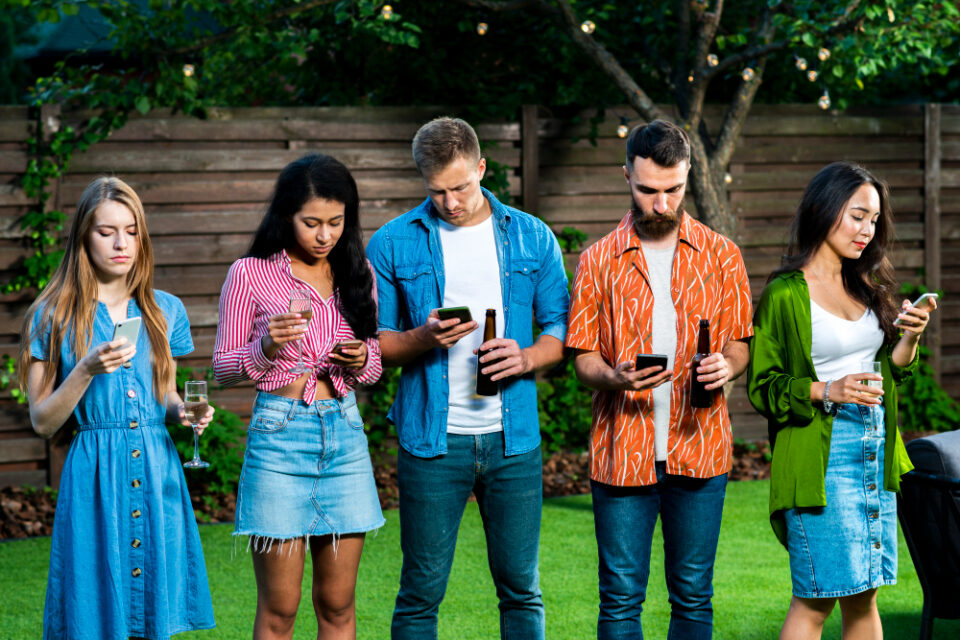
One evening, a man limped into my clinic, gripping his chest. His wife thought he was having a heart attack. I reached for my stethoscope, but he murmured, “Doctor, before you check me, can I charge my phone? It’s at 2%.” The heart could wait; the battery could not.
Ayurveda taught us to read the nadi at the wrist. Today, the real pulse is in the thumb. It twitches, flicks, scrolls. Vata, Pitta, and Kapha were once described in relation to digestion and disease. Now they describe your apps. Vata is the restless scroll of Instagram, Pitta is the angry volley of WhatsApp messages, Kapha is the Netflix binge that fuses you to the sofa.
I see them all in my clinic. A software engineer who panics if his phone isn’t in reach. A retired uncle who forwards turmeric cures at 5 a.m. as if running a digital hospital. A teenager who confessed, “Doctor, I dream in reels.” My waiting area has become a laboratory of digital doshas.
Phones have quietly replaced our rituals. My grandmother began her mornings with an oil bath and prayers to the sun. Her grandson begins by staring into a glowing rectangle, offering his face to the rising screen. Patients once came to me with bad digestion from heavy dinners; now they come with indigestion of the senses. I call it scroll-ajirna.
Post-COVID, the phone stopped being a tool and became an extension of oneself. Weddings, funerals, classrooms, clinics—all lived inside it. What was meant to be temporary survival has hardened into permanent culture. Anthropologists call this ritualisation of crisis. I call it the new imbalance.
And the body hasn’t been spared. Ayurveda warned of ajirna (indigestion), aruchi (loss of taste), and anidra (insomnia). Phones have given us new versions—text neck, WhatsApp thumb, notification palpitations. One woman complained of shoulder pain; the culprit wasn’t her pillow but the 500-gram gadget she cradled like a newborn all night.
Each app sells an emotion, not a service. Instagram peddles envy. Twitter peddles outrage. Netflix peddles numbness. WhatsApp peddles anxiety with its double blue ticks. These emotions are the new doshas of society. Villages once gathered in temple courtyards; now entire nations gather on Twitter to quarrel, sulk, and perform.
But it’s not all abstract. Let me give you a clinic scene. A middle-aged man arrived, with bloodshot eyes and a bloated stomach. His wife whispered, “Doctor, he watches Korean dramas till 3 a.m.” I told him gently, “Sir, even your intestines have circadian rhythms. Kimchi may help Koreans, but it is not going to help your colon at midnight.” He laughed, but he stopped bingeing. His digestion improved, his moods lifted. The real prescription was simple: let his Kapha hold the remote, but make sure it pressed ‘power off.
Another patient, a young woman, complained of palpitations. No heart problem. The diagnosis? “Notification tachycardia.” Every ping sent her heart racing. She had been trained by her phone like Pavlov’s dog. I asked her to keep her phone in another room at night. The palpitations vanished in ten days. Sometimes the medicine is not a tablet but a door closed between you and your device.
Ayurveda never said, “renounce the world.” It said, “Balance the world.” I give the same advice about phones. Try a digital fast after 9 p.m. Oil your thumbs—they have worked harder than your brain. Take no-phone walks and you’ll notice birds again. Replace doomscrolling with moon-gazing. You don’t need an app for pranayama. You just need your breath.
Phones were meant to connect us, but they’ve left us lonelier. Couples sit in restaurants, scrolling silently as their food goes cold. Children swallow without chewing, their eyes glued to cartoons. People complain of stress, sleeplessness, poor digestion—but rarely blame the glowing rectangle. Ayurveda defines health as swasthya, being rooted in the self. Today, most are rooted in selfies.
Every civilisation has its poisons and its antidotes. Tobacco, alcohol, and sugar all began as luxuries, then became epidemics, and only later were restrained by policy and culture. The phone is our new sugar—sweet, cheap, omnipresent. Some nations have responded: China restricts children’s screen hours, France bans phones in schools, and Japan funds counselling for the digitally withdrawn. Even in Silicon Valley, the prophets of distraction are buying silence in the form of device-free classrooms. Yet here, we still laugh at ‘scrolling too much’ as if it were harmless. But dosha imbalance was never a metaphor; it was a map of collapse. If we continue, the future epidemics will not be viral but virtual: depression, loneliness, infertility, broken sleep, fractured families. Wars or microbes will not decide the future, but by what we choose to do with our thumbs.
