
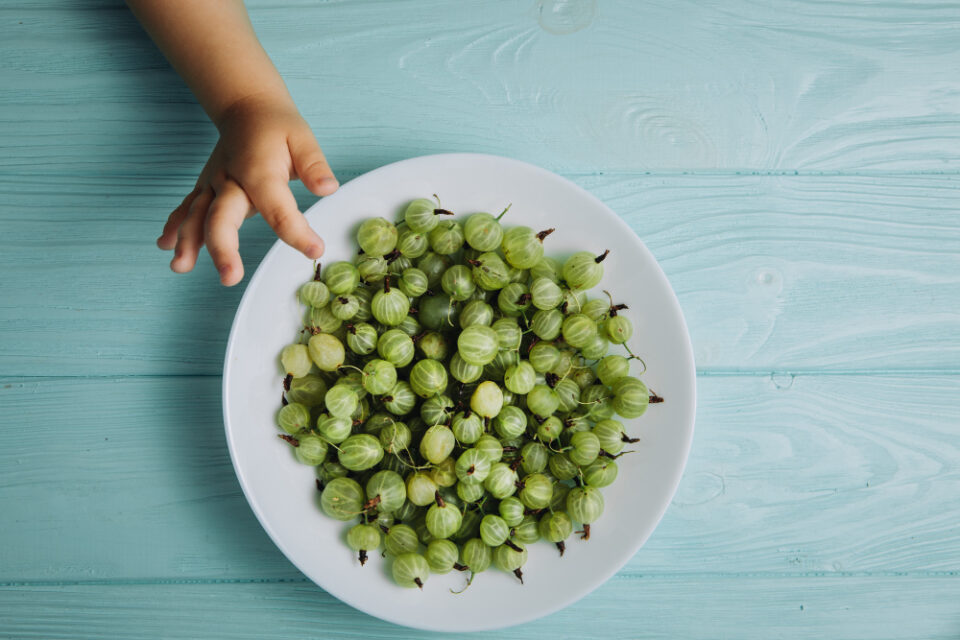
In my clinic, sour faces arrive before sour fruits. They come carrying sleepless nights in designer handbags, hope folded like a prescription slip. One afternoon, a young marketing executive wrinkled her nose when I handed her a green amla. “Doctor, this tastes like heartbreak,” she said. I smiled, “Exactly—it heals the same way too.” She bit, grimaced, then laughed. Within weeks, her fatigue, bloating, and mood swings had eased. “I feel awake,” she said, “as if someone opened a window inside my head.” Sometimes, medicine isn’t sweet reassurance—it’s sour honesty.
Every morning, my clinic smells faintly of sanitiser and crushed herbs, the scent of two centuries sharing one shelf. Outside, a vendor arranges amla in metal bowls like tiny green suns. Children ignore them, chasing guavas instead. Only the grandmothers stop—they know the difference between fruit and medicine. Inside, I hand an amla to a patient like a mirror. Sourness reveals us. The face contorts, the eyes blink, the ego softens. You can’t fake that moment. The fruit tells the truth your tongue didn’t plan to.
Ayurveda refers to the sour taste as chetana vardhaka—the awakener of consciousness. Modern neuroscience now maps the same truth: the insular cortex, which registers taste, sends signals directly to the amygdala and orbitofrontal cortex—the emotional hubs. That jolt on your tongue is a neural fireworks show; sour taste lights up circuits of curiosity and alertness. In that brief pucker, the body learns presence. Mindfulness, in its most edible form, begins on the tongue.
A retired post master once told me, “Doctor, I start my day with amla instead of news. One keeps me acidic, the other keeps me alkaline.” A teacher said, “I pop one before class; it keeps me patient.” A software engineer grinned, “It’s like rebooting without Wi-Fi.” And a poet in her seventies whispered, “Amla brings back my mornings.” I don’t record these in patient files, but these are data too—the quiet science of emotion meeting metabolism.
Inside the fruit, a delicate chemistry is at work. Gallic acid, ellagic acid, and emblicanin-A/B act like tiny janitors, sweeping free radicals that dull the brain. They protect the hippocampus—the seat of memory—from the slow fire of inflammation. The result? More clarity, less chaos. Studies in Phytomedicine (2019) show that amla improves mitochondrial enzyme activity, the same engines that power your mood and mind. When your cells function more efficiently, your thoughts do too.
A young woman once complained, “Doctor, I feel like my brain is buffering.” She lived on energy drinks and anxiety. I suggested fresh amla juice each morning. “That’s too primitive,” she said. Two weeks later, she texted, “Primitive works. I feel like my body stopped whispering complaints.” Amla’s polyphenols lower cortisol, the hormone that keeps us in invisible panic. Lower cortisol, clearer perception. Sometimes stress leaves quietly, without saying goodbye.
A middle-aged architect told me he could finally sleep without pills. “Amla doesn’t make me sleepy,” he said. “It makes me peaceful.” That’s serotonin at work. Amla’s compounds increase tryptophan availability—the raw material for serotonin. But it doesn’t sedate; it steadies. The result is calm alertness, not dull calm. Ayurveda calls this sattva vardhaka—a rise in luminous clarity. Who needs a tranquilliser when nature invented something tart?
A housewife once said, “When I’m angry, I eat one piece of pickle. By the time I finish chewing, my mind cools.” Her husband later confessed he now hides the jar during arguments. What she didn’t know was that her gut microbes were working harder than her willpower. Fermented amla pickle is rich in probiotics that talk to the vagus nerve—the emotional highway between stomach and brain. The microbiome whispers serenity in a language older than logic. Sometimes mindfulness has a tang.
Even I avoided amla for years. I prescribed it liberally, then chased it secretly with jaggery. One day, I stopped sweetening it. That was the day I understood my patients. Healing begins when the tongue stops negotiating. The first bite is rebellion, the second acceptance, the third joy. Sourness teaches surrender faster than sermons do.
One of my diabetic patients once said, “Doctor, this fruit is like you—bitter at first, but it works.” I laughed. Perhaps he was right. Medicine, like truth, must sting a little before it soothes.
Modern labs refer to it as an antioxidant, adaptogen, and cortisol modulator. Ayurveda calls it amla rasa—life’s sour spark. The names differ, but the outcome remains the same. Every compound in it—from emblicanin to ellagic acid—conspires toward balance. The taste that shocks also steadies. The fruit that puckers the tongue smooths the mind.
In a world obsessed with dopamine detoxes and imported superfoods, a two-rupee amla sits quietly in its own galaxy of meaning. The Persians once preserved it in honey to lift melancholy; Tibetan physicians brewed it into Dhātriphalā rasa for clarity during meditation; in Japan, its cousin, the umeboshi plum, guards the bento against decay. Across cultures, the sour fruit has always carried the same instruction — wake up. Modern studies now trace wisdom to the vagus nerve, to serotonin modulation, and to the antioxidant calm of emblicanin A and B. Ayurveda referred to it as chetana vardhaka — that which sharpens consciousness — long before neuroscience discovered the same spark in the insular cortex. I still keep one amla on my desk. Some days I eat it, some days I let it look back at me. Either way, it reminds me that sourness is life’s oldest teacher — proof that clarity can taste sharp, healing can arrive humble, and awareness sometimes grows, not in the mind, but on trees.
I have written a book.
If this blog spoke to you, the book will stay with you longer.
