
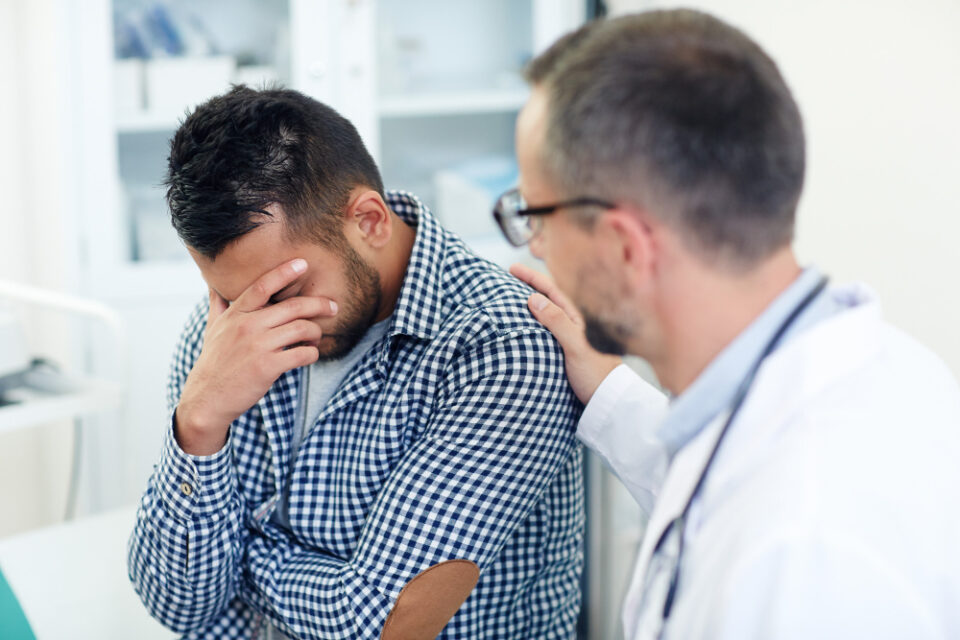
People think the most challenging part of medicine is breaking bad news. It isn’t. The hardest part is convincing a perfectly breathless, sweating, clutching-his-chest patient that he is not “just gassy.”
Denial is the most common disease I treat in my Bangalore clinic. Not diabetes. Not arthritis. Not even stress. Denial. It walks in every day disguised as confidence, bravado, or Google search results. Patients will swallow bitter kashaya, oily ghee, even my fees—but to swallow the truth that they are unwell? That is harder than eating a cactus.
The most dangerous symptom of illness is saying, “I’m fine.”
Mr Ramesh (name changed), a sixty-year-old fashion designer, came in clutching his chest. “Gas, Doctor. Only gas,” he insisted, waving my stethoscope away like a mosquito. He had a heart attack. His wife looked at me with that mix of fury and despair only wives can manage. He laughed nervously. “You doctors exaggerate.” And just like that, denial nearly killed him. Denial is the cheapest painkiller—and the costliest mistake.
Denial wears many costumes. Some laugh, some go silent, some flash Google as proof. A young software engineer once brought fasting sugar of 250. “Lab error,” he argued, showing me screenshots of faulty glucometers. I smiled and said, “If these machines are that unreliable, we should use them for exams too—every student will pass.” He burst out laughing, and in that laugh, his wall of resistance cracked. Sometimes humour is the scalpel that pierces denial.
Research explains denial as a coping blink. Too much light, the eyelid shuts. Too much truth, the mind shuts. It buys time. But time is a cruel shopkeeper. It charges interest. That “just acidity” becomes a bypass. That “little sugar” can lead to kidney failure. That “tension headache” becomes a stroke.
Disease waits politely at first. Later, it compounds interest.
Ayurveda had a word: prajnaparadha—mistake of the intellect. The mind knows but refuses. A man sees his waistline swell, his tongue demand sweets, his knees creak—but says, “I’m fine.” The tragedy isn’t in the diabetes or arthritis. The tragedy is in pretending it doesn’t exist. The body whispers; the mind shouts it down.
Yet denial isn’t always stupidity. A young woman with thyroid disease once told me, “Doctor, I don’t believe I am sick.” At first, I thought she was resisting. Later I realised she meant, “I refuse to live like a patient.” She accepted treatment, did yoga, followed a diet—but never called herself “ill.” That was not ignorance. That was dignity. Sometimes denial is not blindness but armour.
Families suffer most. A mother drags her depressed son, but he sits with arms crossed: “I’m fine. They are the problem.” The alcoholic who says, “I can stop anytime. I don’t want to.” The hypertensive man who insists, “Doctor, my pressure rises only in your clinic.” In my consulting room, denial often takes the lead role. Truth waits in the wings. Every family has two patients: the one who is sick and the one who denies it.
Research shows 40% of cardiac patients delay seeking help because they dismiss chest pain. Psychiatry has a term—anosognosia—when the patient literally cannot see their illness. Neuroscience reveals that the same circuits that avoid fear also fuel denial. Behavioural economists liken it to debt: delay, deny, hope it disappears. But like debt, disease grows interest while you look away. You can ignore a diagnosis, but you cannot overlook its bill.
In India, denial is a cultural art. Illness is weakness, weakness is shame. Families hide cancer till the wedding is done. Tumours are called “swelling.” In cities, patients whisper, “Doctor, don’t write diabetes on paper, insurance will reject me.” Disease is treated like family gossip—kept in cupboards, only aired when too large to hide. We’d rather hide illness than heal it.
Ayurveda advises against ignoring early signs, likening it to ignoring a crack in a clay pot. One day it leaks, and the next day it bursts. Even the doshas deny in their own style. Vata denies from fear—“Maybe it will vanish.” Pitta denies pride—“I know better.” Kapha denies from inertia—“Why bother?” Each excuse is different, but the result is the same. Every dosha has its denial, but none have immunity.
What works? Not scolding. Not frightening. What works is the story. A diabetic once ignored me until I told him about another who lost his eyesight. He returned a week later, obedient. Numbers bore, stories stick. Graphs measure. Stories persuade.
Sometimes, family breaks the denial. A wife once kept a diary of her husband’s complaints—fatigue, cramps, thirst. She read it aloud. He was stunned at his own words. A granddaughter asked her grandfather, “Why don’t you eat cake with us?” That one question proved more effective than ten lectures. Sometimes the cure begins with a child’s question.
For patients, the antidote to denial is dialogue. Talk to your doctor. Write down symptoms. Ask simple questions. Ayurveda refers to this as satvavajaya chikitsa—strengthening the mind. Acceptance is not surrender. It is a strategy. Only when you admit the fire exists will you fetch water. Acceptance is not defeat. It is the beginning of a plan.
As a doctor, I don’t smash denial. I wait beside it. Like ice in the sun, it melts slowly. One visit, ten visits—until courage arrives. And when it breaks, hope pours in. Hope, not herbs or pills, is the true rasayana. Doctors don’t open the door of denial. They hold a lantern outside it.
Denial is like wearing sunglasses at night. It doesn’t block glare; it blocks light. The irony is cruel: the very thing meant to protect ends up harming. But denial is human. We all deny—our age, our mortality, our limits. Illness denial is just one chapter in the larger book of human fragility. Every “I’m fine” is a rehearsal for goodbye.
The lesson from decades of practice is simple: truth heals faster than medicine. Denial delays truth. And delay is the disease’s best friend. So when your body whispers with pain, swelling, fatigue—don’t bargain, don’t postpone, don’t deny. Listen. Because you can deny illness, but illness will never deny you. It will arrive—later, louder, and far more expensive. In medicine, the bravest act is not fighting disease but greeting it by name.
I have written a book.
If this blog spoke to you, the book will stay with you longer.
