
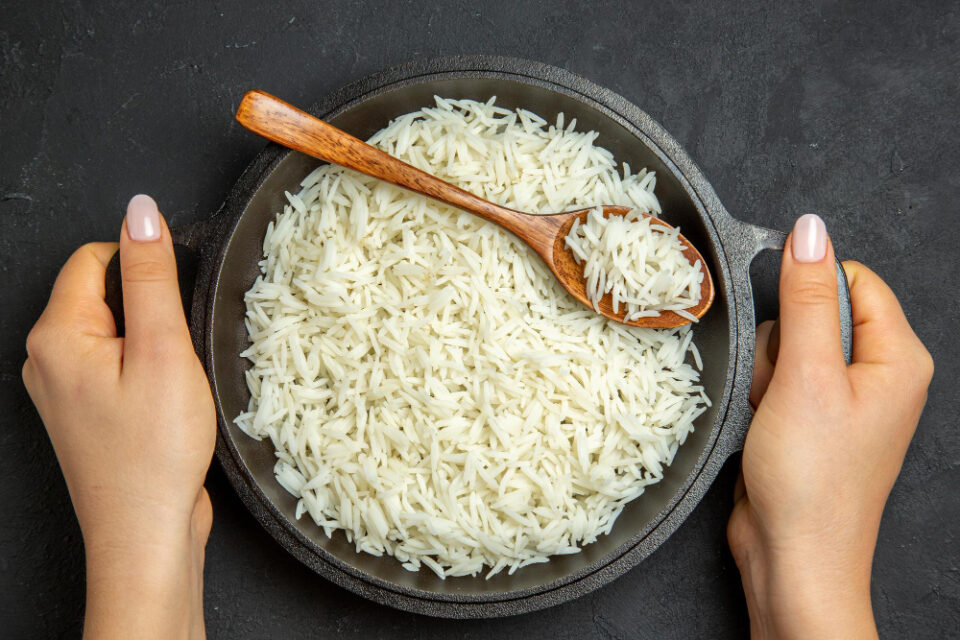
A young engineer walked into my Bengaluru clinic clutching a diet chart like a court summons. “Doctor, I have stopped eating rice,” he declared. I asked why. “It raises insulin, my trainer said.” His voice carried both pride and fear — the twin currencies of modern nutrition. I almost smiled. In a country where rice still graces temple plates and dinner tables alike, a small but loud minority has begun to treat it like a dietary sin.
Every civilisation has a grain that mirrors its psyche. Wheat made Europe ambitious, corn made America inventive, and rice made India reflective. For centuries, it was our daily prayer — white in temples, red in fields, black in royal kitchens, brown in humble huts. Charaka and Sushruta described Śāli and Śaṣṭika rice not as “carbs” but as living temperaments — cooling, nourishing, grounding. Their rice grew in fertile soil, hand-pounded, unhurried, fragrant with oil. The modern grain that fills our plates has little in common with that ancestor.
What changed? Almost everything.
The rice of our grandparents was local, seasonal, and grown without chemical fertilisers. It was hand-pounded, retaining its bran — that golden skin that holds fibre, magnesium, and natural oils. Today’s rice is a laboratory hybrid designed for yield, not wisdom. We polish it till it shines like vanity itself, stripping away nutrients so it cooks fast and sells faster. Even the soil beneath it has lost its ancient intelligence — overworked, overfed with urea, under-rested between crops. The rice didn’t become bad; it became lonely, divorced from the ecology that birthed it.
Modern nutrition then delivered the final insult: it reduced rice to a number — its glycaemic index. The same food that once symbolised abundance was suddenly rebranded as guilt. But as every dietitian grudgingly admits, rice is not sugar in disguise. Its metabolic impact depends on variety, fibre, fat, and pace. Reheated or fermented rice contains resistant starch, which feeds gut microbes and stabilises blood sugar. The lab calls it “retrograded amylose.” Ayurvedic wisdom never needed a test tube to know it — rice left to rest overnight in water, gently fermented, becomes medicine for the gut and balm for the mind. Modern science now calls it resistant starch.
Still, the fear persists. At my clinic, I meet people who eat quinoa with suspicion and rice with shame. A young mother once said she wouldn’t feed rice to her toddler because “Instagram says it causes insulin spikes.” Her grandmother, sitting beside her, muttered, “We were healthier when we feared Gods, not glucose.” In that single sentence lay the story of India’s nutritional neurosis.
Rice didn’t make India diabetic; lifestyle did. We replaced walking with watching, community with convenience, and oils with paranoia. We stripped the bran off our rice, the same decade we stripped leisure from our lives. Ayurveda never blamed the grain; it blamed the mismatch — the wrong food, the wrong time, the wrong mood. Charaka observed, ‘Deśa-vaiśamyāt dravyāṇāṁ balaṁ hīnaṁ bhavati’ — when the land and climate lose harmony, the strength of all substances declines. Translate that into today’s idiom: when lifestyle and rhythm go out of tune, even good food loses its power.
Somewhere between the polished rice and the polished life, we lost texture. The white rice that now glows in our supermarkets is the nutritional metaphor of our times — refined, restless, hollow. It is easy to digest but hard to trust. Drive through rural Karnataka and you’ll still see fields shimmering with stories. In the coastal wetlands of Aghanashini, Kagga — a stubborn red grain that thrives in salt water without a drop of fertiliser — grows. In the interior plains, farmers still nurture Rajamudi, once the rice of Mysuru royalty, its grains bold and nutty. And deep in Ayurvedic lore lives Navara, the short-season red rice used in healing therapies for inflamed guts and weary bodies. Each grain carries a geography, a season, a song. They haven’t vanished; only our patience for their pace has.
When patients ask, “So, Doctor, should I eat rice or not?” I tell them: eat rice that remembers its soil. Choose the variety that suits your body, not your influencer. Soak it, simmer it, eat it without guilt. Pair it with lentils, vegetables, and a dash of ghee — the way every grandmother since Harappa has known. The miracle isn’t in the grain; it’s in the rhythm. But who has time to chew enlightenment between two Zoom calls?
Maybe the real health revolution is not about new superfoods but old relationships — between soil and farmer, kitchen and gut, hunger and humility. Rice doesn’t make you weak; forgetting how to eat it does. When we finally stop fearing our own food, perhaps we’ll rediscover what our ancestors knew: that the simplest bowl of rice, eaten in peace, can be the most sophisticated act of wellness.
I have written a book.
If this blog spoke to you, the book will stay with you longer.
You can get your copy here.

2 comments
Very useful information sir.
THANK YOU