
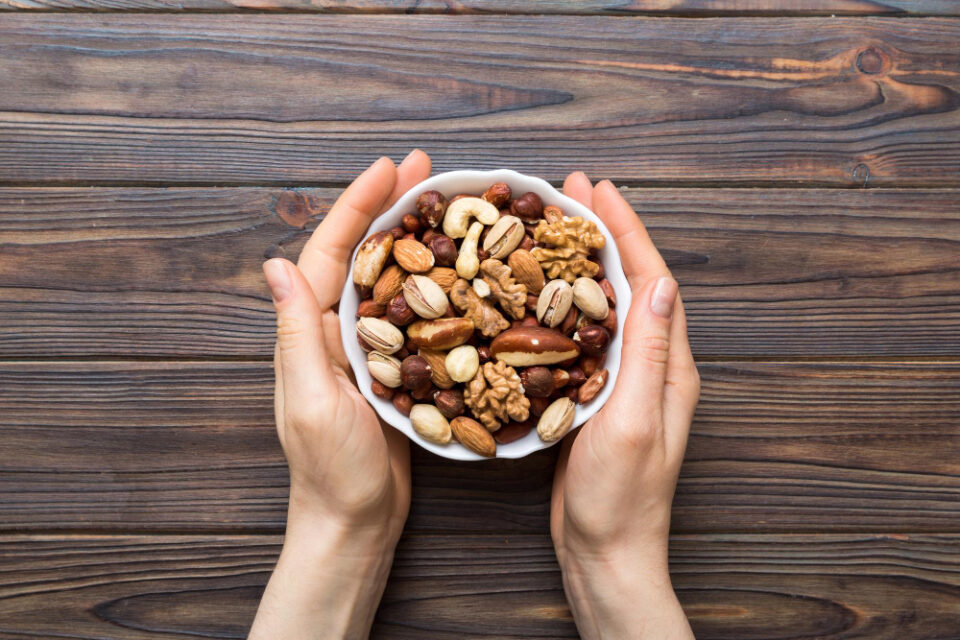
The funniest thing about cholesterol is that it rarely scares people; what scares them is the thought of giving up biryani, so they run to almonds for emotional support. First came the oat wave, as if Bengaluru suddenly woke up thinking it was London. Then apple cider vinegar entered the city, stinking up kitchens but boosting confidence. Himalayan salt followed, pink, glamorous and outrageously overpriced. And finally, we have nuts, the latest miracle everyone trusts more than the doctor who asked them to walk thirty minutes.
The real comedy begins when these miracles arrive in my clinic. People bring nuts the way devotees bring coconuts, full of faith and half of facts. One man placed a box of soaked almonds on my table as if he were presenting evidence in court. He said he had started eating ten every morning and waited for applause. I asked him gently if he was eating them or worshipping them because the devotion in his eyes was unmistakable. He said that almonds would fix his cholesterol, and I reminded him that hope is good, but habit is better. A nut can help the heart, but it cannot fight the rest of your plate.
The funny part is that nuts are not new to India at all. Our grandmothers used them without making a scene on social media. They slipped almonds into kheer, pistachios into halwa, and peanuts into chutney, not because of cholesterol, but because it made the food feel alive. Today, we have turned these same nuts into a medical strategy. People talk about walnuts as they do mutual funds, with lengthy explanations and little understanding. Someone once told me that walnuts would increase his good cholesterol, and I asked him what good cholesterol actually does. He laughed and admitted he had no idea. This is the age when people know the benefit before they know the biology.
Research does give nuts their due. An extensive Harvard study tracked participants for years and found that those who ate nuts a few times a week had a much lower risk of heart disease. Almonds reduce bad cholesterol, walnuts raise good cholesterol, and pistachios help with inflammation and blood sugar. Even peanuts stand tall in this family. They may not have foreign glamour, but they do the job with the quiet confidence of an old friend. But research also adds one crucial line that many readers skip. Nuts help only when they replace junk, not when they accompany it. A handful of walnuts after a plate of biryani is not nutritious. It is an apology.
Ayurveda saw this long before Harvard published its findings. It states that nuts build strength and nourish deeper tissues, especially when eaten with calm rather than mindlessly. Almonds support the mind, walnuts steady the nerves and pistachios behave better in digestion than most rich foods. However, Ayurveda also notes that raw nuts can irritate the stomach when eaten without soaking or gentle warming. Every week, someone proudly tells me they eat almonds straight from the fridge and then complains of bloating and dull mornings. The body is not a machine. It is a negotiation. When digestion feels attacked, the rest of the system refuses to cooperate.
One of my favourite stories belongs to a software architect named Sudhakar, a man who trusted data more than daylight. He began his nut experiment after watching a video that promised cholesterol freedom. He bought a large box of walnuts sent by a cousin from America and announced that he would improve his health with foreign dry fruits. Three months later, he returned looking puzzled. His cholesterol improved slightly, while his weight substantially increased. After a gentle conversation, the truth emerged. He had replaced the biscuits with walnuts and added chocolate-coated cashews for comfort. His logic was simple. If nuts reduce cholesterol, then more nuts must reduce more cholesterol. This is how even intelligent people misunderstand biology. They treat food like mathematics and the body like a calculator.
People often ask me how many nuts they can eat, as if there were a secret number that would unlock perfect health. The answer is more straightforward than the search. A handful that fits your own palm is enough for most adults. Not a fistful and definitely not a bowl. Morning is the best time, when digestion is strong, and the body is ready to use this slow, steady fuel. Afternoon is acceptable, especially if it replaces your biscuit habit. Night is tricky because nuts are heavy and the stomach prefers peace after sunset. Soaked almonds work well for most people, walnuts can be eaten as they are if the bitterness does not bother you, and pistachios go well with fruits or curd. Cashews are delicious, but they ask for discipline, the same way sweets do. If you treat them like a festival, they will bless you. If you treat them like a routine, they will punish you.
What many people do not realise is that the real problem is not hunger. It is the restless mind that comes free with modern living. People snack when they are bored, anxious, lonely, stuck in traffic, scrolling endlessly, or simply unable to face their own thoughts. Nuts become convenient companions for emotional eating. They look healthy, sound scientific, and do not carry the guilt that biscuits do. I have seen people open a box of almonds not because their stomach asked, but because their mind wanted relief. Ayurveda describes this as ahara, food consumed without awareness of hunger or need, which always creates a slight disturbance in the body. The stomach can digest nuts. It struggles to digest confusion.
The people who genuinely benefit from nuts are not the ones who discuss them like stock market tips. They understand that food works only when life cooperates. I have seen patients improve their cholesterol not because they discovered almonds, but because they finally found sleep. Others walked a little, breathed a little, slowed their meals, and allowed their bodies to trust them again. Nuts then became partners, not saviours. Science shows that the healthy fats in nuts help calm inflammation and improve how cells communicate. Ayurveda says they nourish ojas, the quiet strength that keeps the body steady in stressful times. Both are saying the same thing in different accents. A nut works best when the rest of your life is not working against it.
Over the years, I have realised that the people who heal are rarely the ones searching for miracle foods. They are the quiet ones who make small changes without announcing them. They replace their evening chips with a few soaked almonds. They stop adding sugar to their tea. They finish dinner before the night becomes heavy. They walk while talking on the phone. They respect their hunger and their sleep. When these simple habits fall into place, nuts become powerful allies. Without that foundation, even the best food behaves well only on paper, not in real life. The body understands sincerity. It also recognises shortcuts.
So yes, nuts can help your cholesterol. They can steady your energy, calm the body and offer a small daily anchor in a noisy world. But they work only when they join hands with better choices, not when they are asked to fight alone. If you want your heart to feel lighter, let your days become lighter too. Eat mindfully, walk a little, rest on time and allow your body to trust your decisions. Nuts are only messengers. The real change begins when you stop treating your health like an emergency and start treating it like a relationship. A handful of nuts can support your heart, but only your habits can protect it.
I have written a book.
If this blog spoke to you, the book will stay with you longer.
You can get your copy here.
