
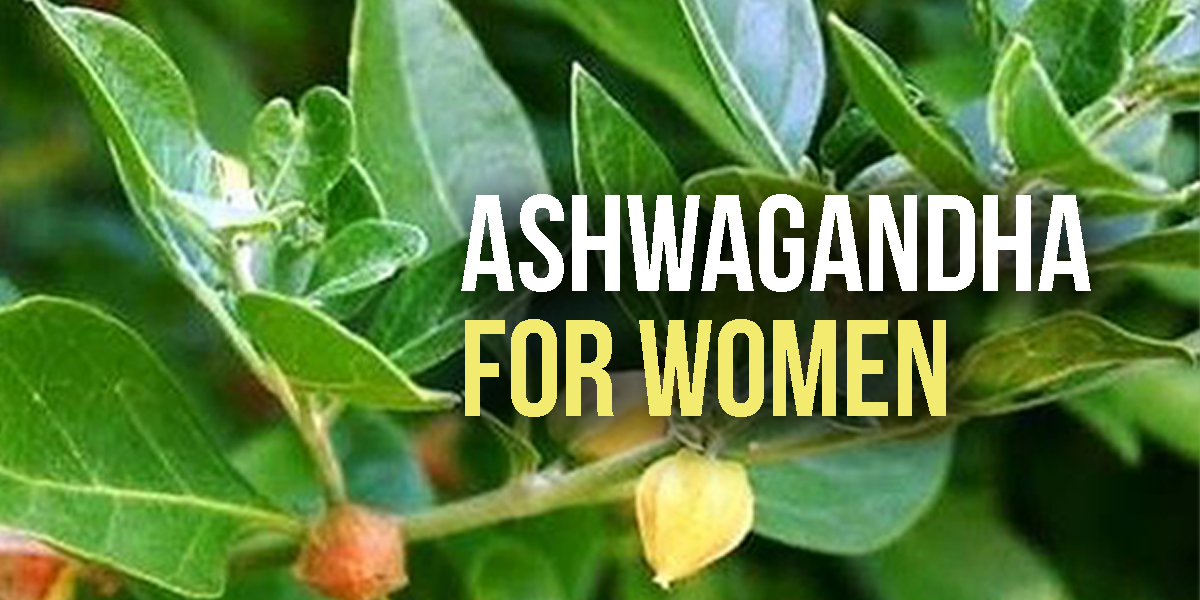
The ancients promised this root would give you the strength of a horse. They undersold it — they had clearly never watched an Indian woman run a house, a job, a joint family and three WhatsApp groups before 9 a.m. Ashwagandha, whose name politely translates to “the smell of a horse,” is in truth one of the gentlest, most maternal things in the entire Ayurvedic cabinet. It asks for nothing, boasts of nothing, and has quietly been on a woman’s side for the better part of two thousand years. Some heroes wear capes. This one smells faintly of a stable and hides in a steel dabba behind the haldi.
Let us be properly introduced. Ayurveda calls Ashwagandha a Rasayana — a rejuvenator, a restorer of what life keeps quietly taking away — and among the strength-giving balya herbs, it is practically royalty; the old texts all but crown it king. Charaka, in his chapter on the Rasayanas some two thousand years ago, promised such herbs would return long life, a sharp memory, freedom from disease and the lost bloom of youth — a tall order for any plant, and yet here is one that keeps quietly trying. Its power lies in a family of molecules called withanolides, which sound like a Marvel villain but behave like a caretaker. And now the surprise nobody at the wellness counter will mention: this regal “king of herbs” is, botanically, a common nightshade — first cousin to the brinjal in your sambar, the tomato in your salad and the potato in your masala. That fashionable nickname, “Indian ginseng”? Pure marketing. It is no more related to ginseng than your baingan is.
And here is the detail I love most. Its botanical name, Withania somnifera, literally means “the sleep-bringer.” Two thousand years ago, a Vaidya wrote that this root calms and settles a restless system; a nineteenth-century European botanist, who had never read a word of that Vaidya, reached for exactly the same idea in Latin. Across twenty centuries and one dead language, they shook hands.
Now, why should a woman in particular care? Because a woman’s body is asked to do the impossible on a rolling basis, it keeps a hidden ledger of the cost. That ledger is written in a hormone called cortisol — the body’s alarm bell, magnificent in a genuine emergency, quietly ruinous when it rings all day long. And for the woman running on chai and duty, it rings all day long. Ashwagandha belongs to a small, elegant class of herbs, which pharmacologists call adaptogens, which is a very grand word for a very simple gift: it neither pushes you up nor drags you down; it simply helps an over-stretched system stop over-reacting. It is the botanical equivalent of the one friend who takes your hand at the worst moment and says, sit, breathe, I have handled worse.
I think of a young mother who came to me last year, a software engineer from Whitefield, thirty-four, undone by hair fall, sleeplessness and a monthly cycle that had gone completely rogue. We ran every test. Each one came back annoyingly perfect. Her only real illness was her own calendar.
And here is the piece of the puzzle almost nobody explains to her. Chronic stress is not merely tiring; it is instructive. When cortisol stays high for weeks on end, the brain — reading the body as a place too unsafe to reproduce in — quietly turns down the master switch that governs ovulation, and the monthly cycle stutters, skips, or vanishes altogether. This is precisely how a frightened, overworked woman can hold flawless blood reports in one hand and a calendar in complete chaos in the other. It is also the thread that ties this entire essay together: soothe the stress system at its source, and the ripples travel outward — to sleep, to mood, to the cycle, to desire, to the very hormones of menopause. Ashwagandha does its work upstream, at that source. Which is why one humble root can ease so many separate complaints at once, without a single one of them being magic.
This is not a grandmother’s fond hope, mind you — the laboratory has caught up to the dabba. Pooled analyses of properly conducted trials now show that Ashwagandha meaningfully lowers cortisol, eases anxiety, and helps frayed sleep knit itself back together; one review gathering 15 studies and more than 800 people reached the very verdict our grandmothers reached without a single citation. Picture cortisol as the hormone your body floods you with each time your manager types “quick call?” at 6:55 in the evening. Ashwagandha, gently, turns down that particular tap.
Then there is plain stamina, that unglamorous fuel a woman burns by the litre. She is expected, as the old joke goes, to have ten hands: one for the child, one for the stove, one for the laptop, and seven in reserve for the things nobody notices. Here, too, the trials are kind. Standardised root extract, taken over a couple of months, measurably improved strength and endurance in women — not merely in gym-going young men, but in women, in black and white, in the data. It will not turn you into a racehorse. But it may get you to the finish line of an ordinary Tuesday with your dignity intact, which is, if you think about it, the more heroic distance.
Its real tenderness, though, shows at the great bends of a woman’s life. A woman’s hormones do not run along a straight road; they take a series of hairpin turns — menarche, the monthly tide, pregnancy, and then perimenopause, which arrives uninvited like a relative with strong opinions and no return ticket. At that last bend, Ashwagandha earns genuine respect. A well-run trial in menopausal women found it eased the familiar symptoms, gently lifted flagging estrogen, and quietened the hormonal static that steals both sleep and patience. For the woman being ambushed by her own internal thermostat at three in the morning, that is no small mercy.
And now the subject the glossy pouches hint at and then lose their nerve to name: desire. A doctor may speak of it plainly, so I shall. In a careful placebo-controlled study, women taking Ashwagandha reported real improvement across the whole honest catalogue of intimacy — arousal, comfort, satisfaction — while the women on the dummy pill carried on exactly as before. The old texts, you will not be shocked to hear, were ahead of us yet again; even the Kama Sutra found room to tip its hat to this modest root. Two thousand years of quiet endorsement, at last written into the modern medical record.
There is a cosmetic dividend too, and it flows from the very same spring. Much of what ages a woman’s skin and thins her hair is not the calendar at all but the cortisol — stress cashing itself out in fine lines and a widening parting. By steadying that inner weather, Ashwagandha lends a modest, unbought glow and helps hold on to hair that anxiety had been busy loosening. No serum in a beautiful bottle can claim quite so honest a mechanism.
How, then, to take it? Resist the capsule swallowed guiltily at a red light on Old Airport Road, and reach instead for the oldest form, which happens also to be the loveliest — the churna, the fine powder, a small spoon stirred into warm milk at dawn. Milk here is not sentiment but pharmacology: it is the classical anupana, the vehicle the texts chose to carry a balya rasayana softly into a tired body. I will be honest about the one thing the pouches never are: it tastes frankly awful — bitter, earthy, with an unmistakable whiff of the very stable it is named for. Generations of Indian women learned to pinch their noses and swallow the milk fast, which is perhaps the herb’s final, fitting joke. If you would rather have a tablet, pick a standardised root extract within the range used in the studies, somewhere between 300 and 600 milligrams a day. And buy the plainly labelled root, not some mysterious “blend” — the honest root is the herb on which all these blessings were measured.
One gentle word, because even a friend deserves respect. If you are pregnant, this is a clean and simple no; the tradition itself counselled caution here, and modern medicine nods along. If you take thyroid medicine, mention Ashwagandha to your doctor before you begin, as it can interact with thyroid hormone. And if you carry any chronic condition, let a physician or a thoughtful Vaidya set the dose. A powerful herb is still a herb with power, and power is always best held in a steady hand.
Tradition and science, finally sharing the same charpai, agreeing at last about a humble root that never once asked for attention. Ashwagandha performs no miracles, and it has the good grace not to pretend otherwise. What it offers is rarer and far more useful: a little more steadiness at the close of a long day, a little more sleep, and a little more of you left over for yourself. The ancients said it carried the strength of a horse. Watch any Indian woman get through her ordinary, impossible day — and you will understand why she deserves nothing less.
(This article is for general education and is not a substitute for personal medical advice. Please consult a qualified physician or Vaidya before starting Ashwagandha, especially if you are pregnant, take thyroid or other regular medication, or have a chronic condition.)

44 comments
Very Informative 👍
thank you
So informative Dr! More so because I am taking this medication! Get a better perspective 👍
Thank you. Please share your experience with ashwagandha
[…] Also Read: Amazing Ashwagandha for women […]
[…] Also Read: Ashagandha for women […]
[…] Also Read: Ashwagandha for women […]
[…] Also Read: Ashwagandha for women […]
I’m not sure why but this weblog is loading incredibly slow for me.
Is anyone else having this issue or is it a problem on my end?
I’ll check back later on and see if the problem still exists.
I am regսlar visitor, how are you everybody? This piece
of writing posted at this web site is truly nicе.
I was just seeking this info for some time. After six hours of continuous Googleing, finally I got it in your website. I wonder what’s the lack of Google strategy that don’t rank this kind of informative sites in top of the list. Normally the top web sites are full of garbage.
An fascinating dialogue is price comment. I think that it is best to write extra on this subject, it won’t be a taboo subject however typically persons are not enough to talk on such topics. To the next. Cheers
Sure will do that… Thanks for sharing your thoughts!
An added important area is that if you are an older person, travel insurance pertaining to pensioners is something you need to really consider. The older you are, greater at risk you’re for making something bad happen to you while abroad. If you are not necessarily covered by many comprehensive insurance cover, you could have a few serious challenges. Thanks for giving your ideas on this weblog.
I want to point out my respect for your generosity for men and women who require guidance on in this niche. Your very own dedication to passing the solution all around was incredibly important and have usually helped professionals like me to reach their desired goals. Your amazing useful publication denotes much a person like me and additionally to my fellow workers. Many thanks; from each one of us.
Great weblog right here! Also your web site lots up fast!
What host are you using? Can I am getting your affiliate link
in your host? I want my web site loaded up as fast as yours lol
Along with every little thing that seems to be building throughout this subject matter, a significant percentage of viewpoints are fairly refreshing. However, I beg your pardon, because I do not give credence to your entire idea, all be it stimulating none the less. It looks to everyone that your commentary are not totally validated and in fact you are your self not even wholly confident of your assertion. In any event I did take pleasure in reading through it.
Terrific work! This is the type of information that should be shared around the net. Shame on Google for not positioning this post higher! Come on over and visit my web site . Thanks =)
I simply couldn’t depart your web site prior to suggesting that I actually enjoyed the standard info an individual supply to your visitors? Is going to be back ceaselessly to check up on new posts
wow, awesome article.Really looking forward to read more. Really Great.
Thanks a lot for the article post.Really looking forward to read more. Keep writing.
Hi friends, its wonderful post concerning teachingand completely explained, keep it up all the time.
Thanks so much for the blog post.Really looking forward to read more. Really Cool.
I appreciate you sharing this blog.Thanks Again. Really Great.
Enjoyed every bit of your article post. Really Cool.
Really enjoyed this post.Thanks Again. Really Cool.
I truly appreciate this blog post.Really thank you! Awesome.
Hmm is anyone else having problems with the images on this blog loading?I’m trying to determine if its a problem on my end or if it’sthe blog. Any responses would be greatly appreciated.
Aw, this was an incredibly nice post. Taking a few minutes and actual effort to create a superb articleÖ but what can I sayÖ I put things off a lot and don’t seem to get nearly anything done.
Fantastic blog. Great.
I really enjoy the blog article.Much thanks again. Want more.
Im grateful for the blog post.Really looking forward to read more. Great.
wow, awesome article post.Much thanks again. Keep writing.
I value the blog article.Really thank you! Keep writing.
[…] Also Read: Amazing Ashwagandha for Women […]
Thank you ever so for you post.Really thank you! Want more.
Your mode of describing the whole thing in this pieceof writing is truly nice, all be able to simply understand it,Thanks a lot.
It is perfect time to make some plans for the longer term and it is time to be happy. I’ve read this publish and if I may I want to suggest you some fascinating things or suggestions. Perhaps you could write next articles relating to this article. I want to learn more issues about it!
wow, awesome blog.Really looking forward to read more. Keep writing.
Very well explained. Thanks for sharing this article. Ashwangandha is widely used in Ayurveda (Ancient Indian Medication). I learned about Ashwangandha from iahas.com. I have tried remedies using it, they worked well for me. I will add your blog to my list.
Of course, what a fantastic blog and enlightening posts, I definitely will bookmark your blog.Have an awsome day!
[…] Also Read: Amazing Ashwagandha for women […]
[…] Signs Of Aging – Ashwagandha contains high levels of antioxidants that fight the signs of aging like wrinkles, dark spots, fine lines, and […]
[…] Recognizing the signs of chronic stress and anxiety, I introduced Arundhati to Ashwagandha, an ancient herb with a long history of use in Ayurvedic medicine. I explained that Ashwagandha is an adaptogen, meaning it helps the body adapt to stress and promotes overall well-being. Numerous studies have shown its effectiveness in reducing stress and anxiety levels, and I believe it could be a valuable tool in helping Arundhati manage her stress. […]