
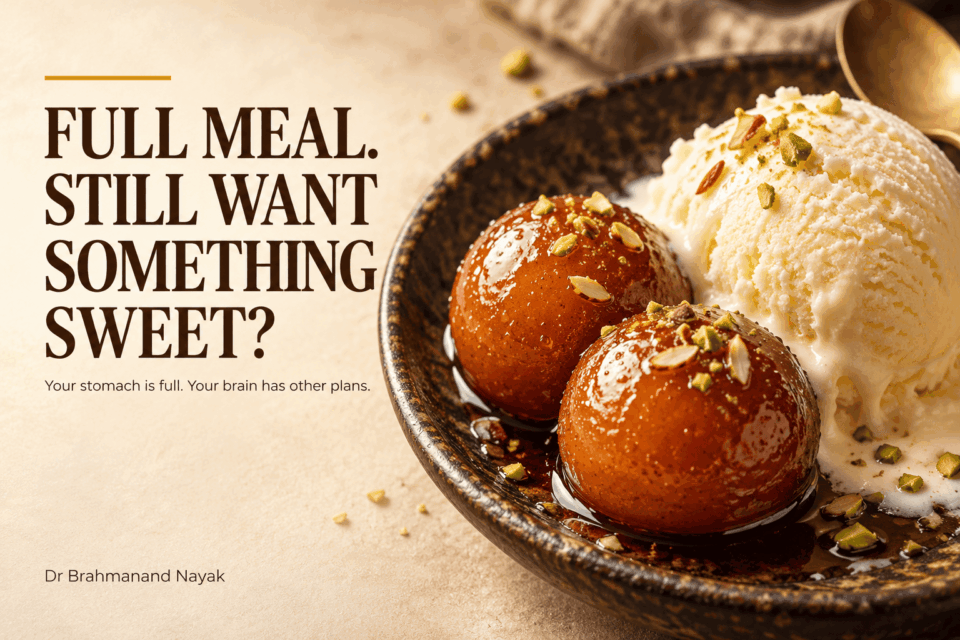
Offer another chapati after a wedding lunch and a man will cover his plate as though you are trying to serve him a court summons. Bring gulab jamun, and he pulls his hand back. Two, please. With a little syrup. Apparently, the stomach was full only for chapati.
We recognise this manoeuvre because we have done it. Nothing more, we announce, leaning back to give lunch more room. Then someone mentions hot jalebi. We sit up. We ask whether it is being made fresh. A person who could barely breathe is now conducting a quality inspection.
There is a name for part of this miracle: sensory-specific satiety. As we eat a particular food, its appeal usually declines. The first mouthful of pulao is glorious. By the twentieth, the romance needs help. Something with a different taste, texture or temperature can still seem inviting. You have had enough of that experience; another remains interesting. Fullness and appetite don’t always end together.
Researchers demonstrated this neatly with yoghurt. People ate more when offered three distinct flavours in succession than when given just one—even when that single flavour was their favourite. Variety kept appetite interested. This is useful knowledge at a buffet, where six desserts can turn sampling into a substantial second meal. A teaspoon of everything sounds restrained until everything occupies half a plate.
Even the brain can offer a second helping after announcing it is full. In a 2025 study, cells that helped signal fullness also encouraged mice to eat sugar. Human scans offered clues to a similar response, though researchers established the mechanism in mice. Dessert, it seems, has friends in high places.
Habit supplies another invitation. If dinner has ended with something sweet for years, finishing the meal becomes the cue to look for it. Think of the familiar explanation: I am not hungry, Doctor. I just need something sweet to finish. That distinction is revealing. The person may be seeking a familiar ending, rather than more food to satisfy hunger.
What helps? First, pause before automatically reaching for dessert. Clear the plate. Talk. Notice whether you want the sweet itself or merely feel that dinner is unfinished. If you choose dessert, serve a modest portion on a plate instead of negotiating repeatedly with an open box. Choose the one you love. You need not interview every sweet in the shop.
Eat it attentively, too. Notice the warmth, cardamom, crisp edge or soft centre. Check whether the next bite still gives the pleasure you wanted. Dessert need not become a guilty secret or a test of character. Understanding the invitation lets you choose whether to accept it.
Knowing why you want another gulab jamun is useful. Knowing you don’t have to obey is freedom. You can thank the brain for its suggestion and put down the spoon.
