
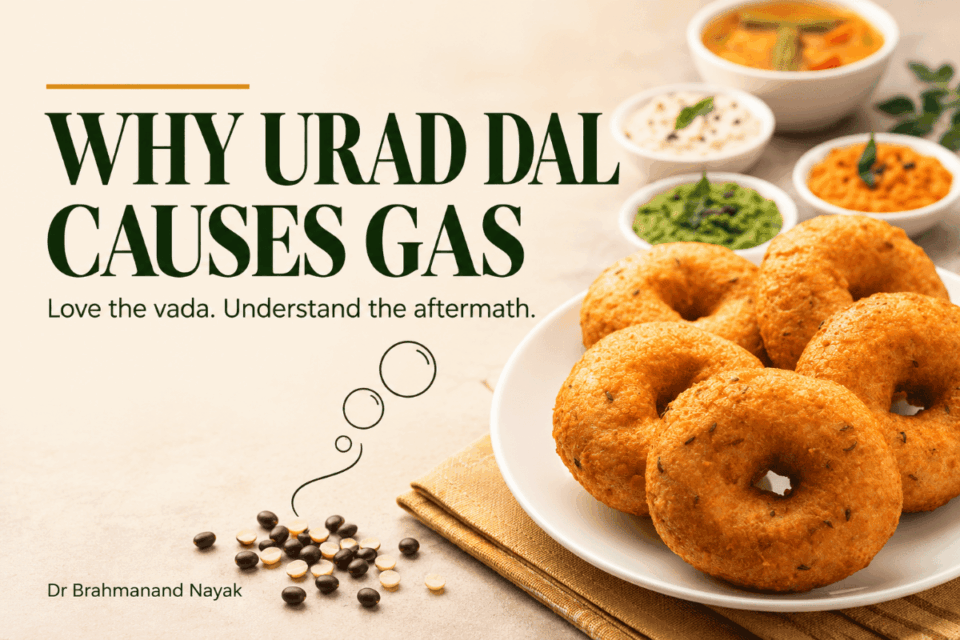
There should be two bills for medu vada: one payable at the counter, the other during the car ride home. The first you settle with UPI. The first you settle with UPI. The second makes everyone in the car suddenly interested in fresh air.
Poor urad dal. We beat air into its batter, fry it into something irresistible, eat four pieces, and complain that it causes gas. The complaint has a scientific basis. The portion deserves a hearing too.
Urad contains raffinose-family oligosaccharides, carbohydrates our small intestine cannot fully dismantle because it lacks the necessary digestive enzyme. They reach the large intestine, where bacteria ferment them and produce gas. Your meal has reached another set of diners. These organisms don’t care whether you are attending a wedding or travelling in a crowded lift.
Notice what does much of the mischief: certain carbohydrates. People sometimes blame the protein and abandon pulses altogether. But gas doesn’t mean all the food remained undigested. Different components of the same mouthful take different routes through digestion. Your intestines can absorb nutrients while your microbes produce something less socially useful.
There is another surprise. Feeling inflated does not reliably measure how much gas you contain. In irritable bowel syndrome, the gut can be unusually sensitive to stretching. One person barely notices what makes another loosen a waistband. The discomfort is real, even when the gas volume is unremarkable. A sensitive intestine needs consideration; instructing its owner to stop thinking about it rarely improves dinner.
The most useful experiment begins with the serving spoon. On a day when your digestion feels settled, try a few tablespoons of well-cooked urad with an otherwise familiar meal. Repeat on separate days. Note the portion, preparation and symptoms. If comfortable, increase gradually. Testing your tolerance at a wedding buffet is ambitious: by dessert, you have given your intestine fourteen possible explanations.
Preparation can help. Soak the dal for several hours, discard the soaking water, rinse, and cook in fresh water until thoroughly soft. Refrigerate during prolonged soaking in hot weather. Some gas-producing sugars pass into the water, though the reduction varies. Thorough cooking helps digestion; it does not guarantee that every troublesome carbohydrate disappears. Even a pressure cooker has limits.
Fermentation can reduce these sugars too, which helps explain why different urad preparations may suit you differently. Try a modest portion of properly fermented, steamed idli and compare your response with other preparations on another day. Neither sour batter nor a magnificent rise guarantees freedom from bloating. The microbes in your kitchen and those inside you don’t share a customer-service department.
Also examine what accompanied the urad. Rich, fatty meals can worsen discomfort. Onion and garlic trouble sensitive guts; dairy can trigger symptoms if you’re lactose intolerant. Hing, ginger, and cumin add pleasure, but they can’t protect you from an oversized meal. Eat slowly. Skip the fizzy drink. Change one thing at a time so you can learn what works.
Persistent or worsening bloating, severe pain, vomiting, blood in the stool, or unexplained weight loss warrants a medical assessment. Ordinary wind after urad usually calls for a smaller portion and better detective work. You may still enjoy your vada. Begin with one, eat it happily, and give the car windows the afternoon off.
