
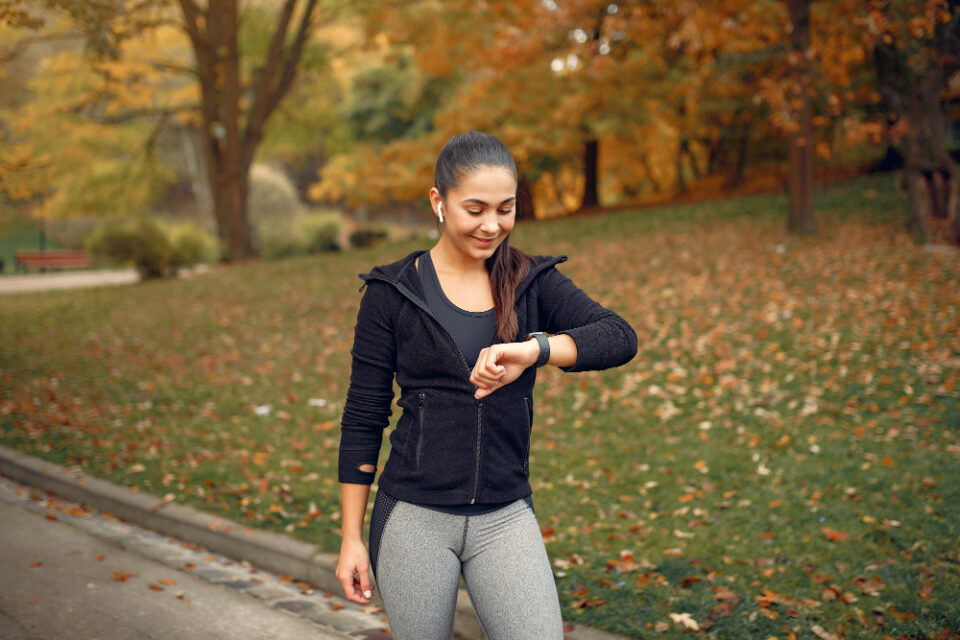
The young man sitting across from me looked well-rested and deeply alarmed. He was twenty-four, worked for a Bengaluru technology company and carried three months of health data on his phone. “Doctor, something is wrong with my sleep,” he said. His smartwatch had given him 62. I asked how he felt that morning. “Quite fresh,” he admitted. Then he lowered his voice. “But apparently I am not.”
There, in one consultation, sat the great health paradox of Gen Z. No generation has known so much about its body, and perhaps none has needed so much external permission to believe it. A young person may wake refreshed, but a watch declares poor recovery. She may feel hungry, but the calorie allowance is over. He may enjoy a long walk, but because the phone was left at home, the walk has vanished from history. The body lived it. The dashboard refused to issue a certificate.
By breakfast, the modern body has already undergone a performance appraisal. Sleep, deep sleep, resting pulse, heart rate variability, stress, and readiness arrive in cheerful colours. By night, it must submit attendance: steps walked, calories burnt, water swallowed, protein consumed and minutes spent being mindful. Even peace must now produce paperwork.
Technology deserves neither blame nor blind obedience. Wearables can encourage movement, reveal useful patterns and sometimes flag an irregular heartbeat. Menstrual apps can help women understand their cycles. Continuous glucose monitors can show how differently two bodies respond to the same meal. A device can be an excellent window. Trouble begins when the window acquires a whistle and starts behaving like the watchman.
The young man had bought his watch to improve his sleep. During the first week, he merely wore it. During the second, he began studying it. By the fourth, he was eating earlier, cancelling evening plans and lying down at exactly 10.30, determined to manufacture eight excellent hours. Sleep, which had previously arrived without an appointment, noticed the new management and resigned.
Clinicians have a name for this: orthosomnia, the unhealthy pursuit of perfect sleep data. A person sees a disappointing score, worries about the damage and enters the next night determined to perform better. But sleep dislikes auditions. The more closely it is watched, the more shyly it behaves. The tracker estimates another poor night, worry deepens, and the device appears to have proved itself right. The thermometer has begun heating the room.
Our ability to sense what is happening within the body is called interoception. It helps us notice hunger, fullness, thirst, breathlessness, tension, fatigue and the quickening heartbeat that sometimes arrives before fear has found its name. It is not magical inner wisdom; anxiety can exaggerate it, and illness can confuse it. But it is one of the oldest conversations we possess. Today that conversation is being interrupted by a third participant who speaks in percentages.
A Bengaluru breakfast now accommodates several civilisations. Grandmother says, “Eat before it becomes cold.” The gym trainer asks how many grams of protein it contains. Instagram wants to know whether it looks attractive. The glucose sensor waits two hours to pass judgment. The idli, once an innocent citizen, now appears before four courts carrying one bowl of chutney as legal counsel.
Food has consequently acquired a moral police force. It is clean or dirty, good or guilty, permitted or “earned.” A banana is no longer fruit; it is sugar in a yellow uniform. Rice must explain its glycaemic index. Ghee has travelled from criminal to celebrity so rapidly that it should appoint a public-relations manager. Meanwhile, someone who can calculate every macronutrient may have forgotten the small, ancient signal that says, “Enough.”
Exercise has suffered a similar promotion. It once belonged to play, work, travel and companionship. Now it may exist only after being recorded. People pace beside the bed at 11.55 p.m. because an activity ring remains incomplete, while the body they are supposedly protecting begs to sit down. Ten thousand steps have been achieved. Common sense is still at 9,436.
This is Goodhart’s law at work: when a measure becomes a target, it often stops being a useful measure. Steps matter because they represent movement. Once the number becomes sacred, people serve the number rather than the purpose. The same thing happens with calories, streaks, sleep scores and productivity minutes. We begin by measuring behaviour. Soon the measurement begins manufacturing it.
Gen Z was unusually prepared for this invasion. School gave marks, social media gave likes, gaming gave levels, offices gave ratings and shopping apps gave reward points. The body was the last unscored territory. Technology entered, placed a dashboard on it and announced that wellness, too, could be ranked before breakfast.
The result is a new kind of status. Earlier, wealth was displayed through watches; now the watch displays discipline. A completed activity ring, an immaculate smoothie, and a 5 a.m. gym photograph announce that the owner has not wasted the morning, unlike those irresponsible citizens who were asleep. Health is no longer simply experienced. It is performed, photographed and occasionally sponsored.
Every culture creates rituals to manage uncertainty. Earlier communities fasted together, feasted together, walked to places of worship and followed seasonal customs. Gen Z has morning routines, detox challenges, digital streaks and wearable badges. The influencer has become a travelling healer, the algorithm an invisible village elder, and the hydration reminder a tiny temple bell summoning the faithful to their steel bottles.
Some of this is genuinely liberating. This generation speaks about anxiety, menstruation, therapy, loneliness and burnout with an openness many parents never possessed. Online communities can help a young person discover that suffering has a name and that treatment exists. Language opens doors. But occasionally, it also moves in, changes the curtains and refuses to leave.
Watch one short video about adult ADHD and the algorithm does not ask what else could explain poor concentration. It supplies twenty more videos. Sleep deprivation, grief, anaemia, exam stress and ordinary boredom quietly exit through the back door while the diagnosis settles into the best chair. Algorithms do not practise differential diagnosis. They practise retention. A doctor asks, “What are the other possibilities?” The platform asks, “What will keep this thumb here?”
Pause over hair loss and the phone soon constructs a universe in which everyone lacks iron, vitamin D, biotin, zinc, magnesium and possibly hope. This creates a perfect market: first make ordinary bodily variation feel suspicious, then sell reassurance by subscription. Tired after a difficult week? Test your hormones. Distracted after five hours of sleep? Buy a focus supplement. Worried about health? Purchase a ring that provides fresh health information to worry about.
The young man had done more than reorganise his bedtime. He had stopped eating Sunday dinner with his parents because they ate at nine. His father complained, his mother began setting aside his portion, and he sat in his room, protecting tomorrow’s recovery score. Then he told me something almost casually. “They talk for a long time after dinner,” he said. “If I sit with them, my sleep time gets disturbed.”
That was the real abnormal reading. The device intended to protect his health had begun removing one of its foundations: human company. We know that social connection influences mental health, cardiovascular health, sleep and longevity. Yet no popular watch gives a young man a readiness score for making his mother laugh, lingering beside his father or belonging to a table where nobody is counting anything.
Wellness can become another language for inadequacy. The body is never lean enough, hydrated enough, rested enough, productive enough or calm enough. Rest must be optimised. Breathing must be coached. Gratitude must be recorded. A person can work so hard at preparing to live well that life slips past wearing ordinary clothes.
I asked the young man to try an experiment that cost nothing, which immediately made it suspicious. For two weeks, he could wear the watch but not view his sleep score. Each morning, before touching the phone, he had to rate three things: freshness, clarity of mind and willingness to move. He was also to notice afternoon sleepiness, caffeine dependence, snoring and morning headaches. And on Sunday, he had to eat with his parents.
This is a useful rule for anyone using health technology: body first, device second. Before opening the app, ask, “What am I actually feeling?” At meals, begin with hunger and stop near comfortable fullness. During exercise, notice your breathing, pain, pleasure, and next-day recovery. Study trends rather than isolated readings. One unusual score is often weather; a persistent pattern may be climate and deserves proper attention.
It also helps to preserve small regions of unmeasured life. Take one walk each week without recording it. Eat one meal whose protein remains unknown. Let one night’s sleep escape grading. Meet a friend without calling it mental-health maintenance. These are not rebellions against science. They are reminders that an experience does not become worthless merely because it leaves no graph.
Two weeks later, the young man returned. His watch had recorded almost the same sleep scores, but he no longer looked frightened. On several mornings it gave him marks in the sixties when he felt alert; once it congratulated him with an 84 after a night he remembered spending largely awake. He had also resumed Sunday dinner. “My score was bad on Monday,” he said, smiling, “but my mother’s dosa was excellent.”
That was not a victory over technology. It was a healthier partnership with it. The device could count, compare and warn; the person retained the right to interpret. A number could begin a conversation without delivering the final judgment. The dashboard had returned to its proper place—not above the body, but beside it.
Gen Z may yet become the healthiest generation in history. It has knowledge, openness, tools and a remarkable willingness to experiment. What it needs is not fewer measurements, but freedom from obedience to every measurement. The watch will continue counting, the app will continue predicting, and the algorithm will continue giving advice with the confidence of an uncle at an Indian wedding. But the body must retain the final vote, because a life can meet every target on the screen and still miss dinner at home.
