
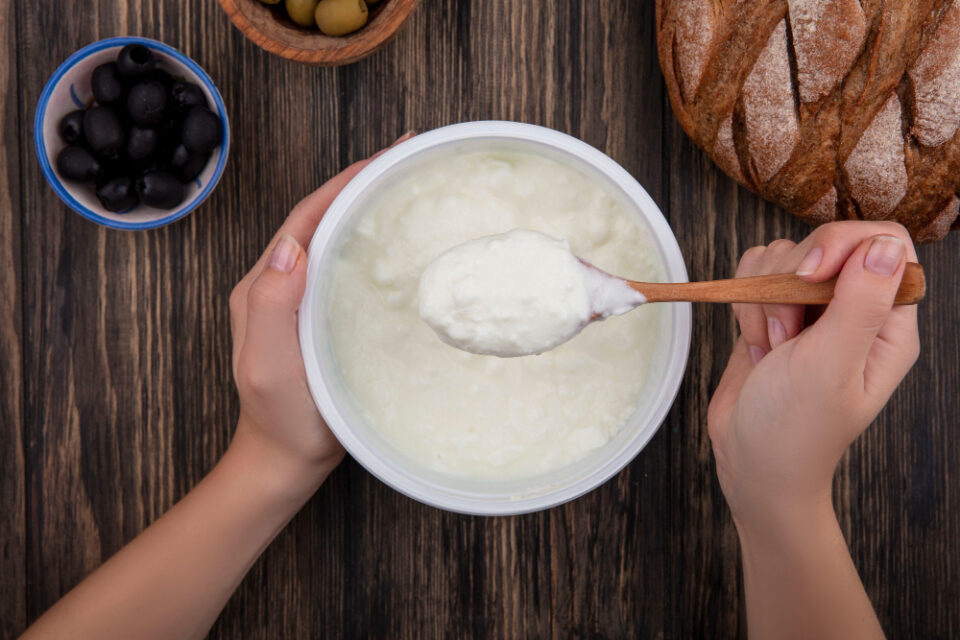
The funniest argument I hear in my clinic is not about medicines. It is about curd. One patient insists it causes cough. Another swears it cured his acidity. A gym enthusiast calls it the perfect protein. An elderly gentleman declares it should never be eaten at night. They all turn towards me, waiting for a verdict, as though I possess a secret agreement signed jointly by bacteria and the human digestive system. I usually disappoint them. Curd has never been the problem. Our certainty has. And as it happens, the elderly gentleman is closer to the truth than the rest.
Think about the foods you prepare every day. Rice boils before your eyes. Chapati puffs on the flame. Coffee announces itself through aroma. Even a pressure cooker whistles like an impatient neighbour demanding attention. Curd does none of these. You pour warm milk into a vessel, stir in a spoonful of yesterday’s curd, close the lid and walk away. When you return several hours later, the milk has quietly become another food. There was no applause, no smoke, no sound and no visible drama. Yet one of the most remarkable biological transformations in your kitchen has already taken place.
Curiously, almost nobody watches curd being made. We trust it completely, despite never having witnessed the process. Long before children learn words like microorganism, fermentation or microbiome, they grow up accepting that milk left overnight with a spoonful of starter culture will somehow become curd by morning. It is an act of faith supported by generations of repeated experience.
Our ancestors had no microscopes to reveal bacteria. Louis Pasteur would arrive thousands of years later. Yet Indian households had already mastered the practical art of cultivating invisible life. Every evening, a small spoonful of yesterday’s curd was carefully preserved because it carried something precious that could not be seen. Nobody spoke of Lactobacillus or Streptococcus thermophilus. They simply knew that without this tiny spoon, tomorrow’s curd might never appear. Observation came first. Scientific explanation arrived centuries later. That may be one of the greatest strengths of traditional knowledge. It respected evidence long before it understood mechanisms.
What actually happens inside that covered vessel would make an excellent documentary if our eyes could magnify the invisible. Millions of bacteria wake up in the warm milk and begin feeding on lactose, the natural milk sugar. As they multiply, they produce lactic acid. The rising acidity gently unfolds milk proteins called casein, allowing them to link together into a delicate three-dimensional network. Water becomes trapped inside this microscopic scaffold, and a soft gel slowly appears. Curd is therefore not milk that has thickened. It is milk whose entire architecture has been rebuilt without a single human hand touching it.
The story does not end when the curd sets. The clock keeps ticking. Leave it outside for longer, and the bacteria continue their work. The curd becomes increasingly sour because more lactose is converted into lactic acid. Refrigeration merely slows the journey; it does not stop it. Many people imagine the refrigerator presses a stop button. It does not. It simply persuades biology to walk instead of run. Yesterday’s mild curd and tomorrow’s sharply sour curd may occupy the same bowl, but they are not the same food.
This is also why two people can argue passionately about curd and both be telling the truth. One ate fresh, mildly fermented curd after lunch. The other remembers heavily sour curd stored for several days. As fermentation progresses, bacteria consume much of the lactose in milk. That is why many people who develop bloating or diarrhoea after drinking milk can often eat curd without the same problem. But the same passing hours raise the acidity and the biogenic amines, histamine among them, which is a different matter for a different person. So before you judge the bowl, read it. Just-set and mild is one food. Held-over and sour is very nearly another. The name on the vessel has not changed, but almost everything worth knowing about it has.
Ayurveda understood this long before food chemistry acquired its vocabulary. It refused to treat every milk product as interchangeable, describing dadhi, takra, mastu and navanita separately because transformation itself was considered meaningful. And it went further, into instructions a cook could follow. The Ashtanga Hridayam, in the Sutrasthana, is remarkably specific about dadhi. It advises against eating curd at night, heating it, consuming it in spring, or eating it on its own. Instead, it recommends combining curd with honey, ghee, sugar, green gram or amla. At first glance, these instructions may seem like rigid food rules. Viewed through the lens of modern fermentation science, however, they appear strikingly practical. Curd is a dense, acidic food, and these combinations may help balance its heaviness and improve its digestibility. Whether every recommendation is universally applicable today is open to discussion, but the underlying principle is unmistakable: curd should never be separated from its context. The elderly gentleman in my clinic was not merely repeating family tradition. Without realising it, he was echoing a clinical insight recorded more than a thousand years ago.
One detail still moves me more than any other. Every family protects its starter culture almost affectionately. If the curd fails to set, somebody quietly walks next door with a small bowl and returns carrying a spoonful from the neighbour’s kitchen. Along with it comes an invisible community of microorganisms that will now establish itself in another home. We borrow sugar without emotion. We borrow curd with hope. Few people realise they are also borrowing an entire microbial inheritance, exchanged between kitchens for generations without a single formal introduction.
After nearly three decades in practice, I have grown suspicious of the question patients most love to ask: is curd good or bad? It is the wrong question, because the honest answer depends on who holds the spoon. The child recovering from diarrhoea and the person who cannot digest milk both do well on fresh curd, its lactose already spent. The one with recurrent sinus trouble should suspect the old, sour bowl at the back of the fridge, where the amines have gathered. A marathon runner generates far more metabolic acid during exercise, yet the body usually handles it with remarkable efficiency. The elderly diabetic is better served by thin buttermilk than a thick sour mound at midnight. Same food, five answers. Good medicine begins where the single verdict ends.
Every bowl of curd contains two histories: one written by microbes overnight, the other by generations that learnt to trust results over explanations. Science arrived with a microscope. Tradition arrived with breakfast.
