
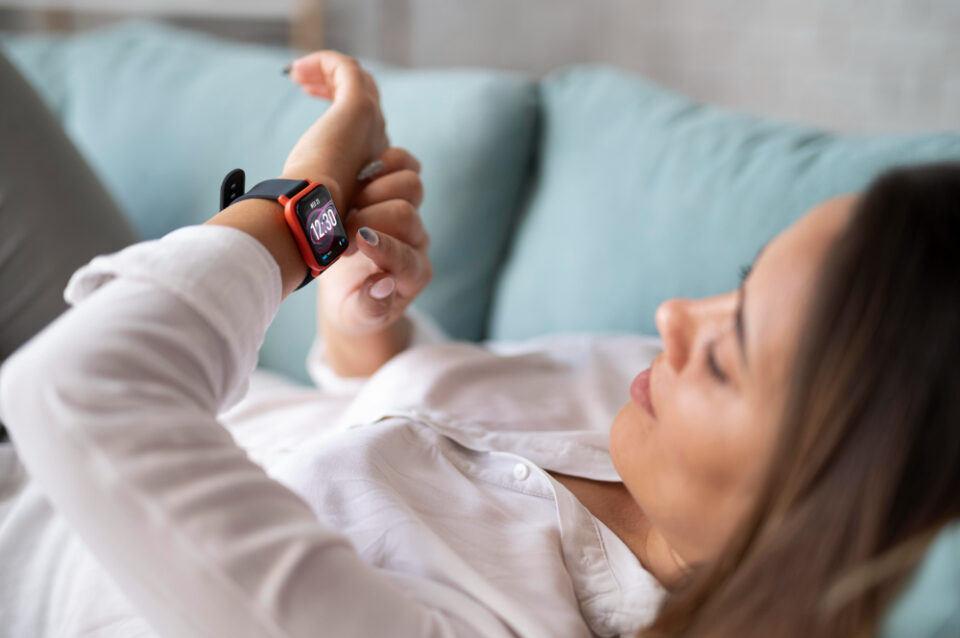
At 3:12 in the morning, a man opened one eye, lifted his wrist to his face, and checked whether he was sleeping properly. Then he turned to the other side and slept again. He narrated this to me later with the innocence of someone saying he had adjusted the fan speed. Only after he left did the sentence begin to glow strangely in my head. People have always woken at night because of crying babies, barking dogs, snoring spouses, mosquitoes, bladder pressure, unpaid bills, old regrets and sudden philosophical emergencies. Somewhere recently, another item slipped quietly into the list: checking sleep.
Sleep has changed departments. Earlier, it belonged to darkness, fatigue, pillow, prayer, habit, digestion, dreams and the mercy of mosquitoes. Now it belongs partly to technology. Bedtime increasingly resembles pre-flight preparation. Phone charged. Watch charged. Water bottle filled. Room temperature adjusted. Blue light reduced. Sleep mode activated. Alarm set. Battery checked. Wrist device tightened. App opened. Finally, unconsciousness was attempted. Once people counted sheep. Now, many count sleep cycles. Rest has become homework.
A software engineer once came to my clinic carrying printed reports. I expected thyroid, sugar, vitamin D, something familiar. Instead, he spread out coloured pages of deep sleep, REM sleep, body battery, stress score and recovery percentage. He was not tired. He was not sleepy. His work was fine. His appetite was fine. His mood, until the report arrived, had also been fine. “Then what is the problem?” I asked. He pointed to one curve with the seriousness of a man showing a suspicious ECG. “Recovery sixty-one per cent.” For a few seconds, both of us looked respectfully at the paper. The graph looked more confident than either of us.
This is where the comedy becomes science. A sleep tracker is clever, but it does not sleep with you. It waits outside the door, collecting clues. Your wrist moves less. Pulse changes. Temperature shifts. Breathing finds another rhythm. From these hints, the device makes an educated guess. Real sleep studies are less stylish and more electrical. Wires on scalp. Sensors near the eyes. Belts around the chest. Electrodes on limbs. A proper sleep lab looks as if a person went to bed and accidentally joined a space programme. A watch that measures sleep is like standing outside a cricket stadium and reconstructing the match from the crowd noise. Much can be guessed. Much can be missed. A dropped samosa may sound like a wicket.
Then came the most beautiful absurdity. Sleep trackers did not merely measure sleep. They began changing people’s relationship with sleep. Researchers noticed that patients were becoming anxious about their sleep scores and termed this phenomenon orthosomnia. Some stay in bed longer to improve numbers. Some refresh apps like exam results. Some cancel exercise because readiness is low. Some wake during the night to check whether sleep is proceeding correctly. This is a special kind of modern achievement: disturbing sleep to audit it. It is the only exam where checking marks during the exam can reduce the marks.
A couple once told me their morning arguments had become more scientific. Earlier, the wife would say, “You are irritable.” Now the husband had upgraded his defence. “No, my deep sleep was low.” This is how technology enters marriage. First, as a gadget. Then as a witness. Then, as a lawyer. Soon someone will say, “Don’t blame me, blame my REM architecture.” Earlier, rich people displayed cars. Now some proudly display resting heart rates. Once, health was how the day felt inside the body. Now, for many, health begins with opening an app.
The bigger change is not that watches started tracking sleep. The bigger change is that many stopped trusting the morning. Earlier, you woke and asked, “How do I feel?” Now the first question can become, “What does the app say?” That distance looks small. It is not. Numbers are attractive because they are clean. Feelings are untidy. Numbers sit neatly inside circles and graphs. Feelings arrive with hunger, mood, memory, weather, quarrels, digestion, loneliness and last night’s dinner. But some of the most important things in life still refuse to be perfectly measured. Happiness. Friendship. Grief. Peace. Love. Good sleep.
Ayurveda, in its old-fashioned way, would probably smile at this confusion. It would not reject the gadget. It would simply ask for humility. Did you wake fresh? Is hunger steady? Are bowels regular? Is the mind clear? Is the day bearable without behaving like a minor dictator at breakfast? The body has always kept records. It writes them in appetite, skin, eyes, enthusiasm, patience and the small kindness with which you answer the first phone call of the day. A watch gives data. The body gives a verdict.
Recently, another patient asked whether he should stop wearing his sleep tracker. “No,” I said. “It can be useful.” Useful for noticing patterns. Useful for correcting terrible habits. Useful when snoring, obesity, daytime sleepiness or suspected sleep apnoea need attention. Useful when lifestyle has become so chaotic that even a wristwatch feels concerned. “Then what should I do?” he asked. “Occasionally ignore it,” I said. Before he could answer, his watch vibrated. Hydration reminder. We stopped talking and drank water obediently. The watch seemed pleased. I still do not know whether either of us was thirsty.
Perhaps the best use of a sleep tracker is to treat it like a weather forecast. Useful to know. Unwise to obey blindly. Listen sometimes. Smile sometimes. Do not hand over the house keys. Because sleep is not a corporate target, not a school exam, not a stock-market graph, not a moral certificate issued at dawn. It is a nightly act of surrender. The old sleep tracker is still there when morning arrives. You open your eyes. You sit up. You meet on the day. That is the report that matters most.
I have written a book.
If this blog spoke to you, the book will stay with you longer.

1 comment
[…] I asked. “I walk every morning. I’ve lost six kilos. I eat dinner before eight. I sleep earlier,” he said. Then he smiled. “And Doctor… I have started putting a little milk back […]