
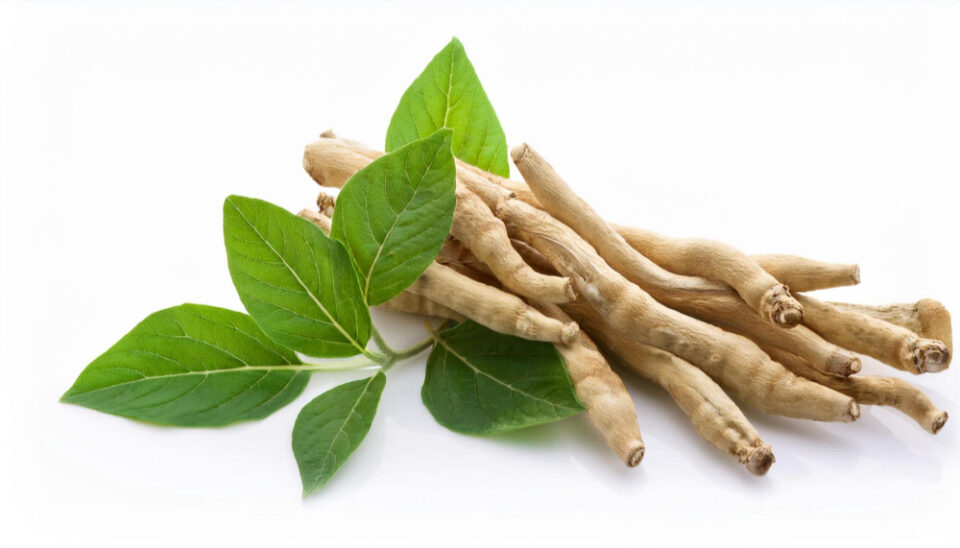
Inside the most dramatic regulatory firing in the history of Ayurveda, where a plant part used for three thousand years just lost its job. To a PDF.
Imagine you have been working for the same organisation for three thousand years. You show up every day, rain or drought. You ask for nothing except some dry Deccan soil and a philosophical commitment to holistic wellness. You are, by any reasonable measure, a loyal employee. And then one April morning in 2026, you find a government circular on your desk. No performance review. No exit interview. Just a line in an official FSSAI directive: root extracts only, thank you. The leaf? Step away from the capsule. You have been let go.
This is the story of the ashwagandha leaf. And it is considerably more interesting than any firing you have heard of before. Before the outrage brigade arrives with torches — the internet has a remarkable talent for turning nuance into panic and panic into a wellness blog called “IS ASHWAGANDHA TRYING TO KILL YOU?” — let us establish something clearly. NO. Ashwagandha is not trying to kill you. If you are currently taking ashwagandha supplements, and the odds are reasonable given that it is the world’s top-selling adaptogen in a global market approaching a billion dollars, you are almost certainly taking root extract. You have always been taking root extract. The Ayurvedic Pharmacopoeia of India says the root. The British Pharmacopoeia says root. The World Health Organisation says root. The American Herbal Pharmacopoeia says root. Of the 247 clinical trials registered in India on ashwagandha, exactly one involves the leaf. One. The leaf was never used as a traditional medicine. It was the supply chain’s creative interpretation of a three-thousand-year-old prescription. The FSSAI has finally noticed.
Now that the panic is handled, the fascinating part begins. The plant’s proper name is Withania somnifera — Latin for “sleep-inducing Withania,” named after the eighteenth-century botanist Heinrich Withan, who presumably never had trouble sleeping after naming a few hundred plants. Its Indian name, ashwagandha, translates from Sanskrit as “smell of horse.” This is not a metaphor. The fresh root smells, with absolute botanical conviction, exactly like a horse. Ayurvedic physicians knew this for millennia and prescribed it anyway, because when a plant can rebuild your stamina, calm your nervous system, improve your fertility, support your immunity, and outlive every wellness trend by thirty centuries, you forgive it the cologne. It also delights botanists at dinner parties—a member of the nightshade family. Same extended family as tomato, potato, and belladonna. The nightshades are like that. They grow what you eat every day, and what you should never eat in the same family, entirely unbothered by the company they keep.
The plant does not come with a single name. It comes with a series of observations. Classical texts kept returning to it, naming what they noticed. Aśvagandhā — smell of a horse. Baladā — giver of strength. Puṣṭidā — nourisher. Varāhakarṇī — leaves shaped like a boar’s ear. Hayagandhā — the horse again, as if once was not enough. This is how Ayurveda worked. It did not name plants. It watched them — over centuries, across seasons, across different constitutions — and accumulated knowledge so layered and contextual that it makes a modern supplement label look like a Post-it note. The Charaka Samhita, written over two thousand years ago, classifies ashwagandha as a rasayana — not a cure for one thing but a tonic for everything that erodes: vitality, memory, resilience, the slow, dignified wearing-down of a life well-lived. Every classical text, every pharmacopoeia, every serious scholar wrote about the root. In traditional Ayurvedic practice, the leaf was used topically. Applied to swellings. Sometimes in supervised, short-term therapeutic contexts so specific that they would require a trained vaidya, not a midnight scroll through a wellness website. The leaf was never an oral supplement. Until, suddenly, it was.
The leaf was not discovered by science. It was discovered by shortage. Ashwagandha root trades at the wholesale mandi level at roughly two hundred and fifty to three hundred rupees per kilogram. Ashwagandha leaf costs less than one-fifteenth of that price. When demand for “root extract” exploded globally — pandemic stress sent sales surging, TikTok discovered adaptogens, your gym-going nephew started adding it to his protein shake — supply cracked under the pressure. India produces approximately fifteen hundred tonnes of ashwagandha root per year. Annual industrial demand is 7,000 tonnes. That is not a supply gap. That is a supply abyss. An industry trying to meet 7,000 tonnes of demand with 1,500 tonnes of root will, with the inevitability of water finding a crack, turn to something cheaper. It reached for the leaf.
The scale of what followed warrants front-page coverage. One study tested 10 commercial extracts labelled “derived from roots” for chemical markers indicative of aerial-part adulteration. Eight of the ten contained those markers. A larger study using high-performance thin-layer chromatography tested five hundred and eighty-four commercial batches of ashwagandha root extract and found that 20.4% were not composed solely of authentic root material — 14% rejected outright due to leaf debris. Then came the number from the National Medicinal Plants Board, the Government of India’s own trading data body, for 2024 to 2025: in that single year, 4,698 tonnes of ashwagandha leaf were sold across India, compared with 4,170 tonnes of root. More leaf than root. In a market where every label says root. The leaf ban is not purely a safety intervention. It is a fraud intervention.
Some of the most reputable manufacturers — those who spent years in research, ran dozens of trials, and built their entire identity on root-only products — have publicly acknowledged that their financial advisors pointed out that profits would be far higher if they used leaves. They chose not to. They held the line. Meanwhile, anyone could press leaf powder into a capsule, print “clinically studied ashwagandha” on the label — technically accurate, because the clinical studies exist for root extract, not for whatever was actually in that bottle — and have it on Amazon by Thursday. The supplement industry rewards speed and punishes diligence. When the FSSAI issued its directive in April 2026, it was not breaking new ground. It was closing old gaps — gaps that had existed for fifteen years, gaps that every serious manufacturer knew about, gaps that the industry had quietly exploited because nothing in the system made honesty cheaper than adulteration.
Now to the science. The molecule at the centre of the leaf controversy is called Withanone. Concentrated significantly more in the leaf than in the root, it is processed by the liver through a pathway called cytochrome P450, generating reactive metabolites that the liver neutralises using glutathione — the body’s primary chemical defence. Under normal circumstances, the liver handles this gracefully. Overwhelm the system — with high doses, chronic alcohol use, or other supplements depleting the same reserves — and the molecule stops being managed and starts causing damage. The label says natural. The liver reads chemistry. The mechanism resembles how paracetamol damages the liver in overdose. Both deplete glutathione. Both are safe at normal doses but become dangerous when the liver’s capacity is exceeded.
Now consider who ashwagandha marketing targets most aggressively: the stressed, anxious, frequently headachy person. What does that person reach for alongside their wellness supplement? Crocin. Paracetamol. Two glutathione-depleting compounds through the same overworked liver, simultaneously, without either label mentioning the other. The molecular biologist is speaking in a language the patient was never told existed. This is not a story about a dangerous plant. It is a precision story about what happens when a pharmacologically sophisticated substance is stripped of all clinical context and handed to the general public, accompanied by a cheerful leaf graphic on the packaging.
There is also a bidirectional hormonal truth about ashwagandha that the supplement model cannot accommodate. Research shows it acts as a pharmacological amphoteric — stimulating a hormone receptor when levels are low, blocking it when levels are too high. This is the scientific basis for calling it an adaptogen. Documented adverse events are rare, largely idiosyncratic, and in most instances involved misuse — doses well above recommendations, combinations with alcohol, or continuation despite warning signs. These are not common outcomes. But rare outcomes multiplied across millions of daily consumers are not rare in absolute numbers. They are a predictable statistical tail. A supplement label cannot ask whether you have an underlying liver vulnerability. It cannot ask what else you are taking. It says “take two capsules daily” and considers its job done. The classical practitioner asked twelve questions before recommending anything. The capsule asks none. Ayurveda asked questions. The capsule removed them. That gap is not a minor inconvenience. It is where adverse events live.
Now, to what the root actually does — because the extraordinary findings sit quietly in peer-reviewed journals while the controversy dominates the headlines. In clinical studies on male infertility, ashwagandha root administered for three months increased sperm count in men with low sperm counts by three hundred and sixty-three per cent. That number, in a pharmaceutical trial, would be front-page news globally. It sits largely undiscussed because the compound cannot be patented and therefore cannot be backed by the commercial infrastructure that pharmaceutical companies deploy. Clinical trials have shown ashwagandha root lowers cortisol in stressed adults by twenty-three to thirty-three per cent, works on GABA receptors — the same pathway that anti-anxiety medications like alprazolam operate on, without the addiction risk — and improves sleep quality, memory, cardiorespiratory endurance, and testosterone. This is not a dietary supplement behaving like a vitamin. This is one of the most pharmacologically sophisticated substances available without a prescription anywhere on earth, growing in the dry soil of Madhya Pradesh and Rajasthan, where smallholder farmers earn ten times the return per acre compared to wheat. It is a genuine marvel of Indian botanical heritage, and it deserves far better than the label it has been given.
The global politics around this plant demand attention. In April 2023, Denmark became the first European country to ban ashwagandha outright, citing a Technical University of Denmark risk assessment that alleged, among other things, abortifacient activity. The claim traced through a chain of citations to the American Herbal Pharmacopoeia monograph. There was one problem: the AHP monograph said the opposite — that ashwagandha has traditionally been used to prevent miscarriage, not cause it. The DTU report misread the citation so completely that the AHP’s own editor issued a formal clarification in July 2024, stating unequivocally that ashwagandha poses no abortion risk. Researchers at the University of Mississippi’s National Centre for Natural Products Research, in a paper published in the Journal of Ethnopharmacology, stated that they “did not see solid scientific evidence to come up with a decision that would ban ashwagandha” and that “questionable science may have caused Denmark’s move.” A national ban that triggered regulatory alarm across Sweden, Finland, France, Germany, the Netherlands, and the United Kingdom was partly built on a misread footnote.
Regulation does not preserve tradition. It preserves what can be measured. Denmark measured a misread sentence and banned a plant. That ban is now reshaping ashwagandha’s future across an entire continent. A three-thousand-year-old plant is now being judged by systems that did not exist when it was first prescribed. If Ayurveda had a legal team, they would be filing a very interesting brief right now.
India has not been passive. The Ministry of AYUSH issued an Ashwagandha Safety Dossier in 2024, compiling scientific evidence on the root’s safety to counter the European regulatory cascade. In December 2025, Prime Minister Modi launched the Ayush Mark at the Second WHO Global Summit on Traditional Medicine in New Delhi — a global quality benchmark for traditional medicine products. A commemorative postage stamp on ashwagandha was released at the same event. India views this plant as an instrument of civilisational soft power at a moment when the world is genuinely seeking what India’s classical tradition offers. Meanwhile, European pressure arrives against the backdrop of documented biopiracy — American and Japanese companies filed over 12 ashwagandha patents in the early 2000s, of which India managed to revoke only one through the Traditional Knowledge Digital Library. A plant that the world first tried to own is now being regulated off Western shelves. The sequence is uncomfortable to observe, and India is right to name it.
But there is a domestic discomfort here too, harder to discuss and more important to name. The leaf was not banned by external enemies. It was adulterated into root products by domestic suppliers, overused by domestic industry, and flagged by domestic regulators who saw the NMPB data and found more leaf than root moving through the market. The supply chain fraud was an inside job. The lesson of the leaf is not that the West is taking ashwagandha away from India. The lesson is that India nearly handed itself over by treating a precision instrument as a bulk commodity, and a classical medicine as a marketing ingredient.
The FSSAI directive has restored the original instruction. Use the root. The same instruction in the Charaka Samhita. The same instruction in the Ayurvedic Pharmacopoeia of India. The leaf was not a traditional medicine awaiting modern rediscovery. It was a medicine that belonged in a specific clinical context — assessed constitution, appropriate delivery vehicle, defined therapeutic duration, deliberate exit point. The modern supplement industry took that compound, removed all those conditions, put it into a capsule, and called the result ancient wisdom. We did not misuse the plant. We removed the conditions that made it safe.
The root is still in your capsule, doing what it has always done — lowering cortisol, improving sleep, working through pathways that took centuries of careful observation to understand and are only now being confirmed by clinical science. It has been working on your behalf for three thousand years. What we owe it — what we owe this extraordinary plant, as much a part of India’s heritage as the Ganga and the ghee and the grandmother who knew exactly how to use both — is to finally use it wisely. Not just the root in the capsule.
Ayurveda did not fail modern wellness. Modern wellness failed to read Ayurveda.
————————————————————————————————————————————————————————————
The author has written Vishvagandha, a book on the classical, clinical, and cultural depth of Withania somnifera. The FSSAI directive F.No. RCD-15001/11/2021-Regulatory-FSSAI was issued in April 2026, reaffirming that only roots and root extracts are permitted in food supplements. The Ministry of AYUSH directive T-13020/4/2022-DCC-Part(2), dated the same date, extended the restriction to all Ayush formulations. All scientific data cited in this article is drawn from peer-reviewed published literature and government sources available in the public domain at the time of writing. This article is intended for general informational and educational purposes only. It does not constitute medical advice, diagnosis, or treatment recommendation. Individual responses to any supplement vary. Readers with existing health conditions, those on medication, or those who are pregnant or breastfeeding should consult a qualified medical practitioner before using any ashwagandha product. The author and publisher accept no liability for decisions made on the basis of information contained in this article.
I have written a book.
If this blog spoke to you, the book will stay with you longer.
