
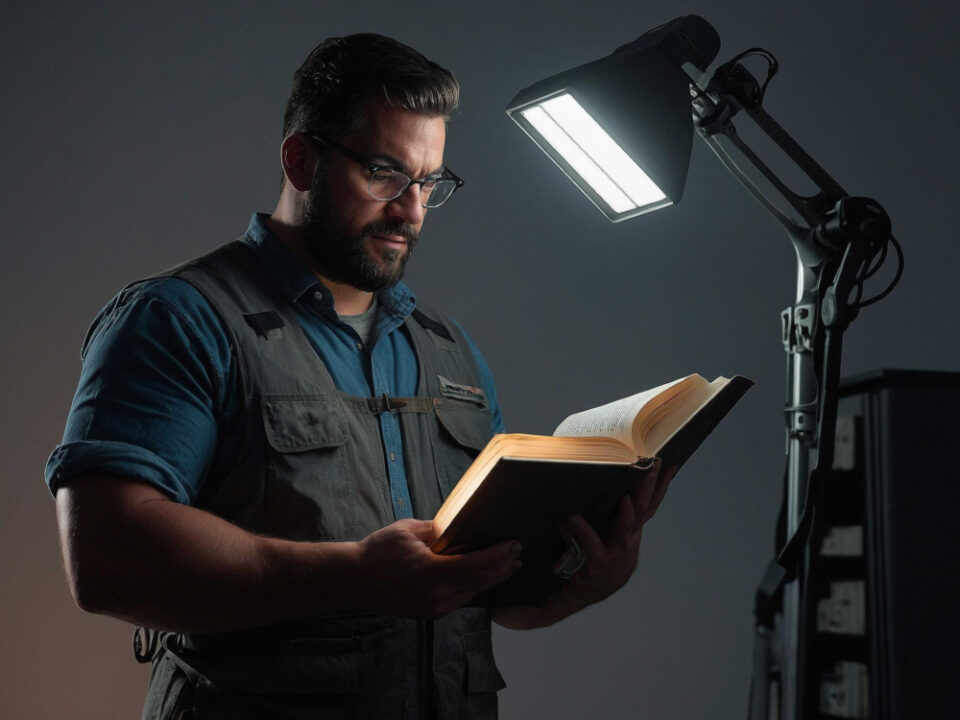
Last week, a young man told me he had no time to read. He said this after narrating, with impressive memory and emotional investment, a 14-episode web series he had finished in two nights for “stress relief.” I did not interrupt him. In medicine, you let a patient complete his diagnosis before you begin yours. He remembered every character arc. He could not remember the last time he sat quietly by himself. We have time for stories; we say we don’t have time for sentences.
You study for twenty years to stand on your feet. Nobody tells you what to do once you are standing. The syllabus ends. The salary starts. The questions arrive, not the ones with options A, B, C, D, but the kind that look at you and wait. Life begins exactly where the exam pattern ends, and there is no internal choice here.
You get a job. You move cities. You learn to cook one decent meal, burn two, and order the rest with confidence. Your parents become polite on the phone. Your friends become “let’s catch up soon.” Independence arrives. So does Swiggy. And slowly, very politely, life places a set of problems on your table that your degree never mentioned. The real interview starts after the offer letter.
How do you speak to someone you love when you are angry but don’t want to damage the relationship? How do you sit with failure when effort does not translate into success? How do you see your parents as people, not just as instructions? How do you handle jealousy when your batchmate buys a house before you buy a chair—EMI first, furniture later? How do you deal with loneliness in a city that has traffic but no time? You learned algorithms; nobody taught you arguments.
How do you face boredom when nothing is wrong, but nothing feels right? How do you make a decision when there is no correct answer, only consequences? When things don’t happen as you expected, how do you handle it? These are not technical problems. They are human problems. There is no syllabus, no model answer, and definitely no grace marks.
In my clinic, I see this pattern every day. Vitals are normal. Blood tests perfect. Reports say ‘normal.’ Life usually adds a few footnotes.
“Doctor, why should I read now? I already studied so much to get this job.” I hear this often—sometimes with irritation, sometimes with genuine fatigue. I understand the arithmetic. School, college, coaching, placement—reading feels like a phase you have graduated from. Like handwriting. Or patience. But here is the inconvenient truth: your education prepared you for problems with answers. Studies had clear answers. Life doesn’t. You passed the exams. Now the questions are different.
Reading is not just for time pass. It prepares you for life. In a book, you see betrayal, loss, love, and mistakes, without going through them yourself. You understand people better. Sometimes, you even catch your own mistake before making it.
We had this training at home once. In Karnataka, writers did this work quietly, without podcasts or productivity hacks. Kuvempu wrote about expanding beyond your small self into a larger human long before mindfulness became a subscription. D. R. Bendre held joy and sorrow in the same line and made them sit together without fighting. U. R. Ananthamurthy spent a lifetime describing moral confusion inside ordinary homes—the exact confusion that walks into my OPD every evening. P. Lankesh showed us uncomfortable truths about society and ourselves without softening them. Jayant Kaikini captured the quiet loneliness and tenderness of everyday urban life—the small emotions we feel but rarely name. We mugged them for exams and ignored them for life. They passed us. We failed them. The textbook was open; the mind was closed.
“Doctor, I only told the truth. Why is she still upset?” This sentence deserves its own chapter in Indian medicine. Truth, in relationships, is not a fact; it is a delivery system. You can be correct and still be careless. You can win the argument and lose the person. Because truth has a tone, and you delivered it like a software update: forced and badly timed. You can debug code; you cannot debug a sentence once it lands.
A book teaches you this without humiliating you. It lets you sit inside another mind long enough to realise that people rarely say what they mean and almost never mean what they say at first attempt. You learn that anger has a history, that silence has a vocabulary, that love has a grammar you were never taught. Reading is the slow upgrade your personality never got in college.
Doctor, instead of reading, I watch videos. Same thing, no?” “No. The video you just watched. Reading—you have to think. When you read, your mind builds the room, the voice, the pause between two lines. You become a participant, not a spectator. One plays for you. The other makes you work. Entertainment is easy. Understanding is manual.
There is science if you need it, but you already know the feeling. A few minutes with a good page settles something inside that a hundred scrolls cannot—most of which you don’t remember even while watching. Your breathing changes. Your thinking slows. You begin to hear yourself again. The nervous system recognises a good sentence before the intellect approves it.
Doctor, will reading increase my thoughts? Yes. That’s the point. Not all thoughts are noise. When you have better words, you think more clearly. Then you respond rather than just react. The problem is not too many thoughts—it’s the same few thoughts repeating again and again. Better words make the mind calmer.
Biographies add a different strength. They compress decades into days—without you making all the mistakes yourself. You sit with someone else’s failures, doubts, recoveries, and stubbornness at a safe distance. You borrow courage wholesale. You borrow perspective retail. It is the only shortcut that does not cheat you.
If you don’t read, someone else will do your thinking for you. This is true in politics, in relationships, in health. Language shapes perception. Perception shapes choice. Choice shapes life. Without reading, you are not choosing; you are responding to the loudest voice in the room, and today, that room fits inside your phone. Silence is not neutrality; it is borrowed opinion.I do not prescribe classics. I prescribe curiosity. Start with a life that interests you. Then step into a story that is not yours. Then, when you are ready, try a poem that refuses to explain itself. Thirty pages a day. Less than one episode. If you can scroll for forty minutes, you can read for twenty. This is not a time problem. Consistency beats intensity; the mind prefers small, repeated kindness.
You studied to earn a living. You must read to understand how to live. Because after the job comes everything that matters—relationships, responsibility, uncertainty, loss, and long stretches of ordinary days that need meaning. There is no syllabus for this. There are only lives lived before yours, waiting to be entered. Experience is slow; borrowed experience is wisdom.
Income upgrades the house. Language upgrades the person living inside it. Read—not to impress, not to perform—but to equip yourself for the most complex machine you will ever handle: another human being, including yourself—which, unfortunately, does not come with a user manual. A high salary can fund your life; only a trained mind can understand it.
I have written a book.
If this blog spoke to you, the book will stay with you longer.
