
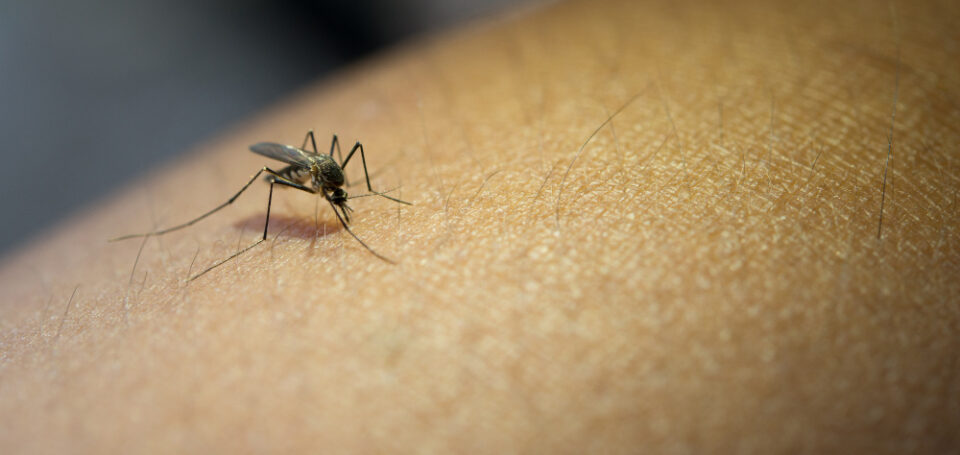
Doctor, why do mosquitoes love me more? A man asked me this question as if he were filing a complaint with the Supreme Court. His wife, untouched, slept like a queen. He arrived in my clinic, scratching his arms, muttering like a betrayed poet. “Doctor,” he said, “they treat her like Switzerland. But me—it’s World War II.” In India, a mosquito bite is not a medical event. It is a personal insult.
That whine in your ear at two in the morning is louder than temple bells. The mosquito knows timing better than a stand-up comedian. It waits until you’re asleep, then circles your ear like an unpaid DJ. You slap yourself awake, roll over, and soon another bite blooms on your ankle. By sunrise, you are a cartographer’s dream, your body mapped with itchy continents. The only empire mosquitoes build is on human skin.
Science, of course, has tried to solve this injustice. Studies reveal mosquitoes prefer Type O blood over Type A. They chase warm bodies, sweaty skin, and carbon dioxide exhaled in abundance. Pregnant women attract more because they breathe heavier and run hotter—beer drinkers too, which makes you wonder if mosquitoes run pubs on the side. Imagine being Type O, sweaty, and fond of effervescent beer. That’s not a body, that’s an open buffet. The mosquito is lighter than a grain of rice, but its taste is fussier than a food critic’s.
Modern research can’t measure irritation. One of my patients, a software engineer, complained that his wife was mosquito-proof. “Doctor, she sleeps like Buddha. I am the night buffet.” His wife smirked, “That’s because you thrash like a Bollywood villain. You invite them with your drama.” She was right. The bite is real, but the itch is magnified in the mind. A mosquito gives you a pinprick. The brain converts it into an opera.
Ayurveda spoke of this long ago. Rakta dosha—when blood runs hot, impure, or inflamed—decides how fiercely you react—two patients, one bite each. One shrugs, the other scratches till his leg looks like an archaeological site. The mosquito is equal-opportunity. It is your blood that writes the script. A calm bloodstream turns the bite into a whisper. An inflamed bloodstream turns it into a scandal.
Evening OPD in Bangalore often feels like a mosquito convention. Patients slap their calves between sentences, scratch elbows mid-story, wave arms like swamis in trance. A retired professor once said, “Doctor, mosquitoes love me because I am too sweet.” His sugar was 260. He wasn’t lying. Ayurveda calls it madhura rasa—too much sweetness in the system makes the body a pest paradise. Just as stagnant ponds breed mosquitoes, stagnant metabolism invites them. Sometimes I think mosquitoes are better at detecting diabetes than laboratories.
My childhood in Gokarna was a stage for mosquito remedies. Grandmothers burned neem leaves at dusk. The smoke rose like incense, and mosquitoes fled like guilty children. Others rubbed turmeric paste or smeared mustard oil with camphor. These rituals weren’t science; they were a matter of survival. Today, we have plug-in coils that smell like insecticide more than relief. Yet Ayurveda still whispers the same truths: tulsi oil on the skin, coriander water for cooling blood, neem in the bath. Patients laugh at these because they are simple. But mosquitoes don’t understand English or Latin names. They only appreciate nature’s language.
The real comedy unfolds inside families. In one house, the husband is the magnet. In another, the child is spared while the mother is chewed alive. Families invent mythologies. One man bragged, “They bite me because I am tastier than my wife.” Another, nobler, “They bite me because I protect my children.” Truth is duller: mosquitoes pick the nearest warm, still, carbon-rich body. But the debates are priceless. Only in India can mosquito bites become family politics.
Yet the danger isn’t only the itch. These aren’t the innocent village mosquitoes of our childhood. They carry dengue, chikungunya, malaria. Every monsoon brings fevers that begin like colds but end in hospital corridors. Ayurveda insists that prevention is the first prescription. Keep surroundings clean, drain stagnant water, strengthen immunity with guduchi, neem, and amalaki. Drink fennel and coriander decoctions. A mosquito bite isn’t just private pain. It is an ecological message. Where mosquitoes thrive, the environment is sick.
And still, with satellites in space and AI in our phones, we lose sleep to a creature lighter than a whisper. It doesn’t argue. It doesn’t need WiFi. It doesn’t want your property. Just a drop of blood. And for that, it turns your night into a battlefield. Perhaps the lesson is this: the mightiest troubles don’t ruin our peace. The tiniest irritations do. A mosquito is proof that persistence beats intelligence.
So when patients ask, “Doctor, why do mosquitoes love me more?” I smile and reply, “Because even the smallest citizens of Earth need their favourite restaurant.” Health is not the absence of bites. It is the art of not letting the bite become the night.
