
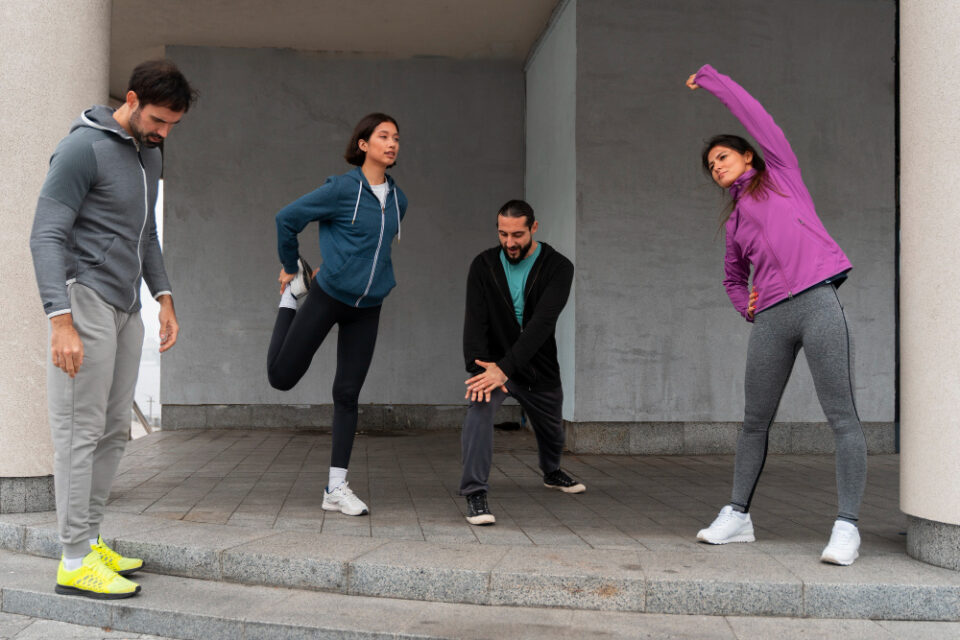
Some people lift weights. Some lift babies. Some lift only their eyebrows when you mention exercise. Over the years in my clinic, I’ve met all three types—and prescribed movement to each. Not the kind splashed across gym billboards, but the kind that matches their inner wiring. Because when it comes to exercise, one-size-fits-all is the fastest route to one-week-and-quit. Your body has a personality. Your mind has a rhythm. When your workout matches both, it stops feeling like a chore and starts feeling like coming home.
At least once a week, a patient leans in, lowers their voice, and asks, “Doctor, just tell me… what’s the best exercise?” They expect me to reveal a top-secret name, such as “Tabata with triphala” or “Ashtanga with ashwagandha.” Instead, I usually lean back, smile, and say, “The one you’ll actually do.”
Exercise is not just about reps and steps. It’s about resonance. I’ve seen how workouts fail not because people are lazy, but because they’re mismatched, like forcing a peacock to swim or a dolphin to do yoga. The body resists what the mind doesn’t enjoy.
Ramesh, a high-energy sales executive who signed up for 5 a.m. meditation thinking it would ‘discipline’ him. He lasted three days. On the fourth day, his wife said, “Please let him jog, Doctor. He’s meditating and muttering at the same time—none of us has slept.” Ramesh is a classic extroverted Pitta. He needs to burn, not bottle up. I sent him to a group boxing class, and two weeks later, his blood pressure had come down, and his team reported receiving fewer angry emails.
On the other hand, Madhavi, a retired librarian in Malleshwaram, came to me with anxiety, disturbed sleep, and bloating. “My daughter forced me into Zumba,” she confessed. “I feel like a misplaced marigold in a wedding baraat,” I told her she’s more vata in nature—sensitive, airy, prone to overthinking. I switched her to a quiet evening walk under the trees, followed by 20 minutes of slow, restorative yoga, and a cup of Brahmi tea before bed. Three weeks later, she was humming bhajans while waiting in line at CTR. Progress.
See, we often treat workouts like medicines: generic and prescriptive. But Ayurveda reminds us that every body has a different prakriti—constitution—and every mind has its rhythm. Research from the University of Michigan indicates that individuals tend to adhere to fitness routines longer when they align with their personality traits. Introverts tend to prefer low-stimulation, solitary workouts. Extroverts thrive on group dynamics. People with anxiety respond better to rhythmic, predictable movements. Individuals with sleep issues tend to benefit more from morning sunlight and grounding, breath-led routines.
In our clinic, I often joke that a person’s workout should match their WhatsApp status. If your status says, “Need space,” don’t join CrossFit. If it says, “Party tonight,” maybe skip solo tai chi. The problem isn’t that people dislike movement—it’s that they haven’t found their kind of movement.
Let’s talk doshas, because that adds another fascinating layer. Vata-dominant folks are quick, mobile, enthusiastic—but they’re also prone to burnout, sleep disturbances, and joint pains. I’ve seen dozens of vata types who jump into a 30-day challenge with excitement and then disappear on day eight with a twisted ankle and a journal full of guilt. They do best with slower, grounding practices—such as walking barefoot, warm-up stretches, tai chi, and gentle yoga with longer holds. Think fluid, not frantic.
Pitta types are characterised by their sharpness, ambition, and focus. They make the best gym-goers—until they overdo it. A typical pitta complaint? “I did hot yoga and got a migraine.” Or “I doubled my reps and now my back is on fire.” Their fire burns bright but needs cooling. Swimming, evening walks, mindful strength training, or even playful badminton with friends suits them. And for heaven’s sake, never let a pitta do cardio in summer heat.
Kapha types, on the other hand, are steady, loyal, and… let’s say, “momentum-challenged.” These are the folks who buy a gym membership and treat it like a fixed deposit—locked in, untouched. Once they get going, they’re unstoppable. I often tell my kapha patients, “Don’t wait for motivation. Trick yourself into motion.” Morning movement works best for them—brisk walks, upbeat dance, high-tempo yoga, or cycling. Even chasing their child’s school bus works, as long as it involves sweat and breath.
Now here’s something most people miss—your mind also has a dosha. Emotional patterns are linked to body types. The vata mind is scattered, the pitta mind is judgmental, the kapha mind is sluggish. Your mental state can make or break your movement habit. A kapha mind says, “Tomorrow.” A vata mind says, “Maybe pilates? Or salsa? Or trapeze?” A pitta mind says, “I missed one session, I’ve failed at life.”
That’s why some patients need therapy before using a treadmill. Some need permission not to exercise the way Instagram tells them to. Like Divya, a 32-year-old software engineer who came in saying, “Doctor, I feel guilty when I rest.” She had vata-pitta imbalance, high cortisol, and was doing 7 a.m. spinning classes despite menstrual cramps and insomnia. I asked her to stop all formal exercise for a week. “Just walk after lunch. And water your balcony plants.” She looked at me like I’d committed fitness blasphemy. But by week three, her bloating vanished and her smile returned. Not all healing comes in lycra.
Then there’s the biggest category of all—people who hate any exercise. I call them the ‘ghosts of PT period past.’ These are adults who were scolded during school sports or mocked for being slow. Movement carries shame for them. They tell me, “Doctor, I’m just not a fitness person.” I tell them, “But you are a human person. And humans are born to move.” So we begin where it doesn’t feel like punishment. Dance to Shreya Ghoshal’s song in the kitchen. Walk to the next chai stall. Stretch while brushing your teeth. Ayurveda doesn’t separate life from lifestyle.
Of course, there are logistical barriers too—weather, traffic, lack of space, back-to-back Zoom calls, toddler tantrums, cranky knees. I once asked a new mother when she last walked alone. She said, “Doctor, even in the bathroom, there’s a toy truck under my foot.” So we found her a three-minute breath-body routine that she could do in bed before the baby woke up. Small moves matter especially when they’re repeated.
Sometimes I wonder if we should stop using the word “exercise” altogether. It’s too loaded. Too moral. Maybe we should say “movement practice” or “body joy.” Or ask, “How do you like to move today?” That’s what Ayurveda teaches us—to meet the body where it is, not where a fitness reel wants it to be.
The right workout doesn’t exhaust you—it reminds you how good it feels to be yourself.
