
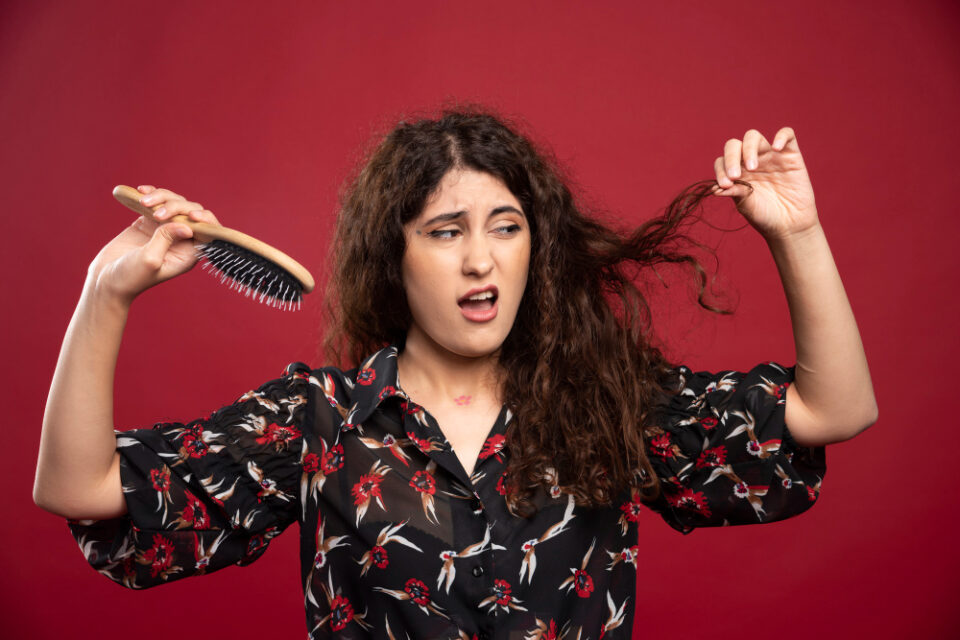
It always begins with this sentence: “Doctor, my hair has gone mad.” They come into my clinic with tamed faces and wild hair—sometimes tied back into a bun that’s fighting for freedom, frizzing out like a halo of static electricity, and sometimes defeated under a silk scarf. Frizzy hair, I’ve learned, is not just a cosmetic complaint. It’s your hair raising its hand and saying, ‘Excuse me, I need moisture!
I practice Ayurvedic medicine in Bangalore. Between treating arthritis, acidity, and anxiety, I’ve also become a part-time therapist for the scalp. Frizz, you see, isn’t about vanity alone. It’s about control. And in a city where the weather swings like mood swings, frizz finds fertile ground. Add to that chlorinated water, hurried towel drying, harsh shampoos, hot irons, cold winds, skipping meals, and skipping oil—all of which have conspired against the average Indian head of hair.
One of my patients, a 26-year-old chartered accountant, once said, “My hair looked better during audit season when I hadn’t washed it for five days. Now I use a shampoo with ten botanical extracts, and it looks like I licked a plug point.” I told her it wasn’t her shampoo plotting revenge—it was just basic science.
You see, frizz is just your hair’s way of announcing that it’s thirsty like a cranky toddler. The outer layer of the hair shaft—the cuticle—opens up when it’s dry or damaged, letting moisture escape and external humidity enter. That causes the shaft to swell unevenly, and voila: a halo of frizz. Hair doesn’t lie. It affects your diet, sleep, stress, water intake, and emotional state. If your inner fire (Agni) is disturbed, your strands will reflect it—literally.
In Ayurveda, we see hair as a mala—a by-product—of bone tissue. Therefore, anything that weakens asthi dhatu (bones) can also impact your hair. Frizz is often the first sign of an imbalance in the Vata dosha. Vata is dry, rough, mobile—just like frizzy hair. It dries things up—skin, joints, digestion, relationships. The scalp, being one of the most Vata-prone zones, is the first to complain. That’s why our ancestors used to oil their hair on a weekly basis. Not to smell like a curry leaf farm, but to protect their ojas.
I saw a reel recently that perfectly captured the frizz story—accidentally, but brilliantly. Our Deputy Chief Minister D.K. Shivakumar was at a public function. He was meant to light the ceremonial lamp, but the cotton wick had slipped deep into the oil. Without missing a beat, he dipped his fingers in, pulled them out, squeezed the excess oil, and placed them correctly.
Standing next to him was Kannada film comedian Sadhu Kokila, known for his wildly frizzy hair. His curls danced in every direction, like a monsoon breeze trapped in a bush. Shivakumar, with his fingers still glistening with oil, casually reached over and rubbed them onto Sadhu Kokila’s head. The crowd burst into laughter. It was spontaneous, symbolic, and perfect—one oily swipe to tame what looked like a porcupine that had just seen a ghost.
I’ll be sure to tell you about Savitri ( name changed) from Malleswaram. She was in her late 50s, still active, fiercely opinionated, and had hair so frizzy it could pick up FM radio. She came in with complaints of headaches and sleeplessness. I looked at her diet—rusk and tea for breakfast, no oil in cooking, and an obsession with cold water hair washes. “It keeps my scalp cool,” she claimed. “No, it keeps your doshas confused,” I replied.
We started with warm oil head massages twice a week, using a mixture of coconut oil and Brahmi taila. She was sceptical. “Won’t it clog my thoughts?” she asked. “No,” I said, “it will declutter them.” We added a nourishing diet—ghee, sesame, dates, almonds, and proper sleep. Within three weeks, the frizz began to fold back like an apology.
Research now nods to these traditions. Studies have shown that regular scalp oiling improves circulation, reduces cortisol levels, and strengthens the hair shaft. Coconut oil, with its low molecular weight, penetrates the hair cortex better than most conditioners. Add a few drops of rosemary or hibiscus oil, and you’ve got a potent anti-frizz potion hiding in your kitchen cabinet.
I often recommend a simple recipe: warm coconut oil, a few dried hibiscus petals, a pinch of fenugreek, and a strand of patience. Let it sit overnight. Massage it into the scalp the next day. Wrap your head in a warm towel. Hum a tune if you like. Frizz doesn’t just need product—it needs ritual.
And then there’s the towel drying problem. Most people rub their hair like they’re trying to erase it. Don’t. Blot, don’t scrub. Use a cotton t-shirt instead of a regular towel. It absorbs without aggression. One patient told me, “Doctor, I used your t-shirt towel hack. My hair behaved for the first time in a year. I felt like proposing to it.”
Hydration is key, not just for the hair, but for the human body. I ask patients about their water intake, and they often say, “Yes, I drink enough, doctor. One litre every evening.” That’s not hydration—that’s flood management. Sip through the day. Moisture inside reflects moisture outside.
Diet matters. Soaked overnight, dry fruits help nourish hair from within. Flaxseeds, sesame, and curry leaves are underrated superfoods for the scalp. And I often sneak in one walnut a day—it’s frizz insurance.
Of course, frizz is also worsened by stress. I had a college student whose hair looked like a mushroom cloud during exam season. No oiling, poor sleep, and bingeing on cup noodles—his Vata was screaming. We brought in Ashwagandha, Shankhapushpi, oil massages, and mandatory laughter breaks. His hair calmed down faster than his exam stress.
Now, this doesn’t mean you throw out your shampoo. It just means you stop blaming your genetics and start befriending your routine. Choose mild, sulfate-free cleansers. Avoid washing with very hot water. And stop chasing straight hair as the holy grail. Wavy, curly, coily—all hair can shine if you stop treating it like a chemistry experiment gone wrong.
Hair doesn’t need punishment. It requires permission to breathe, to bounce, to be imperfect. I’ve seen patients spend thousands on keratin treatments and yet complain they feel “lifeless.” That’s not hair. That’s a metaphor.
You don’t need miracle serums. You need warm oil. You don’t need ten-step routines. You need rhythm. Hair care, like health, is about coming home to yourself—a little bit of tradition, a dash of patience, and a lot of kindness.
Whenever you look in the mirror and sigh at your frizz, don’t panic. Just listen. Your hair is speaking. Maybe it’s asking for oil. Maybe for sleep. Or maybe—maybe—for you to stop fixing and start feeling.
Frizz is not the problem. Forgetting yourself is.
