
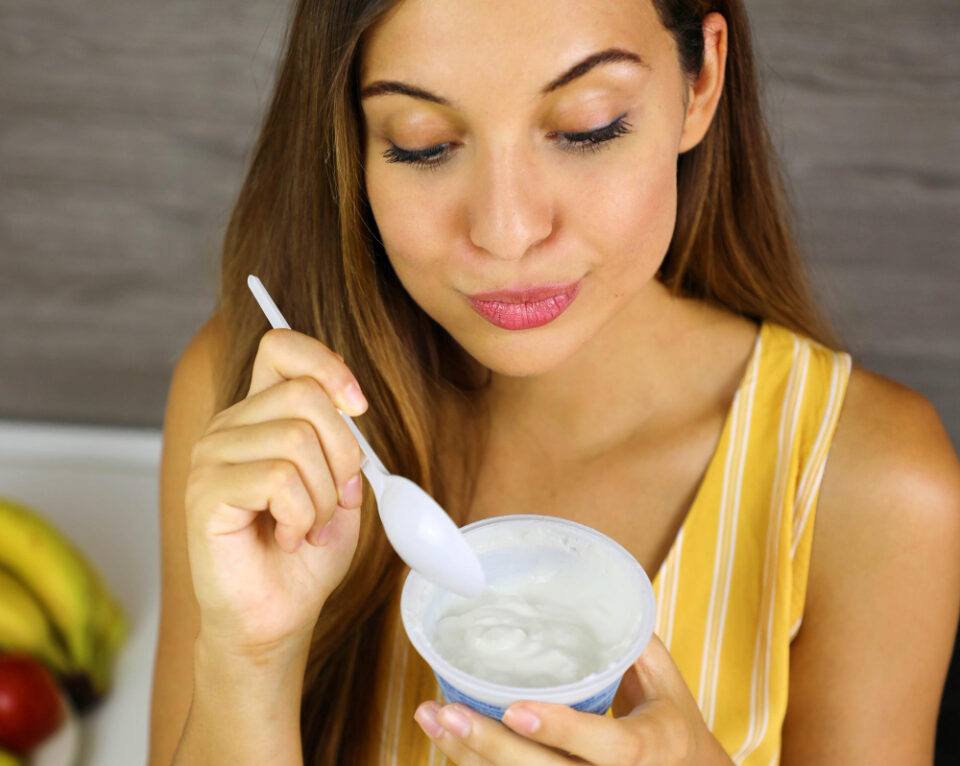
Long before science wrote theories, culture built habits, and behaviour became data, a simple spoon of curd and sugar carried its own quiet logic—offered without argument, defended without vocabulary, trusted without needing the approval of a journal or a graph. It didn’t promise intelligence, calm, or better memory; yet across households and generations, it became the unspoken bridge between fear and preparation, body and mind, uncertainty and hope, long before we realised those bridges had names.
Before the gut became a subject of biomedical fascination, there was a spoonful of curd and sugar, offered without explanation—only expectation.
A Stanford trial would show that fermented foods can lower inflammatory markers like IL-6 and increase microbial diversity in just 10 weeks. A UCLA study would demonstrate that eating probiotic yoghurt could alter how the brain responds to emotional stimuli. And neuroscience would eventually admit that nearly ninety per cent of the vagus nerve’s signals travel upward—from gut to brain—not the reverse. But for decades, none of that existed in the grandmother’s vocabulary, yet all of it existed in her certainty.
In my clinic, the curd debate persists with the same predictability as traffic near Hebbal: slightly dramatic, never truly resolved. One patient says curd at night guarantees a blocked nose. Another insists curd rice is the only thing that helps him sleep after twelve hours of writing code. Someone else asks with genuine bewilderment, “Doctor, is curd a food or a gamble?”
The truth is quieter and less dramatic: food behaves differently in different bodies.
Ayurveda knew this. It didn’t treat curd as universally good or bad. It described it precisely—heavy, cooling, sour, kapha-forming. It suggested rules: fresh, never stale; ideally daytime, not night; paired with pepper, honey, or ghee—not taken plain. And Ayurveda didn’t worship curd—it worshipped balance. The real therapeutic star in the classical texts is takra—properly churned buttermilk, spiced with roasted cumin or hing. It was prescribed for bloating, IBS-like conditions, sluggish digestion, piles, and the broad, ancient category of ama—toxic heaviness born from poor digestion. Today, we call this gut dysbiosis.
Other cultures also arrived at similar conclusions. In Turkey and Iran, salty yoghurt drinks like ayran and doogh accompany meat-heavy meals to prevent heaviness and indigestion. In Japan, fermented milk containing specific strains, such as Lactobacillus casei Shirota, has been used for decades in schoolchildren to reduce inflammation associated with infections. A century ago, Bulgarian yoghurt fascinated Nobel laureate Metchnikoff, who proposed fermented milk could slow ageing by reducing intestinal decay. His theory was mocked then—now it looks prophetic.
In practice, I have seen both sides. A software engineer with chronic sinusitis swore curd was harmless. Six weeks after removing night curd and replacing it with warm spiced buttermilk at lunch, his morning congestion decreased. He sighed and said, “So it wasn’t Bangalore weather. It was my refrigerator.”
A young woman with IBS symptoms and bloating switched from carbonated drinks to mid-day buttermilk. A month later, she told me, “I didn’t change my lifestyle. I just changed my glass.”
During exam season last year, a father brought his daughter to my clinic. She looked tense, chewing her lower lip the way children do when their fear is louder than their confidence. The father asked bluntly, “Doctor, should we stop giving her curd and sugar before exams? Her teacher said it’s a superstition.”
I looked at the girl, not him, and asked, “How do you feel after eating it?”
She shrugged first, then answered softly, “Calmer. Like… everything will be okay.”
I nodded and said, “Then keep it.”
The father paused, surprised by the simplicity of the answer. But the girl smiled—her first smile in that entire consultation.
Some things don’t need scientific explanations to work; they need familiarity, predictability, and a body that recognises comfort faster than the mind can explain it.
Artificial intelligence now claims it can mirror human intelligence—interpret patterns, predict behaviour, write essays. But it does not eat before exams. It does not inherit rituals. It does not remember taste.
So the question was never whether curd is good or bad.
Some truths don’t wait for evidence. They wait for recognition.
I have written a book.
If this blog spoke to you, the book will stay with you longer.
You can get your copy here.
