
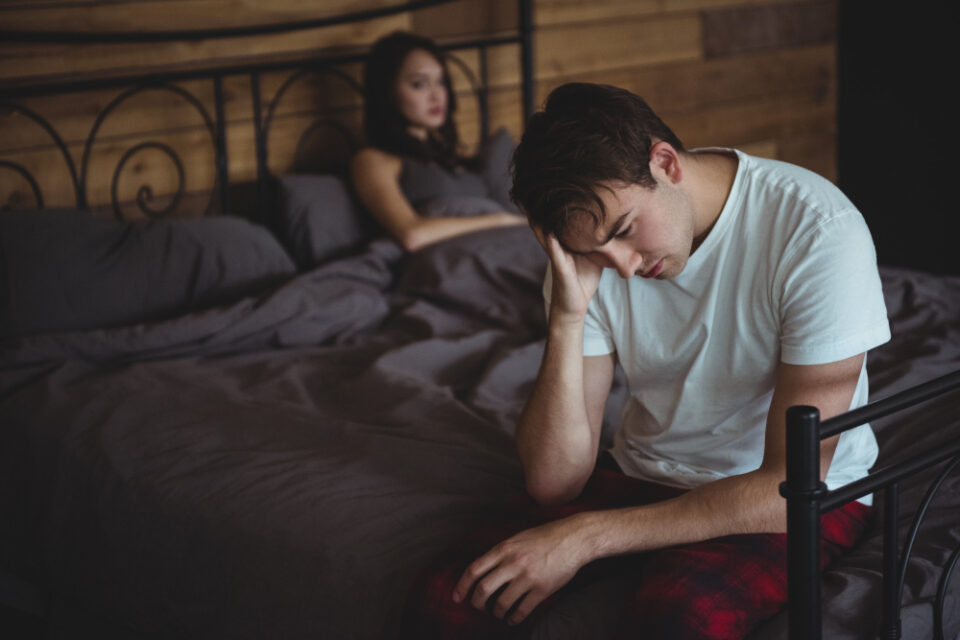
There are certain questions that never walk into a doctor’s consultation room. They sneak in. One afternoon, a middle-aged gentleman entered my clinic, glanced over his shoulder to make sure his wife had stepped outside, pulled his chair a little closer and lowered his voice. “Doctor… this is a little embarrassing.” I smiled. “In my experience,” I said, “the embarrassing questions are usually the important ones.” He looked visibly relieved before finally admitting, “My interest in sex has reduced.”
For a few moments, neither of us spoke. I have learnt never to rush these conversations. Embarrassment has its own pace. Answer too quickly, and patients assume you have heard the question a thousand times. Wait for a few seconds, and they realise you are listening to their story, not merely to their symptoms. It is remarkable how easily Indians discuss blood sugar at family dinners, cholesterol at weddings and knee replacement in crowded elevators. Yet the moment the conversation turns to sex, voices soften, eyes wander, and suddenly the floor tiles become the most fascinating objects in the room.
Instead of answering his question, I asked one of my own.
“How are you sleeping?”
He blinked.
“Doctor,” he said, almost smiling, “I came here because of my sex life.”
“I know.”
“Then why are you asking about sleep?”
“Because your body usually knows the answer before you do.”
For the next half hour, we hardly spoke about sex at all. We spoke about Bengaluru traffic that stole three hours of his day. About late-night conference calls with clients in America. About the ten kilograms that had quietly appeared over the previous five years. About diabetes that was “almost under control.” About the two pegs of whisky that had gradually become three. About snoring that his wife complained about every night. About the morning walks, he planned every Sunday, but somehow never began on Monday. When the consultation ended, he looked faintly disappointed. He had expected a powerful medicine. Instead, he had received a notebook full of changes.
That consultation reminded me of something the human body keeps demonstrating with astonishing consistency. It rarely points towards the real problem first. Fever is often the body’s announcement, not the infection itself. Swollen feet may be the first visible clue to a failing heart. Burning feet sometimes lead to diabetes. In the same way, reduced sexual desire is often less of a diagnosis than a message written in a language we have forgotten how to read. Most people search for an aphrodisiac. The body is asking for something entirely different.
Perhaps that is because sexual desire is one of the few experiences that demands unanimous approval from the entire body. The brain must feel secure. Hormones must remain in balance. Blood vessels must carry blood without hesitation. Nerves must transmit their signals with precision. The heart must pump efficiently. Muscles must have enough energy. Emotions must feel safe. Even the immune system has a say. We often imagine desire as a simple instinct. In reality, it is one of the most sophisticated collaborations in human biology. When one participant begins to struggle, the entire performance changes.
That is why I have become wary whenever someone says, “Doctor, I have only one problem.” The body almost never has only one problem. It has one complaint. The real story usually begins somewhere else.
The biggest surprise for many patients is that the most important sexual organ is not located below the waist. It is the brain. Long before the body responds, millions of nerve cells have already assessed stress, sleep, fear, attraction, memory, fatigue, hormones and emotional safety. Dopamine builds anticipation. Oxytocin strengthens trust. Testosterone influences desire. Serotonin shapes mood. Modern neuroscience has shown that these systems are engaged in a continuous conversation, each influencing the other in ways that are only now becoming clear. Romance may appear spontaneous. Biology is anything but spontaneous. Long before a couple embraces, the brain has already cast its vote.
Our ancestors rarely had the luxury of worrying about quarterly targets, traffic jams or unread emails. Their fears had claws and teeth. Ours arrive with notification sounds. The body, however, makes little distinction between the two. Faced with danger, it diverts blood towards muscles, increases stress hormones, sharpens attention and postpones every function that is not essential for immediate survival. Reproduction is one of the first to move down the priority list. Evolution made a sensible decision thousands of years ago. Unfortunately, what was designed to last a few minutes after escaping a predator now continues for months inside boardrooms, hospitals, software companies and crowded city roads. Many people believe they have lost their desire. More often, the body has simply decided that survival deserves its attention first.
The body has an extraordinary sense of priorities. Nobody teaches what matters first. It already knows. During a severe infection, appetite disappears. During prolonged grief, sleep becomes disturbed. During starvation, the reproductive system gradually slows. A woman who loses a significant amount of weight may stop menstruating for months because the body decides that pregnancy is not a wise investment during a famine. Athletes who push themselves beyond reasonable limits sometimes experience the same phenomenon. The body is not malfunctioning. It is making a difficult economic decision. Before it can think about creating another life, it wants to protect the one that already exists.
Sleep is one of the first investments it demands. Unfortunately, it is also one of the first things modern life steals. We proudly say, “I manage on five hours,” as though exhaustion were a medal to be displayed. The body remains unimpressed. During deep sleep, memories are organised, damaged tissues are repaired, growth hormone is released, and, in men, a substantial proportion of daily testosterone production takes place. Researchers have shown that even a week of restricted sleep can reduce testosterone levels in healthy young men by as much as ten to fifteen per cent. Poor sleep also increases cortisol, worsens insulin resistance, stimulates appetite and raises inflammatory chemicals throughout the body. By morning, many people blame their lack of enthusiasm on ageing. The previous night’s sleep deserves much of the blame.
The problem is not the number of hours spent in bed but what happens during those hours. A gentleman once insisted that he slept for eight hours every night. His wife smiled patiently before saying, “Doctor, he sleeps. The rest of us don’t.” He had severe obstructive sleep apnoea. Every few minutes, his breathing would stop briefly, his oxygen levels would drop, and his brain would pull him out of deep sleep without waking him completely. By sunrise, he believed he had enjoyed a full night’s rest. His body knew better. Treating the sleep apnoea improved his blood pressure, his diabetes, his energy levels and, to his wife’s delight, their married life. Few people realise that loud snoring is sometimes not a nuisance but a diagnosis waiting to happen.
The next clue often arrives in the laboratory. Diabetes has earned a reputation for damaging the eyes, kidneys and nerves, yet many people are surprised to learn that the feet occasionally notice the disease before any of those organs do. The explanation lies in anatomy rather than romance. The arteries supplying the penis are barely one to two millimetres in diameter, much smaller than the coronary arteries that nourish the heart. A slight reduction in blood flow may therefore become apparent there, years before chest pain develops. Cardiologists call this the artery-size hypothesis. Erectile dysfunction can precede symptomatic heart disease by three to five years. In other words, a conversation that begins in the bedroom may one day prevent an emergency in the cardiac intensive care unit.
That is why I sometimes tell patients something they have never heard before. “Your body is not trying to embarrass you. It is trying to warn you.” There is a profound difference between the two. People who understand that difference stop looking only for medicines. They begin looking for causes. That is where recovery usually begins.
Not every warning arrives through a blood test. Some arrive through the weighing scale. People often think body fat is simply stored energy. It is much busier than that. Fat tissue behaves like a living endocrine organ, producing inflammatory chemicals and altering the body’s hormonal balance. It also contains an enzyme called aromatase that converts part of a man’s testosterone into oestrogen. The process is gradual. Nobody wakes up one morning and notices the difference. Energy fades first. Climbing stairs becomes slightly harder. Afternoon sleepiness becomes routine. Confidence begins to shrink. Months later, people wonder why their interest in sex has changed. The body noticed the change long before the mind did.
One afternoon, a cheerful businessman said, Doctor, I don’t have time for exercise. His wife smiled. “He does,” she said. “He just gives it to television.” Everyone laughed. Then nobody laughed.
The average Indian now spends more hours sitting than any previous generation. We sit in traffic. We sit in offices. We sit during meetings. We return home and sit in front of another screen again. Our ancestors searched for food. We search for the television remote. Evolution has not had enough time to catch up with swivel chairs. The human body was designed for movement. When movement disappears, muscles weaken, insulin resistance increases, blood vessels stiffen, and hormones begin to change. One missing morning walk rarely matters. A thousand missing morning walks tell a different story.
Then there are medicines—the unexpected suspects. Patients are often surprised when I tell them that an allopathic tablet that helps one part of the body may occasionally trouble another. Certain antidepressants, medicines prescribed for high blood pressure, treatment for enlarged prostate and even some drugs used for hair loss may reduce libido or delay orgasm in susceptible individuals. Depression itself also lowers sexual desire, making it difficult to separate the illness from its treatment. The solution is almost never to stop the medicine. It is to recognise the problem and discuss it honestly. Modern medicine offers alternatives, dose adjustments and different treatment strategies. Silence, unfortunately, offers none.
One consultation remains vivid in my memory. A young woman arrived convinced that something precious had disappeared from her marriage. There is nothing wrong between us, she said. My husband is kind. We rarely argue. I simply don’t feel like myself anymore. She was not depressed. She was not unhappy. She was exhausted.
Her blood tests revealed severe iron deficiency, low vitamin B12 levels and an underactive thyroid. Every cell in her body had been struggling to produce enough energy for ordinary life. Romance had silently slipped down the waiting list. Three months after treatment, she returned with a completely different expression. Doctor, she said, laughing, I thought I had fallen out of love. No, I replied. Your body had simply run out of strength.
That consultation reminded me of something I wish more people understood. The body is remarkably loyal. It postpones pleasure only when it is busy protecting life. It never does so without a reason.
The longer I practise, the less convinced I become that reduced sexual desire is purely a hormonal problem. Hormones certainly matter. Blood vessels matter. So do nerves. Yet there is another ingredient that rarely appears on laboratory reports—attention. I have watched couples answer my questions for years. Newly married couples usually finish each other’s sentences. Couples married for twenty-five years often interrupt each other. Those married for forty years do something entirely different. They look at one another before answering, as though checking whether the other remembers the same story. Somewhere between youth and old age, intimacy stops being about excitement alone. It becomes about feeling understood.
A few months ago, I asked a couple a question that had nothing to do with medicine. When was the last time the two of you went for a walk together? They looked at each other. Neither answered.
When did you last have tea together without the television on? Another silence. The husband finally smiled. Doctor, we are always busy. That sentence has stayed with me ever since. Always busy.
Modern medicine can measure cholesterol to the last decimal place. It can calculate kidney function, detect blocked arteries and sequence entire genomes. Yet there is no investigation that tells us when two people slowly stopped noticing each other. It does not happen in a single argument. It happens one interrupted dinner at a time. One postponed holiday. One late-night office call. One weekend spent catching up on unfinished work. We assume marriages end because of dramatic events. More often, they become tired through ordinary neglect. Affection rarely disappears in a single day. It evaporates in teaspoons.
Research is beginning to explain what poets have known for centuries. A reassuring touch lowers cortisol. A warm embrace increases oxytocin. Couples who feel emotionally secure often sleep better, recover faster after illness and even have lower stress responses during conflict. The brain does not separate love from biology as neatly as we do. It translates every conversation, every disappointment and every act of kindness into chemistry. By the time desire changes, the brain has usually been keeping score for months.
This is one reason I have become sceptical of miracle aphrodisiacs. They promise to repair in thirty minutes what years of neglected sleep, uncontrolled diabetes, emotional distance, excess weight, smoking, alcohol and relentless stress have gradually eroded. It is rather like watering the leaves of a tree whose roots have not seen rain for months. The leaves may glisten for a while. The tree remains thirsty.
The body has a mischievous sense of humour. Just when you’ve stopped searching for a miracle aphrodisiac and started sleeping on time, walking every morning and eating sensibly, it smiles and says, “Now we’re ready to discuss romance.”
