
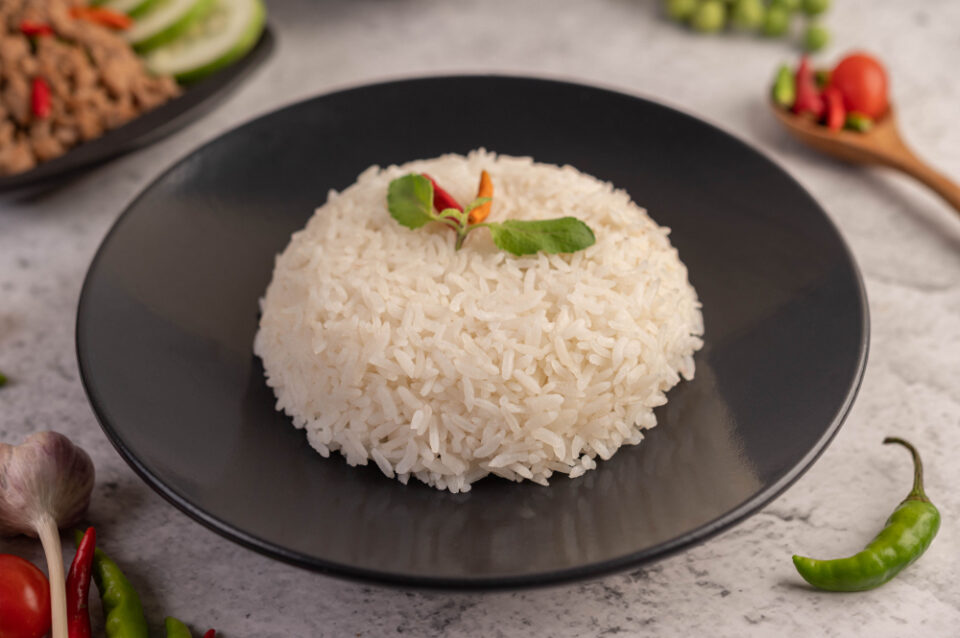
The moment I say, “Limit rice,” the room’s temperature changes. Not silence. No agreement. Reaction. I have seen calmer responses to tax notices.
“Doctor, rice means life. You remove life only,” one gentleman told me, holding his lab report like a legal document. Another whispering as if his pancreas might overhear, “Morning, I will control, doctor. Night… rice controls me.” A software engineer looked genuinely offended. “I stopped sugar, I stopped bakery, I even stopped my weekend biryani. Now rice also? What will remain of me, doctor? Only Wi-Fi?”
One elderly patient smiled kindly, the way elders forgive young people for their foolish ideas. “You are a good doctor. But this ‘no rice’ advice—this will not work in our house. Even my BP tablet depends on rice to go inside. ”And my favourite—a woman who had tried everything—finally said, “Doctor, tell honestly. You want me to control diabetes or start a family war?”
For twenty-five years, this has been my OPD reality. When I say reduce oil, patients nod. When I say walk more, they agree. When I say sleep early, they pretend. When I say “reduce rice,” something cultural, emotional—almost constitutional—wakes up. Rice is not a food in India. It is architecture.
It is what completes a meal. It is what carries sambar, curd, rasam, memories, arguments, and occasionally medicines. You can skip dessert. You can drop snacks completely. But rice? Rice waits patiently until you return.
Which is why, for decades, medicine has taken the predictable route. We warn patients. We explain the glycaemic index. We draw charts. We recommend brown rice with a straight face; the plate rarely agrees. Patients listen with respect, go home, and eat white rice with relief. This is not failure. This is rice winning the argument.
When scientists at CSIR-NIIST in Thiruvananthapuram stopped trying to change the patient and started working on the rice, something quietly shifted. They did not discover a rare grain. They did not romanticise tradition. They went to the most ignored part of the system—broken rice. The fragments that fall off during milling. The pieces nobody proudly serves. The leftovers of a staple. In most places, waste. In India, raw material.
They took that broken rice, ground it into flour, removed excess starch, and rebuilt it into a grain that looks like rice, cooks like rice, but acts very differently inside your body.
Three times the protein of regular white rice. A glycaemic index around 54, compared to the usual seventy-plus. Iron, folic acid, and Vitamin B12 are embedded in the grain itself, not dusted on top, where they disappear with the first wash, but built in so they survive cooking. No genetic modification. Just precise processing. What C. Anandharamakrishnan calls it “food architecture.”
If you sit in a clinic long enough, you realise diabetes in India is no longer a diagnosis. It is background music. It hums behind fatigue, acidity, poor sleep, and joint pain. Anaemia walks beside it. And in both, the same silent participant appears twice a day. Rice.
For years, we have treated this as a discipline problem. Eat less. Avoid. Substitute. Control. Patients tried. Briefly. Then they went back to rice, because no one wants a life where lunch feels like a compromise. This new “designer rice” does something different. It does not fight the habit. It works with it.
Of course, confusion has already begun. This lab-built rice is being discussed alongside heirloom varieties like Mappillai Samba and Kavuni, as if all “better rice” falls into a single category. They do not.
Heirloom rice is about biodiversity, soil, and culture. It deserves revival. It also comes at a cost that quietly limits who can access it.
This new rice is built for scale. It starts with the cheapest raw material—broken rice—and turns it into a clinically useful product. It is meant for the diabetic who is tired of negotiating with food, for the anaemic patient who needs iron without reminders, for the child who will eat only what looks familiar. The technology has been transferred to Tata Consumer Products, which usually means it will not remain in journals for long. Your cook will not notice anything. That is the point.
It will look like rice. It will cook like rice. It will disappear into sambar like rice. And then it will quietly refuse to behave like rice inside your body. Not all revolutions announce themselves. Some sit on your plate and do their job.
There are questions. Taste. Price. Availability. Long-term outcomes. Science always arrives with answers and leaves you with new questions. But step back and look at the direction.
For decades, we have tried to change the Indian diet by changing the Indian mind. Eat less. Avoid this. Control yourself. Now, someone has tried to change the Indian diet by redesigning the food itself.
In Ayurveda, we have always known that food is not fixed. The same rice can nourish one person and disturb another, depending on agni, context, and constitution. The relationship between food and body is dynamic. What modern science has done here is intervene in that relationship from the other side.
At a clinic in Bengaluru, I have spent years asking patients to reduce their rice intake. In a lab in Kerala, someone has spent years making rice easier for the body to handle. Between these two efforts lies a shift; the plate may finally align with the body without a daily argument. The question will change, the guilt will fade, and the habit will remain.
We tried to change ourselves; it may be easier to change what we eat.
We thought discipline would save us; it turns out design might.
I have written a book.
If this blog spoke to you, the book will stay with you longer.
