
“Doctor, I had a bad cold.”
“How many days?”
“Four.”
“Fever?”
“Little.”
“What medicines?”
“Ghar me Augmentin pada tha. Teen din le liya. Phir bhi kam nahi hua. Isiliye aap ke paas aaya.”
He says it with mild disappointment, as if biology has failed to cooperate with initiative. He tried. He acted. He swallowed something strong. The body did not immediately obey. Now he has come to escalate.
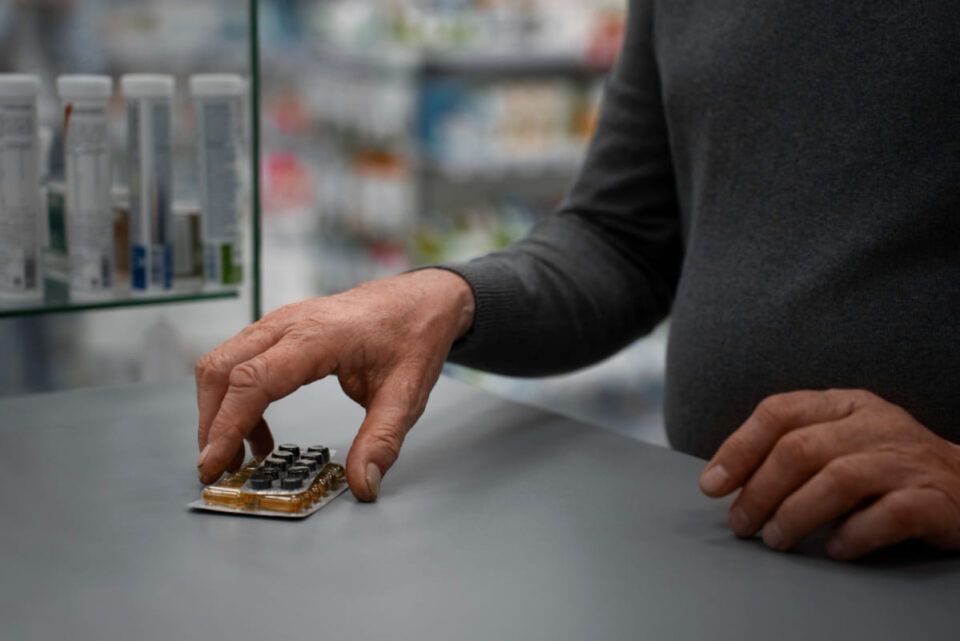
I have heard this sentence in many accents — corporate, rural, retired, newly married, anxious parent, confident bachelor. The names change. The strip remains the same.
Every Indian home has a medicine cupboard. It is rarely labelled. It is usually a steel container, a plastic box, or a drawer that smells faintly medicinal. Inside lies a small museum of past illnesses: half strips of antibiotics from dental procedures, painkillers from back pain, antacids from festive overeating, cough syrup from winter, and multivitamins bought during a motivational phase. Expiry dates are suggestions. Memory is authority.
The cupboard is not stupid. It is psychological insurance. Illness introduces uncertainty. Tablets offer action. Swallowing something feels responsible. Waiting feels negligent.
Human beings evolved to act when threatened. If a bush rustled in prehistoric grasslands, running was wiser than waiting for clarity. That instinct saved lives. Today, it makes educated professionals start broad-spectrum antibiotics for a sneeze.
A software engineer once told me, “Doctor, I did not want to take a risk. So I started antibiotic.”
Risk of what?
“Risk of it becoming serious.”
The cold was on day two.
We are uncomfortable watching the body work without supervision. Fever unsettles us. Cough irritates us. Nasal discharge offends us. We prefer intervention over observation. Modern life rewards action. Rest looks lazy. Patience looks careless.
A mother once broke an adult antibiotic tablet in half and gave it to her ten-year-old. “Dose kam kar diya,” she said with relief. She was not careless. She was afraid. A fever at midnight in a child feels like an accusation. Action equals love.
A businessman confessed, almost proudly, “Doctor, I do not come to the hospital for small things. I manage at home.” Manage meant antibiotic for viral fever, painkiller for headache, antacid for the painkiller, anti-diarrhoeal for loose motion caused by the antibiotic. Each tablet solves the problem created by the previous one. By the time he reached my clinic, the original cold had passed. The consequences had not. Self-medication is rarely about disease. It is about control.
We live in an age where information is abundant, and interpretation is scarce. Google offers worst-case scenarios within seconds. A cold becomes sinusitis. Sinusitis becomes pneumonia. Anxiety multiplies faster than viruses. In that rising panic, the antibiotic strip looks reassuring. It feels decisive. It feels strong.
Strength is theatrical in medicine. Patients ask for injections because injections look serious. Tablets look ordinary. Antibiotics look powerful. Viral infections look invisible. When the enemy is unseen, we reach for the largest visible weapon. The difficulty is simple and biological: antibiotics act on bacteria, not viruses. Most common colds and viral fevers are caused by viruses. In those situations, the antibiotic does not shorten the illness, reduce complications, or speed recovery. It only gives us the feeling that something strong has been done.
The problem is not immediate harm. Often, nothing dramatic happens. The cold resolves in 5 days with or without antibiotics. The patient believes the antibiotic helped. The story reinforces itself. The cupboard gains prestige. But biology remembers differently.
Antibiotics were once miracles. A century ago, pneumonia killed healthy adults. A simple throat infection could become fatal. When penicillin arrived, it transformed medicine. It was not just a drug; it was a civilisational leap. Humanity briefly believed it had defeated bacterial death. Today, we swallow that inheritance casually.
Incomplete antibiotic courses do not merely fail; they educate. The weakest bacteria die. The more adaptable survive. Each half-finished strip is a small training camp. Resistance does not arrive dramatically. It accumulates quietly, kitchen by kitchen.
The next time the same patient develops a real bacterial infection, the antibiotic may not work. Then we escalate. Stronger drugs. Broader coverage. More side effects. Sometimes, hospital admission. The cupboard decision becomes an ICU conversation.
Antibiotic resistance is not an abstract policy. It is arithmetic. Millions of small, private decisions shaping a shared microbial future. Like climate change, each act feels insignificant. Collectively, they alter the ecosystem.
And yet, I do not blame my patients. A daily wage worker cannot afford three days of rest. A young professional alone in a city without family support cannot tolerate uncertainty. A parent watching a child’s temperature climb at 2 a.m. does not want philosophy. They want safety.
Even doctors are not immune to the temptation to act. Medicine itself has trained society to expect prescriptions. Consultation without tablets feels incomplete. We have contributed to the culture of intervention.
Older medical traditions understood something modern systems are rediscovering: not every fever demands suppression. Not every cough requires interruption. Observation is not inaction. It is disciplined patience.
When patients tell me, “Doctor, I already took Augmentin,” they are not seeking rebuke. They are seeking reassurance. They want someone to restore order to the narrative.
In my practice, the prescription I sometimes write is quiet: rest, warm fluids, light diet, and an Ayurvedic plan matched to the stage of the illness, not to the patient’s anxiety. If symptoms persist, worsen, or change character, I review. The patient looks mildly disappointed. “Bas?” they ask. Yes. Bas.
Yes. Bas.
Medicine is not about maximum action. It is about appropriate action. Cold is not war. Fever is not betrayal. Antibiotic is not vitamin C.
The real shift does not happen in my clinic. It happens later, at home. The patient opens the cupboard again months later. The strip is still there. The reflex is still strong. But maybe this time, the strip remains in the drawer a little longer. That second of hesitation is civilisation.
Between symptom and strip, if we can insert reflection, we protect more than the throat. We protect the future usefulness of some of humanity’s most extraordinary discoveries.
The cold will forgive you. The bacteria will not.
I have written a book.
If this blog spoke to you, the book will stay with you longer.
