
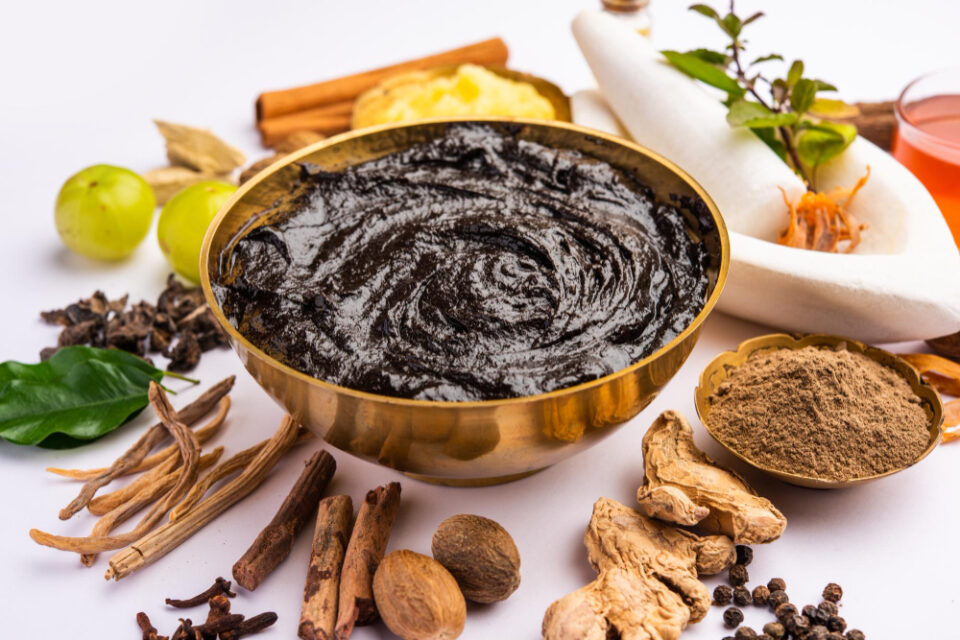
Chyawanprash no longer enters Indian homes through winter rituals or grandmotherly insistence. It arrives through nutrition labels, Instagram debates, and alarmed WhatsApp forwards that circle one number in red—sugar, 50% and counting. In a world trained to fear sweetness, the jar begins to look less like medicine and more like betrayal. Yet the discomfort is not about sugar alone. It is about what happens when an ancient formulation is forced to explain itself in the language of modern panic.
In the clinic, the question comes without accusation. A patient reads the label aloud, pauses, and looks up. “Doctor, this is more than half sugar. How can this be medicine?” It is a fair question. The label is not lying. Most classical chyawanprash preparations are sugar or jaggery-dominant by weight, and modern regulations rightly ask manufacturers to state this clearly. But numbers describe quantity, not purpose. Nutrition labels count grams. Ayurveda counts consequences. Confusion begins when one is mistaken for the other.
To understand chyawanprash, one must first understand why sugar exists in it at all. Not as indulgence, not as disguise, but as design. Sugar or jaggery acts as a carrier, helping herbs travel deeper into tissues. It balances strong, bitter, heating ingredients that would otherwise be intolerable. And when cooked slowly with ghee, amla, and spices, it releases energy steadily rather than suddenly. Ayurveda never argued with ingredients; it negotiated with context. Traditionally, jaggery was preferred over refined sugar, but how much is taken and by whom matters more than the sweetener itself.
This distinction matters because sugar alone acts very differently from sugar in formulation. A spoonful of sugar, eaten in isolation, demands a sharp metabolic response. Sugar cooked, combined, and buffered behaves more like a slow conversation than a shout. The body responds to combinations, not ingredients. Sugar in isolation is a problem. Chyawanprash suits people with good digestion; without it, even medicine can feel heavy.
Much of today’s anxiety comes from how far modern use has drifted from classical logic. Traditionally, chyawanprash was taken in small quantities—half to one teaspoon—often in colder months, with pauses built into its use. It was never meant to be eaten daily throughout the year. Rasayana therapy followed a rhythm: use, observe, withdraw. Today, the same formulation is marketed as year-round immunity insurance for all ages and all lifestyles. When medicine is eaten like food, food will behave like medicine—and sometimes like excess.
Context, however, does not mean exemption. There are clear groups for whom traditional chyawanprash needs caution or avoidance—people with poorly controlled diabetes, insulin resistance, obesity with high triglycerides, fatty liver disease, or very sedentary lifestyles layered over excess calories. Chyawanprash is not a daily tonic for everyone. When it is unsuitable, doctors often suggest other rasayana options with less sweetness. Children, too, should not be given chyawanprash daily for long periods without medical guidance.
Chyawanprash was designed in a world without calorie charts, but not without metabolic intelligence. It assumed movement, seasons, appetite, digestion, and restraint. Remove those assumptions, and even wisdom begins to look irresponsible. Sugar matters in today’s metabolic reality, and dismissing concern would be dishonest. Reducing a complex formulation to a single number, however, is equally misleading.
Ayurveda never promised one rule for everyone. It asked patients and physicians to pay attention to the body, the season, and whether the medicine still serves its purpose.
Chyawanprash does not need defending, nor does sugar need excusing. Dose matters. Timing matters. Suitability matters. Chyawanprash is not a dessert, a gym supplement, or a lifelong insurance policy. It was never designed to sit between breakfast and Netflix. Chyawanprash works best not as a habit, but as a conversation between the body and restraint.
I have written a book.
If this blog spoke to you, the book will stay with you longer.

1 comment
A very thoughtful article in today’s time when sugar is considered as mother of all evil foods.
Thank you for suggesting how not to consume and what it’s not meant to be.