
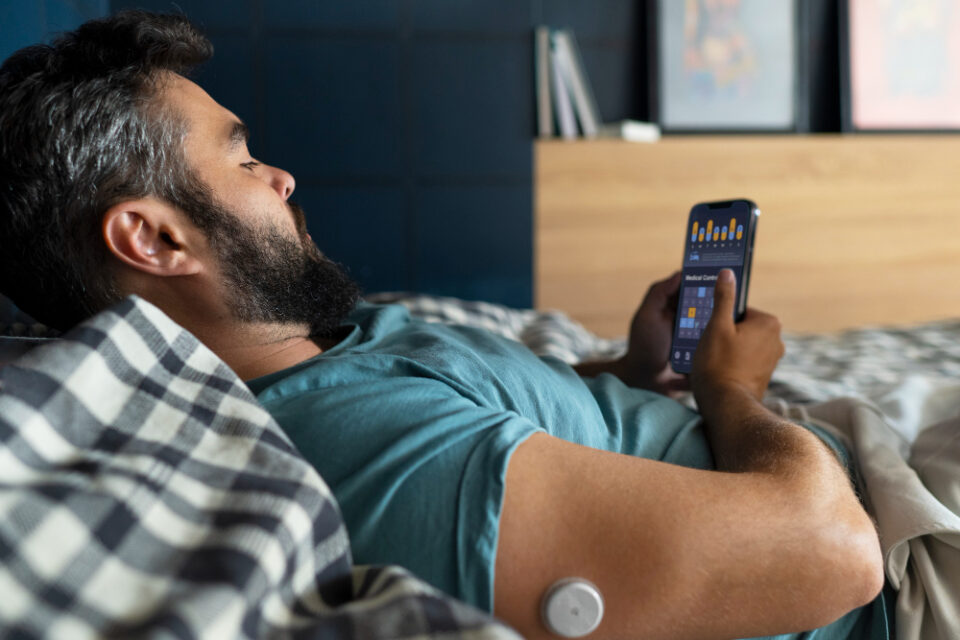
Continuous glucose monitoring entered Indian life the way CCTV cameras appeared in apartment complexes, not because everyone was guilty, but because no one fully trusted themselves. The CGM sits on the arm like a polite spy, quietly documenting every slip, craving, celebration, and negotiation between desire and discipline. It doesn’t just measure glucose. It measures honesty. And, honestly, like bitter gourd juice, it works, but nobody enjoys the first sip.
The earliest CGM patient in my clinic leaned in and said, “Doctor… this device won’t send updates to my husband, right?” When I said no, she sighed with relief the way people do after narrowly escaping a traffic challan. She walked out with a responsible expression and later confessed that she had eaten a Mysore Pak in the Mahalakshmi sweets as a rebellious snack. A CGM doesn’t just reveal physiology. It shows human nature.
Then came a techie who treated his glucose graph like a war strategy board. He analysed, highlighted, and plotted curves. He proudly proclaimed, “I cracked it. Two slices of cake followed by twelve minutes of angry fast walking brings the sugar down.” He said this with the conviction of a scientist announcing a cure. Humans have always been inventive—fire, wheel, insulin… and now cardio to cancel cheesecake. The body doesn’t fear dessert; the CGM graph does.
Some treat insulin and anti diabetic tablets like an all-access dessert pass. One gentleman said, “Doctor, why fear gulab jamun? Medication exists.” He wasn’t joking; he was celebrating. At that moment, diabetes management looked less like healthcare and more like loophole engineering. Another patient proudly demonstrated a routine: eat one jalebi, watch the reading spike, take insulin, watch it fall—then celebrate stability with another jalebi. At this point, he wasn’t monitoring glucose; he was day-trading sugar.
Others blame the device. A lady marched into the clinic, outraged. “Doctor, I didn’t even eat biryani. I only smelled it, and my sugar went up!” I wanted to ask whether she inhaled deeply, emotionally, or spiritually, but controlled myself. She returned two weeks later calmer, healthier, and wiser, because once the initial defensiveness passes, data becomes clarity, and clarity becomes change.
Some patients experiment like reality-TV contestants. One ate only papaya to prove purity; his graph galloped anyway. He threw his hands up and declared, “Even fruit cheats!” No, I told him gently—only expectations do. The CGM is not a judge. It is a translator. It doesn’t blame you. It finally explains you.
But then come the breakthroughs, the ones that make the journey worth observing. A retired teacher discovered her blood sugar behaved like a disciplined class when she walked after meals. No calibrated diets. No expensive powders. Just warm food, early dinners, sleep with dignity, and routine with respect. There was no “hack,” no drama. Just steady biology responding to steady behaviour. Ayurveda has been saying this for centuries: rhythm heals more than restriction.
Of course, there is a trap. Some people scan their glucose more frequently than teenagers refresh Instagram. The anxiety spikes their reading, the spike triggers panic, panic pushes the number higher, and soon the device is not helping them understand their body; it is narrating their stress.
After watching so many people use CGM, one truth stands tall: people don’t fear food; they fear knowing its consequences. Technology doesn’t punish; it reveals. And once the truth appears, there are only two pathways—change the habit or increase the dose. Most increase the dose first. Change arrives later, slowly, reluctantly, but eventually, permanently.
What is CGM in the end? Not a gadget.Not a trend.Not punishment. It is a mirror.
A mirror that shows how we eat, how we soothe ourselves, how we justify excess, how we chase pleasure, and how the body faithfully records every chapter without judgment.
When the device finally comes off, the real question remains quiet, persistent, impossible to ignore:
Now that you have seen the truth, what will you do with it?
Because medicines can control glucose, technology can measure it, but only your daily choices can rewrite the story.
If one line must stay long after the graphs disappear, let it be this: You can negotiate with diet, excuse your habits, and adjust medication, but the body never bargains. It only responds.
I have written a book.
If this blog spoke to you, the book will stay with you longer.
You can get your copy here.
