
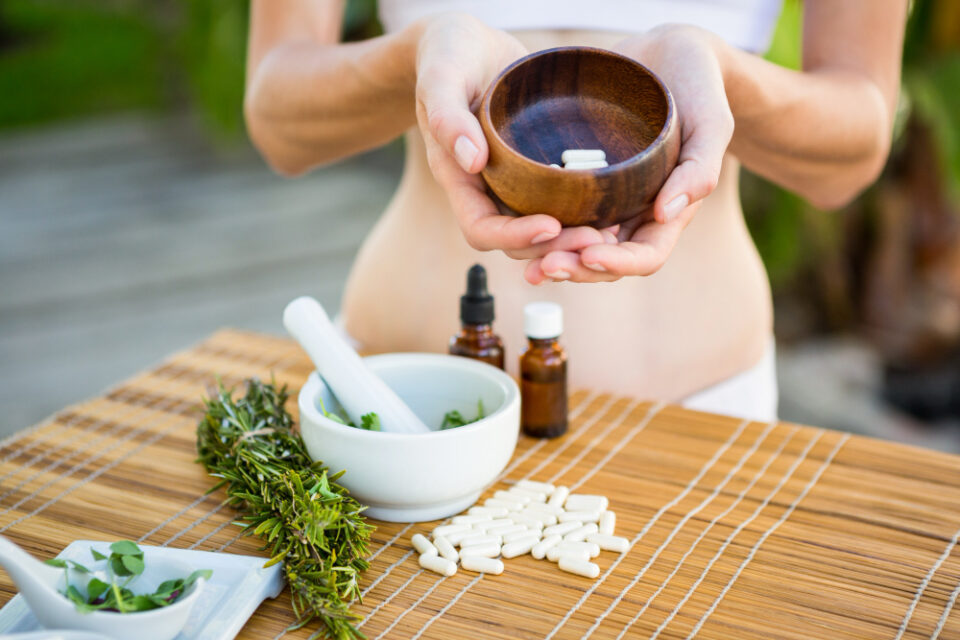
It began quietly, like a monsoon drizzle before the downpour. In the early 2000s, big FMCG brands spotted a goldmine in the “natural and traditional” tag. Ancient remedies were reborn in modern jars, given celebrity faces, and placed in supermarket aisles between biscuits and shampoos. Then came the yoga boom, the global wellness wave, and finally COVID-19, which turned “immunity” into a national obsession. The fear was instant, the purchases frantic—turmeric lattes, giloy shots, and kadhas strong enough to make your oesophagus file for early retirement. And once the bottles and jars entered the kitchen shelves, they stayed. What began as a panic-buy has now become a habit. In health, enthusiasm without guidance can last for days, but the effects can last for years.
Few realise that under Indian law, Ayurvedic OTC products listed in classical texts can hit the shelves without the pre-market clinical trials that allopathic drugs must undergo. Add a few modern tweaks—preservatives, artificial flavours—and you can still sell it under the same name as a 2,000-year-old formulation. It feels like heritage, looks like tradition, but in your gut, it can be a gamble. The consumer thinks, “This is what my grandmother took.” The market thinks, “This is a goldmine.” Your stomach lining hopes you read the fine print.
The appeal is easy to understand. Self-medicating feels empowering, like taking control without a clinic queue. These are “our” remedies, passed down from grandmothers, now dressed up in glossy jars and Instagram reels. Add a pinch of mistrust towards modern medicine and a spoonful of “It’s natural, so it must be safe,” and you have the perfect recipe for an OTC boom. In the mind, control feels like a cure; in the body, it can quietly turn into chaos.
Television plays its role well. A teaspoon of chyawanprash before sunrise, the ad says, and you’ll glow like the actors on screen. What it doesn’t say is that the same chyawanprash can aggravate certain constitutions, or that “safe for all” is a marketing phrase, not an Ayurvedic principle. In Ayurveda, the missing half of the story is often the most important.
The data is sobering. An AIIMS survey found 35% of urban Ayurvedic users take medicines without consulting a physician, and over half can’t name the ingredients they consume. A Journal of Ethnopharmacology study found that 20% reported side effects—acidity, skin rashes, and digestive upsets. Meanwhile, India’s ayurvedic products market was about ₹876 billion in 2024 and is projected to grow at ~16.17% CAGR through 2033. Prime-time ads for cough syrups, balms, and immunity boosters now run as frequently as detergent commercials. The language is seductive: “Daily use,” “Safe for all ages,” “No side effects.” The science of personalisation—the very backbone of Ayurveda—is reduced to a slogan.
And then there’s the clinic reality. The other day, a man walked in with a plastic bag full of bottles like a magician revealing his props—triphala churnam, ashwagandha capsules, pain oil, sleeping pill, digestive goli, giloy juice, dashmoolarishta, and a powder from an Instagram reel. “Been taking these for six months, doctor, but my constipation hasn’t improved.” In my head, I wasn’t looking at a treatment plan—I was looking at a botanical crime scene. In Ayurveda, the wrong herb at the wrong time is like serving bedtime tea on a battlefield.
During COVID, the frenzy was wild. Turmeric was promoted like a Bollywood superstar. Giloy became a household word. Every second, WhatsApp forward had an “immunity kadha” strong enough to strip paint. People began treating Ayurveda like a buffet—pile whatever looks good on your plate. But sequencing, compatibility, and timing (anupana, matra, kala) are not suggestions; they are the steering wheel. Without them, you’re just honking in traffic.
A young marketing executive came to me complaining of bloating and fatigue. She had been downing two glasses of aloe vera juice every morning because a YouTube guru called it a “daily detox.” For her sluggish kapha digestion, it was less a cleanse and more a flood—the kind that leaves your gut feeling like a waterlogged basement.
Another patient, a gym enthusiast, started ashwagandha for muscle gain on his trainer’s advice. Three months later, he had acne, insomnia, and a temper you could light a stove with. Ashwagandha is heating and heavy—it had turned his pitta-kapha frame into a volcano. Herbs have personalities, and not all of them like each other—or you.
Social media hasn’t helped. Influencers beam from their kitchen corners, saying, “Drink turmeric latte daily—it’s anti-inflammatory.” True, but also heating, potentially aggravating acidity, and capable of interacting with medications. Ayurveda without context is like classical music reduced to a ringtone.
OTC availability makes the slope slipperier. You can now buy chyawanprash at airports, herbal syrups in petrol bunks, and “energy chyawans” online with one-day delivery. Herbs are not neutral; they have direction, potency, and purpose. Treat them casually, and you might as well hand a power drill to a toddler.
I often have to detox patients from their self-made regimens before actual treatment. One man with joint pain was on triple doses of guggulu, punarnava, and mahayograj because “more herbs, faster cure.” His digestion was wrecked, his tongue coated white, his sleep in shreds. In Ayurveda, more is not better; right is better.
Some individuals self-medicate due to mistrust of doctors. Ironically, the strongest mishaps I’ve seen come from these very self-experiments. A simple trikatu in excess can burn the stomach; the wrong oil can irritate the skin. The ancients knew this—that’s why they insisted on yukti, the art of reasoning, before prescribing.
Ayurveda’s OTC boom is a mirror of our times: too much information, too little understanding, and too much faith in shortcuts. Ayurveda isn’t a Google search; it’s a conversation between your body, the seasons, your constitution, and the plants. And like any deep conversation, it needs a translator. That’s what a trained Vaidya is.
Which brings me to the man who ended my day last week. He came in with his “immunity kit”—five bottles, three powders, and a homemade kadha in a flask. He had been religiously taking it all for 100 days straight. “Doctor,” he said, “I started this for immunity, but now I’m just tired.” I smiled and told him, “Sometimes, the body doesn’t need more soldiers—it needs a ceasefire.” He laughed. I laughed. And somewhere between the two, we began the real treatment.
–
