
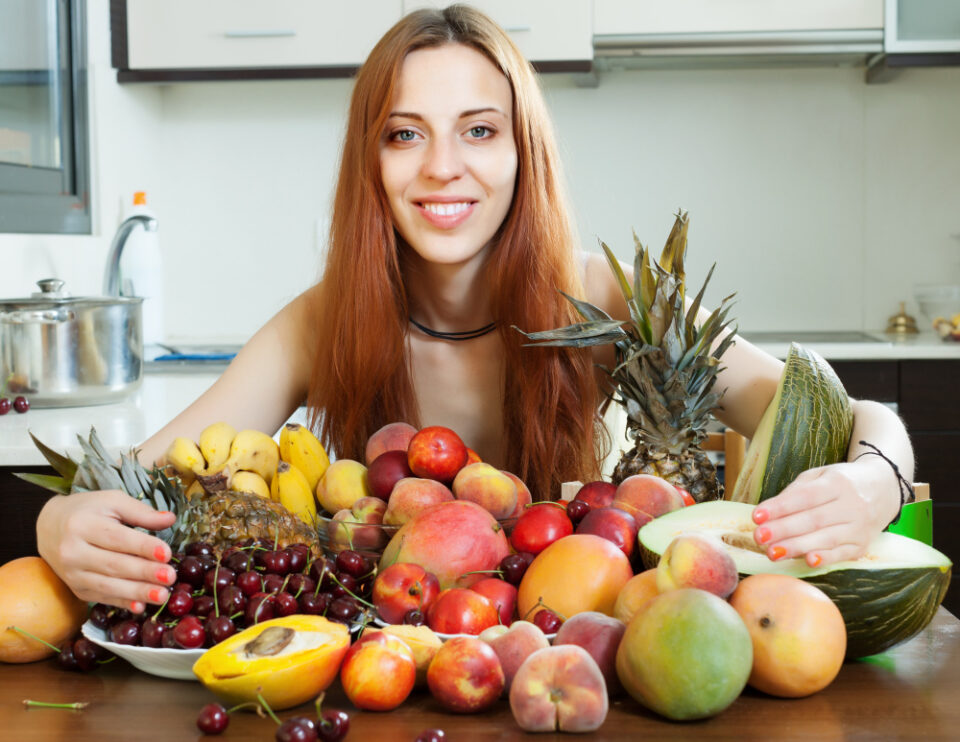
Yesterday, I was at my friend Raghu Apara’s house when I met a delightful couple—she, a writer and artist with a wild imagination, and he, a software engineer with the logic of a programming manual. Over a cup of salt-tinged filter coffee, she turned to me and asked, “Doctor, what’s the best time to eat fruits?” Before I could answer, her husband leaned back and grumbled, “Anything but custard apple or pomegranate. Too many seeds. It’s like doing data entry for one spoon of pulp.”
That’s how my Sunday evening began: one artist full of curiosity, one engineer full of complaints, and a table full of fruit-related doubts. Not whether fruits are good, but when they’re good. Because in the mysterious world of digestion, even the humble banana has a time slot. And if you get that wrong, even a mellow papaya can turn into a belly saboteur.
In Ayurveda, we treat fruits like gentle, wise sages. Light, sattvic, full of prana. You don’t make them stand behind a queue of meat, masala, and maida. They’re meant to be welcomed early, on a clean stage, not after the DJ night is over, and the dance floor is sticky.
Megha, a yoga teacher who drinks papaya smoothies at midnight because Instagram told her it’s detox time. Then she wonders why she wakes up bloated and tired, with a tongue coated like white paint. I told her: Detox is not about dragging fruit into the dark. It’s about syncing with dinacharya—nature’s rhythm. Fruits bloom in daylight. So should their digestion.
Now, here’s a pattern I’ve noticed after 25 years in practice: the healthiest patients are the simplest fruit-eaters. They don’t overthink. They eat fruit the way their grandparents did. Mid-morning, between breakfast and lunch. No toppings, no drama, no freezer-to-microwave acrobatics. Just cut, chew, smile.
A Japanese study found that individuals who consumed fruits in the morning exhibited a better insulin response and lower cravings throughout the day. Another study on “meal sequencing” showed that eating fruit before a meal improved satiety and helped reduce total calories consumed. Eat fruit first, and your stomach sends out a memo: “We’re good, no need for extra rice.
But who follows that advice? Take Ramesh from Koramangala—earnest, well-meaning, newly converted to the gospel of “fruitarianism” for weight loss. He proudly told me, “Doctor, now I eat only healthy!” This meant apples rolled into chapati, pineapple served next to sambhar rice, and grapes moonlighting as a post-dinner dessert. Within a week, he waddled into my clinic looking like a fruit salad gone wrong—bloated, irritable, and unable to, well… download. “Doctor,” he sighed dramatically, “is this detox or slow torture?” I smiled and said, “Neither, Ramesh. It’s just a tragic example of good food with bad timing.”
Fruits digest quickly—usually within 30 to 60 minutes. But toss them in after a heavy meal, and they get stuck in a digestive traffic jam. It’s like sending a cyclist into peak-hour traffic behind a convoy of trucks. The fruit waits. It ferments. Gas builds up. And then, you blame the fruit. Poor, innocent fruit.
Then there’s the WhatsApp wisdom that says never eat fruit after meals, or it’ll turn toxic. No, they won’t release cyanide. However, they may ferment, bloat, or cause sluggishness if the meal is too heavy. It’s not poison. It’s poor sequencing.
Let’s talk about fruit and sleep. One of my more poetic patients, Sahana, said she eats watermelon at night “because it feels like moonlight on my tongue.” Beautiful sentiment, disastrous digestion. Watermelon, being 90% water and best digested during Pitta kala (midday), doesn’t belong in the cold, Kapha-heavy night.
There are exceptions, of course. Ripe bananas can be calming at night, especially if you’re constipated or sleep-deprived. I once advised a busy architect with a Vata imbalance—an anxious mind, cold hands, and dry stools—to try a warm banana with ghee and nutmeg at bedtime. He slept like a baby and hugged me at the next appointment. “Doctor, better than melatonin,” he said.
Please don’t take that as a green signal to chomp on guavas at midnight. Ayurveda works on specifics—your body, your dosha, your needs. It’s not a one-size-fits-all fruit basket.
Let’s also tackle dry fruits. A lawyer I treat, who snacks all day on dates, almonds, and raisins, once said, “It’s all healthy, right?” Yes, until you’re popping ten dates between Zoom calls and wondering why your weight won’t budge. Dates are iron-rich, yes, but also sugar-dense. I told him to soak five black raisins overnight and have them in the morning on an empty stomach. Within a month, his haemoglobin rose, and the sugar crashes vanished. Timing is everything—even with dry fruits.
Oh, and fruit with curd? Big no. Fruit with milk? Depends. Bananas, dates, or figs with warm milk—maybe. But apple with milk? Welcome to Bloating Central. Sour fruits mixed with dairy can curdle inside the gut, leading to sluggish digestion and skin issues. I once had a teenager with persistent acne who drank fruit-milk smoothies every evening. Two weeks after stopping that combo, her skin cleared up. Beauty is all about timing, just like mangoes and marriage proposals.
Melons—especially musk melon and watermelon—should be eaten alone. Not with other fruits, not with salt, and definitely not after meals. I repeat: melons are solo artists. Don’t invite them to the orchestra.
I once asked a 75-year-old woman from Basavanagudi about her fruit routine. With a smile that didn’t need collagen, she said, “Doctor, every morning at 10:30, I cut a banana. If I feel adventurous, maybe a guava too. I eat it slowly while listening to classical music. That’s my tonic.” No supplements, no chia seeds, no juicers that need YouTube tutorials. Just rhythm, simplicity, and quiet joy. Her digestion? Impeccable. Her skin? Glowing like a Mysore lamp. Honestly, she has more vitality than half the thirty-somethings doom-scrolling their way through detox plans.
In weight loss journeys, fruit timing can make or break momentum. Having it too late, and the sugar spikes. Too much, and the calories pile up—wrong combos and inflammation flares. But when done right—local, seasonal, mid-morning, moderate—it works like a charm.
Please don’t peel and store fruits in the fridge for hours. That sliced apple, oxidising like a rusting scooter, has already lost half its antioxidants. Eat fruits fresh, at room temperature, and with all five senses.
If you want to get poetic, think of fruit as the sun’s delayed gift. Every mango, orange, or guava is a sun-baked treasure of nutrition, stored in a form that is edible. To get the best from it, eat it when the sun’s still watching.
Think of this as your fruity Raga chart—each Indian fruit with its own time, tune, and temperament. Banana is soothing in the evening. Papaya is cleansing in the morning. Apple brings balance mid-morning, while guava adds fibre late morning. Mango is energising around noon, and pineapple, with its anti-inflammatory zing, suits the forenoon. Mosambi and orange are refreshing and immunity-boosting when taken in the morning. Pomegranate purifies the blood when eaten mid-morning, and chikoo is most nourishing at midday. Watermelon hydrates well mid-morning, musk melon cools around noon, and custard apple is a gentle rejuvenator in the afternoon. Jackfruit adds bulk in the forenoon, jamun balances blood sugar mid-morning, and ber grounds the gut by midday. Amla rejuvenates best in the early morning, while starfruit alkalizes at the same time. Litchi revives at noon, fig works as a laxative when soaked and taken in the morning, and black grapes detoxify beautifully mid-morning. Sapota strengthens around noon, bael heals the gut when eaten early, pear is light and cooling in the morning, plum chills the system in the afternoon, and mulberry brings anti-ageing magic late morning. Each fruit has its rhythm—when eaten right, it sings in harmony with your digestion. Eaten incorrectly, it sets off a full-blown orchestra of complaints.
Don’t fear fruit. Don’t worship it either. Understand it. Respect it. Eat it when your body is light, your mind is alert, and your stomach isn’t already hosting a food carnival. Mid-morning. Alone. With joy. Chew it. Smile. And for heaven’s sake, don’t follow mango with biryani again.
A couple once came to me post-lockdown, looking unusually tense. “Doctor, we tried a fruit-only diet for a week,” the wife confessed. “It started fine—papaya, banana, smoothie bowls… very Instagram.” But by Day 4, the husband had started roasting apples and adding salt to watermelon. “He was trying to make it taste like rasam,” she said, horrified. They fought over the last chikoo. He accused her of hiding grapes. She threatened to puree his phone.
Eventually, they surrendered—with burps, bloating, and a fridge full of abandoned fruit. “We’ve learned our lesson,” they said. “Fruit is best as a guest, not the whole guest list.”
That’s the truth. When eaten in moderation, fruit is a nourishing food. When forced into every meal, it becomes a comedy. Or constipation. Sometimes both.
===
