
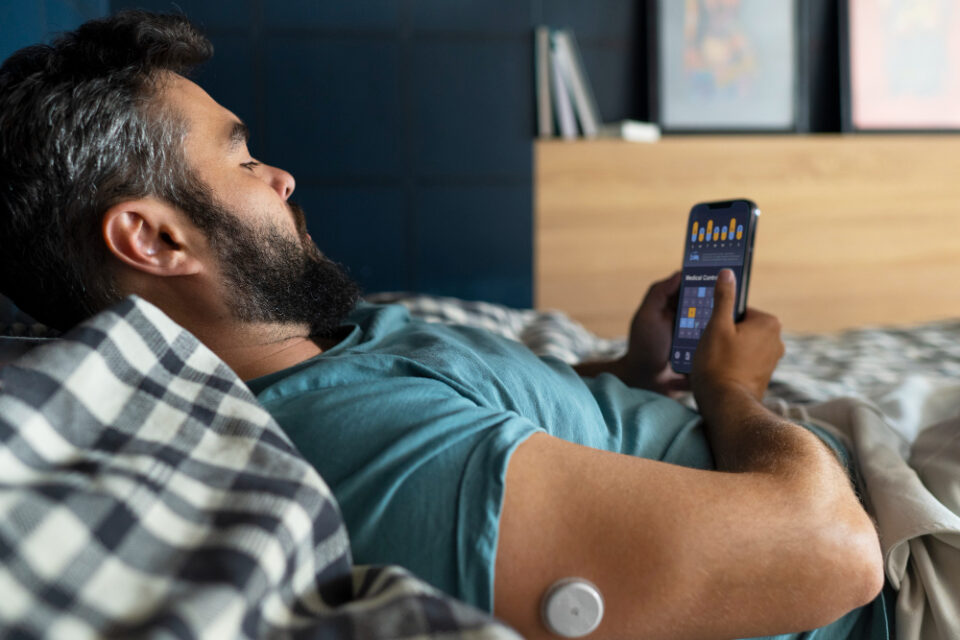
In India, we take our sugar seriously. We monitor it more religiously than our retirement funds, and we blame it for everything—from fatigue to bad moods to skipping dessert. Diabetes has quietly crept into every second household, right between the pressure cooker and the home BP monitor. And while we’ve declared war on sugar, carbs, oil, and even fruit, there’s one silent saboteur we rarely point a finger at: poor sleep.
He walked into my clinic yawning like a lion and scratching his head like a confused crow. “Doctor,” he said, “I’m doing everything right. No sweets, no rice after 7 p.m. I walk 10,000 steps daily, and I’ve even switched to red rice and foxtail millet. And still, my sugar is up.” His tone carried that universal Indian frustration: I’ve done the tapasya, now where’s the moksha?
That moment, like hundreds before it, reminded me—our patients are dieting, exercising, meditating, even juicing bottle gourd at dawn. But they’re forgetting the most ancient, most powerful, and most affordable treatment they have. Sleep. Or as Ayurveda calls it, Nidra—the third pillar of life, quietly collapsing in our noisy, Netflix-soaked nights.
I looked at him. Puffy eyes, sluggish voice, and the energy of a used tea bag. I asked him one question, “How’s your sleep?”
“Sleep?” he blinked. “I watch one episode of Scam 1992, then a few reels… then I toss around till 2 a.m. I wake up twice to pee, then again at 5 a.m. for my walk.”
And there it was—the missing piece of his diabetes puzzle.
Sleep is the most underrated medicine in the diabetes toolkit. People will fast, jog, swallow bitter karela juice, meditate on YouTube, and even flirt with keto. But sleep? That’s just downtime, right? Wrong. In my 25 years of Ayurvedic practice in Bangalore, I’ve seen a pattern as clear as a sugar spike after a wedding buffet—poor sleep worsens blood sugar, no matter how saintly your diet is.
In Ayurveda, Nidra is not just about rest; it is one of the three fundamental pillars of life, along with Ahara (food) and Brahmacharya (balanced conduct). Ignore it, and the whole building begins to shake—mind, metabolism, immunity, everything.
One of my patients, Mr. Desai—a retired banker with the punctuality of Mumbai local train—did everything by the book. Methi water at 6, medicines at 7, a brisk walk at 6:30 sharp. But sleep? That was his Achilles’ heel. He couldn’t sleep before midnight. I asked him why. He sighed and said, “My son watches TV at full volume, and I end up scrolling Instagram to cope with his terrible taste in girlfriends.”
His fasting sugar refused to budge below 160.
All I did was suggest a warm foot soak, a cup of Ashwagandha milk, and no screens post 9 p.m. Within three weeks, his sugar dropped to 110, and he said, “Doctor, I’ve started dreaming again.” That’s a poetic way of saying his REM sleep came back.
Sleep directly influences insulin sensitivity. One night of poor sleep can reduce your body’s ability to handle glucose by 30%. That means even if you eat well, your cells act like sulky teenagers, refusing to open the door when insulin knocks. And then there’s melatonin, our sleep hormone. When released at the right time, it coordinates beautifully with insulin. But mess up your sleep rhythm, and melatonin misfires, leaving insulin unsupported.
In my OPD, I often meet techies who work in US time zones. Their HbA1c levels are always suspiciously high, despite their diet consisting of salads and sugar-free teas. Many shift workers show what I call “artificial jet lag”—their circadian rhythm is in London while their body is in Bangalore. Their pancreas can’t keep up.
I remember a young mother who came to me post-delivery, not for her sugar, but for her moods and fatigue. She said she felt like a zombie—always awake but never truly alive. Her sugar levels, which had previously been normal, were creeping up. I asked her gently if she was sleeping well. She burst into tears. “I haven’t slept more than three hours in a row for the last year,” she said.
Sleep deprivation doesn’t just cause sugar imbalance—it causes sneha imbalance, the loss of emotional lubrication. We become irritable, anxious, and reactive. Cortisol shoots up, insulin goes haywire, and the poor pancreas runs a marathon without shoes.
Yes, Ayurveda does recognise a link between Ratri Jagarana (staying up late at night) and metabolic imbalance, and this holds even through the lens of modern science. Classical texts, such as the Charaka Samhita and Ashtanga Hridaya, mention that night waking mainly disturbs Vata and Pitta. Still, over time—especially when paired with poor digestion, inactivity, and daytime sleep—it can also disrupt Kapha’s balance. When Kapha is disturbed, it leads to fat accumulation (meda dhatu), sluggish digestion (manda agni), and water retention, setting the stage for conditions such as Prameha, the Ayurvedic term for metabolic disorders, including diabetes. Modern research agrees: late-night habits disrupt circadian rhythms, reduce insulin sensitivity, increase cortisol levels, and raise the risk of weight gain and high blood sugar. So yes, those who treat 1 a.m. as their bedtime aren’t just stealing hours from sleep—they’re slowly robbing their metabolism of balance.
Sleep is an active repair mechanism. Our liver detoxifies, our brain washes itself, and our gut repairs the lining. Our insulin receptors reset. That’s why so many people report lower fasting sugar after a good night’s sleep, even if they indulged a little the night before.
Then some proudly say, “Doctor, I function fine on five hours.” I tell them, “You think you function fine. But it’s like running on low battery—you may get through the day, but your internal apps are crashing quietly.”
For decades, we’ve glorified hustle, late nights, and early mornings. “Sleep is for the weak,” they said. However, in truth, poor sleep is weakening us from within. It’s quietly fueling the diabetes epidemic.
Ayurveda recommends going to bed by 10 p.m., ideally in the Kapha phase of the night when sleep comes easily. It encourages dimming lights after sunset, eating early, and using oil massages to calm the Vata that keeps us restless. In many households I visit, the grandparents follow these rules and have no diabetes. Their grandchildren stay up gaming and end up in my clinic by the time they’re 30.
There was one businessman who said, “Doctor, sleep is my enemy. I could earn a crore more if I slept 2 hours less.” I told him, “You’ll spend that crore managing complications if you don’t.” A year later, he came back with high blood pressure, fatty liver, and rising sugar. Now he sleeps by 9:30. Not because he believes me. But because his body finally yelled louder than my advice.
Even our ancient texts recognised insomnia as both a symptom and a cause of Vyadhi (disease). Nidranasha, or lack of sleep, is listed in the Charaka Samhita as a major Vata disorder. Today, we recognise that a Vata imbalance can lead to stress, inflammation, and metabolic disturbances.
As a doctor, it’s easier to prescribe a tablet than to fix a sleep schedule. However, the fundamental shift occurs when patients take their sleep seriously, treating it as a daily medicine. Not a luxury. Not a side effect of boredom. But a potent, sugar-lowering, mood-stabilising, life-saving ritual.
If your sugar is misbehaving, don’t just look at your plate. Look at your pillow. Ask if your sleep is deep, regular, and uninterrupted, not just in terms of hours, but also in quality. And if not, treat it like any other deficiency—something that needs replenishment, with intention and care.
Sleep, I have realised, is the forgotten pill in diabetes care. It’s free, painless, and has zero side effects. It doesn’t come in a strip or bottle. It comes when you close your eyes, trust the night, and let your body remember what healing feels like.
Sleep is the only doctor who doesn’t charge, doesn’t scold, and never asks what you ate. But skip its appointment, and your pancreas will send you the bill.
