
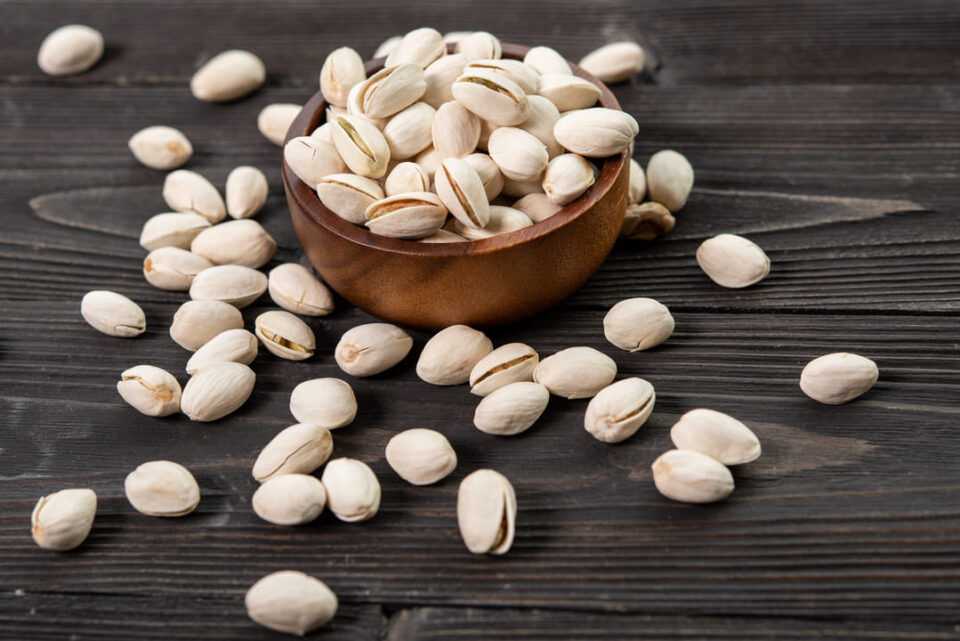
The pistachio has one of the most misleading public relations teams in the food world. It arrives at weddings wearing silver foil, appears in premium ice creams, decorates expensive sweets, and quietly sits inside gift boxes that people exchange only when they are trying to impress somebody. Nobody looks at a pistachio and thinks, “Ah yes, there goes my future haemoglobin.” If nuts held elections, almonds would campaign as the health minister, walnuts would claim to protect the brain, cashews would promise happiness, and pistachios would probably win the ministry of desserts. Yet medicine has a delightful habit of discovering heroes in places where marketing never bothered to look.
A few years ago, a young fashion designer walked into my clinic carrying two handbags. One was expensive. The other was invisible. She had been carrying it for years. It contained exhaustion. Her haemoglobin had refused to climb despite repeated courses of iron tablets. Every few months, she would swallow another strip, suffer constipation, watch her stools turn black, feel hopeful for a while, and then return to where she had started. “Doctor,” she smiled weakly, “I think my blood has declared independence.”
That sentence stayed with me because low haemoglobin is one of those conditions that quietly steal life without announcing the theft. It doesn’t arrive like chest pain or fever. It comes disguised as laziness. You stop climbing stairs because you feel tired. You blame your office, your children, Bengaluru traffic, the weather, your age, your boss, even Mercury being in retrograde, if someone around you believes in astrology. Meanwhile, every cell in your body is simply whispering the same complaint: “Could someone please send us more oxygen?”
This is where most conversations about iron become disappointingly simple. People imagine iron as the only actor on stage. Swallow more iron, make more blood. Biology laughs at such shortcuts. Building haemoglobin is less like adding sugar to tea and more like conducting an orchestra. Iron plays the violin, certainly, but vitamin B6 keeps the rhythm, folate writes part of the music, copper ushers iron into the right seats, protein supplies the building blocks, vitamin C improves iron absorption, and a healthy intestine manages the entire performance. Miss enough musicians and the concert still sounds incomplete.
Pistachios enter this orchestra rather elegantly. No, they are not iron champions. If you are expecting a handful of pistachios to perform the miracle of a blood transfusion, you will be disappointed. A hundred grams provides only a modest amount of iron. But that is precisely why they are interesting. They bring along an unusually intelligent supporting cast. They supply vitamin B6, an important participant in haemoglobin formation. They contribute copper, which helps the body utilise iron efficiently. They contain folate, which is needed for healthy red blood cell production. They also offer protein, healthy fats, and antioxidants that improve overall nutritional status rather than merely chasing a laboratory number. Sometimes the best teammate is not the one who scores the goal but the one who keeps passing the ball to the right player.
Nature has always preferred teamwork over superstition. Consider spinach. Thanks to a famous cartoon sailor, generations grew up believing it was an iron powerhouse. Few realised that spinach also contains oxalates, compounds that reduce iron absorption. Or take jaggery, another household favourite, generously prescribed for anaemia. It does contain small amounts of iron, but not nearly enough to rescue a significant deficiency on its own. Nutrition is full of such half-truths that survive because they sound comforting. Pistachios deserve appreciation for a different reason. They remind us that food is not medicine because of one magical ingredient. Food becomes medicine when dozens of nutrients quietly cooperate, each doing a small job so well that together they produce something remarkably larger than themselves. That is exactly what I explained to my patient before asking her to add a modest handful of unsalted pistachios to an otherwise well-planned treatment, not as a miracle cure, but as one more intelligent ally in persuading her body to manufacture healthy blood again.
Over the next few months, something interesting happened. We did not chase her haemoglobin every week. Patients often become prisoners of laboratory reports. They stare at the numbers before they look at themselves. I prefer a different question. “Can you climb two flights of stairs without negotiating with God?” She laughed. A month later, she said she no longer needed an afternoon nap. Her hands felt warmer. The dark circles had softened. She had started sketching late into the evening again. The blood report improved eventually, but by then her body had already broken the news before the laboratory did. Health often arrives quietly, and paperwork follows later.
There is another delightful trick that pistachios perform, one most people never notice. They come wrapped in their own speed breaker. Every shell asks you to pause. Contrast that with potato chips, which disappear so quickly that the packet is empty before the television advertisement ends. Psychologists call this the “pistachio principle.” Studies have shown that people who eat in-shell pistachios often consume fewer calories than those given shelled ones because the growing pile of empty shells becomes a gentle reminder of how much they have already eaten. Nature invented portion control long before dieticians invented calorie-counting apps.
The colour of pistachios deserves attention too. That soft green is not cosmetic. It comes from chlorophyll and carotenoids such as lutein and zeaxanthin, pigments better known for protecting our eyes. We usually associate eye health with carrots, but pistachios quietly make their own contribution. Add to this their healthy monounsaturated fats, plant sterols and fibre, and you begin to understand why regular nut consumption has repeatedly been associated with better heart health. The heart, unlike social media, rarely appreciates dramatic gestures. It rewards boring consistency.
Then there is the matter of blood sugar, where pistachios act with surprising intelligence. Despite being energy-dense, they have a relatively low glycaemic impact. Eat them with a meal, and they slow the absorption of carbohydrates, softening the sharp rise in blood glucose. This is why nutrition researchers increasingly speak of foods in the context of the entire meal rather than in isolation. A spoon of sugar behaves differently when swallowed alone than when it arrives accompanied by fibre, protein and healthy fats. Food is less like a solo singer and more like a choir. The company it keeps changes the performance.
People often ask me whether pistachios should be roasted, soaked or eaten raw. My answer usually disappoints those searching for complicated rituals. Unless you simply enjoy soaked nuts, pistachios do not demand elaborate ceremonies before entering your stomach. Dry roasting preserves most of their goodness while making them irresistibly aromatic. Salt, however, deserves respect. The food industry has an extraordinary talent for turning healthy ingredients into sodium delivery systems. A handful of lightly roasted, unsalted pistachios is a friend. Half a packet of heavily salted ones while binge-watching cricket is an entirely different relationship.
Of course, pistachios are not for everyone. Those with nut allergies must avoid them completely. People with advanced kidney disease may need to limit portions, as advised by their doctor, because nuts contain significant amounts of potassium and phosphorus. Even healthy foods lose their virtue when consumed without restraint. Ayurveda has repeated the same lesson for centuries: the dose often decides whether something nourishes or burdens the body. Wisdom is rarely found at either extreme.
I sometimes think modern nutrition suffers from what I call the superhero syndrome. Every month, a new food is crowned king. One week, it is chia seeds. Next week avocado. Then blueberries. Soon, someone discovers a berry growing on a mountain that apparently guarantees immortality until another berry replaces it. The human body finds these marketing campaigns mildly amusing. It has always preferred variety over celebrity. No single ingredient has ever built robust health. Healthy blood is not produced by pistachios alone, just as a beautiful raga cannot be played with a single note.
My young patient still eats pistachios. Not because she believes they possess magical powers, but because they remind her of a lesson far more valuable than a handful of nuts. Health is rarely transformed by spectacular decisions. It is shaped by small, intelligent choices repeated so consistently that they become invisible. A modest handful of pistachios. A balanced meal. Adequate sleep. A walk after dinner. Medicines when necessary. Patience always. The body notices these quiet acts of kindness even when we don’t.
That is why the pistachio shell splits open before we do. It is almost as though the nut is smiling at us, gently mocking our endless search for miracles. We spend fortunes chasing exotic cures while overlooking the extraordinary power of ordinary habits. Sometimes the greatest prescription does not arrive in a bottle. Sometimes it fits comfortably in the palm of your hand, waiting patiently inside a little shell until you are wise enough to open it.

1 comment
Thank you sir. Good to know Pista, the power house of many nutrients. A very useful article.